
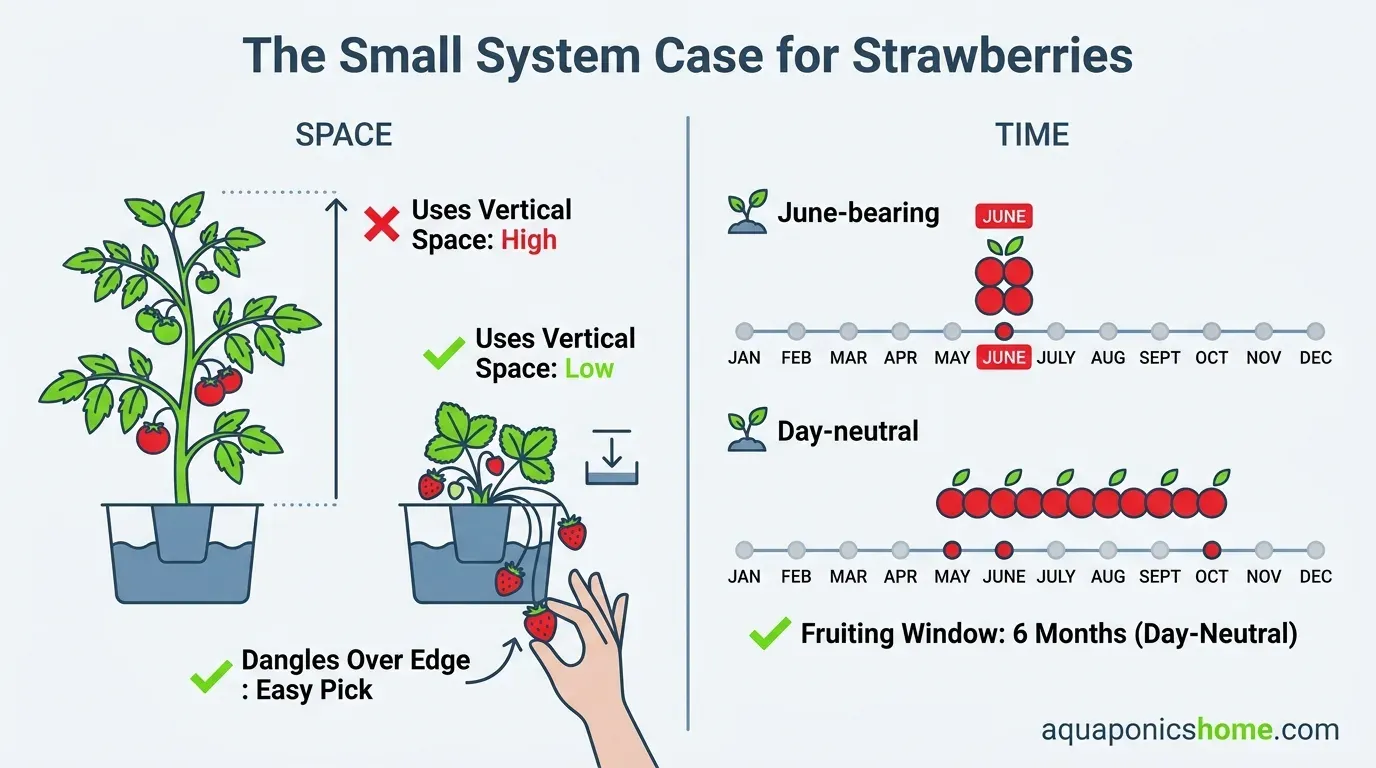
Aquaponics strawberries are one of the better fruiting crops for a small home system, as long as you choose the right type and plant them high. Oregon State University Extension says day-neutral strawberries fruit throughout the growing season except when it is below 40°F or at 90°F and above, while June-bearing plants give one crop a year that usually lasts about four weeks.
In a system that runs all year, that difference decides whether a strawberry plant earns its spot in the grow bed. The second rule is the crown: set it too low in a wet bed and the growing tip can rot.
Why Aquaponics Strawberries Earn Their Space
A small aquaponics system has a limited number of planting spots, and every fruiting crop competes with lettuce and herbs that could be harvested sooner. Strawberries hold their own for three practical reasons.
- They stay small. A strawberry plant does not need staking, a trellis or a deep root run the way a vining tomato does.
- The right type keeps fruiting. A day-neutral plant gives you berries over months, not weeks, which matters when each plant occupies a spot that could have held something else.
- Fruit hangs over the edge. Berries that dangle over the side of a bed or tower stay off the wet media and are easy to see and pick, which is part of why strawberries are the fruiting crop children are most likely to go and check on without being asked.
The trade-off is patience. Strawberries are not a first-month crop, and they ask more of the water than leafy greens do, so they suit a system that is already established and stable.
June-Bearing, Everbearing or Day-Neutral: Pick the Type First
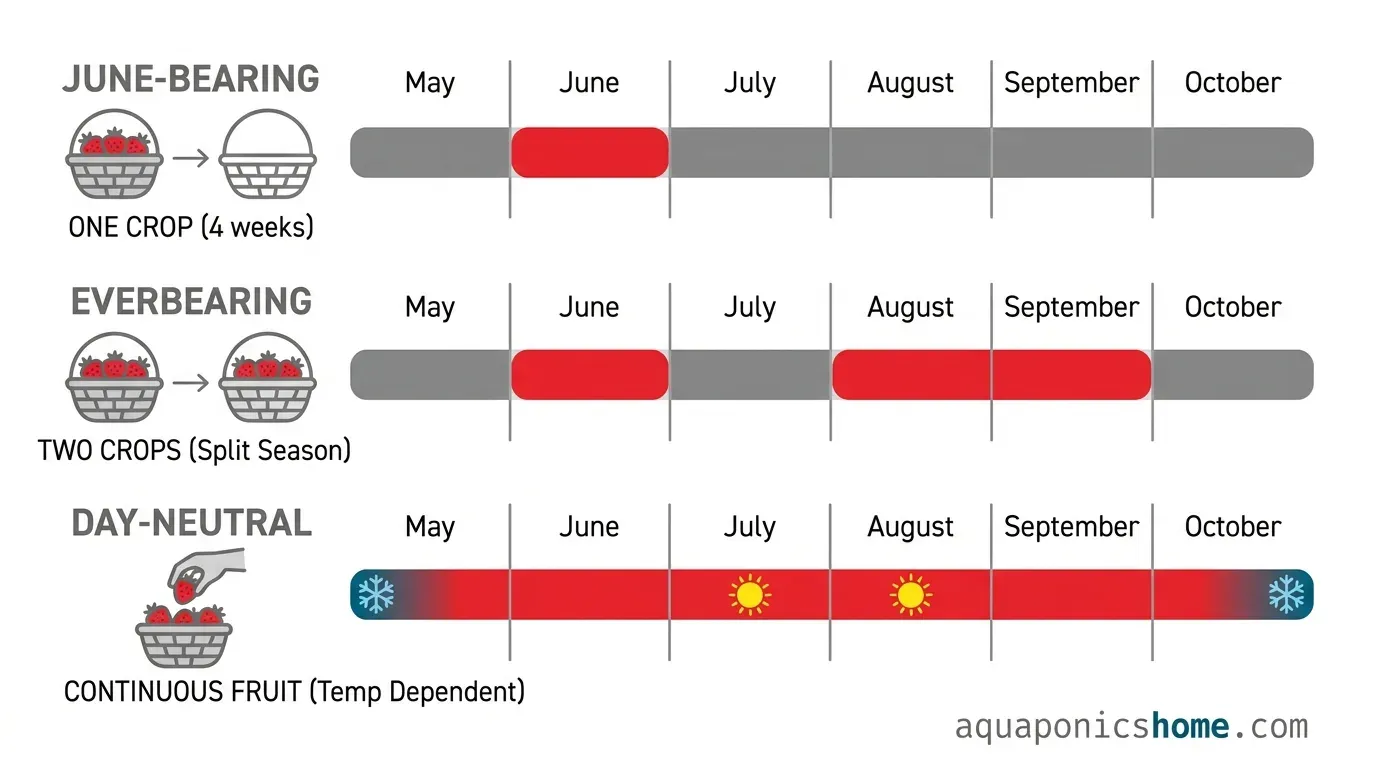
This is the decision most aquaponics strawberry guides skip, and it matters more than the fish you pair them with. Oregon State University Extension’s home garden strawberry guide (EC 1307, revised July 2020, reviewed 2024, read September 25, 2026) describes the three types this way:
| Type | When it fruits, per Oregon State University Extension | Fit for a small aquaponics system |
|---|---|---|
| June-bearing | One crop a year in late spring or early summer; the season “usually lasts around four weeks” | Poor. The plant holds a spot all year for a few weeks of fruit |
| Everbearing | Twice a year, once in the June-bearing season and again in late summer | Workable, with a gap in the middle |
| Day-neutral | “Throughout the growing season, except when it is too cool (less than 40ºF) or too hot (90ºF or higher)” | Best. Suits a system kept in a steady indoor or sheltered range |
The same guide notes that in Oregon’s Willamette Valley, day-neutral plants generally fruit from May through early October outdoors.
An indoor system that stays between those temperature limits removes the “outdoors” part of that sentence, which is the main reason day-neutrals are the usual choice for soilless growing.
Plant the Crown High: The Aquaponics-Specific Mistake
The crown is the short, thick stem where the leaves and roots meet.
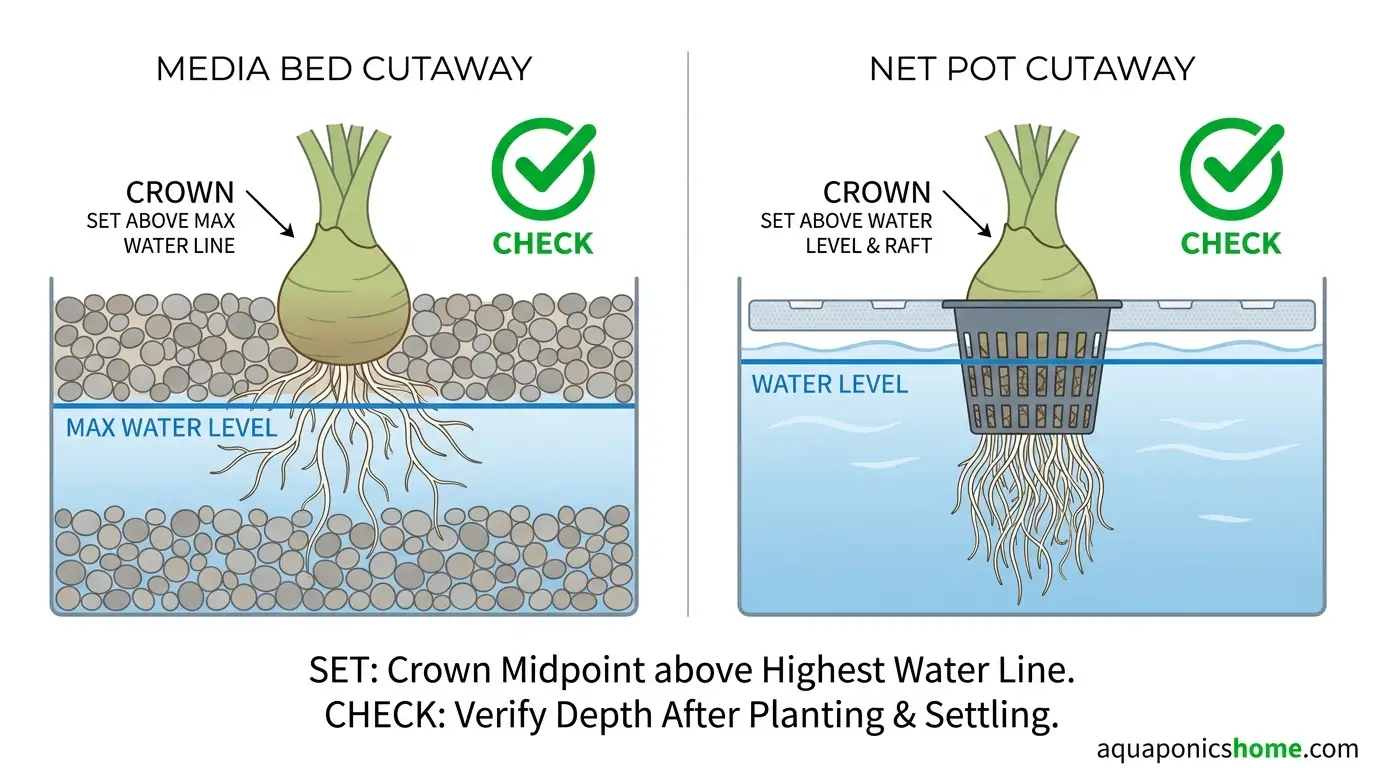
Oregon State University Extension’s planting instruction is precise: the midpoint of the crown should be level with the soil surface, with the topmost root just below it. It also warns that “if you set plants too low, the growing tip at the top of the crown may be smothered and rot.”
In soil, “too low” means too deep. In an aquaponics bed, it also means too wet. A flood-and-drain media bed raises the water level through the media on every cycle, so a crown planted level with the top of dry-looking gravel can still sit in water several times a day.
- In a media bed, set the crown so its midpoint sits above the highest point the water reaches, not just above the surface of the media. The roots will find the water.
- In a net pot on a raft, keep the crown clear of the water surface, with only the roots hanging down.
- After a few days, check again. Media settles and plants shift, and a crown that started high can sink.
A media bed is the most forgiving place to get this right, because you can adjust depth plant by plant. The case for it as a first system is in why media bed aquaponics is the default.
Where Strawberries Fit in a Home System
Many aquaponics strawberry guides recommend towers or NFT channels, and commercial growers do use vertical systems.
University of Illinois Extension (Bronwyn Aly, October 27, 2023, read September 25, 2026) describes day-neutral strawberries grown in a vertical stack system of perlite-filled cubes inside a high tunnel, with production running from mid-March into October. That is a hydroponic trial with its nutrient solution held to set targets, not a fish system, but it shows how well day-neutrals suit a vertical layout.
For a home aquaponics grower, the water side of a tower is the harder part, and it is explained in vertical aquaponics and where the water goes.
NFT channels bring their own risks for a beginner, covered in why NFT is a poor first aquaponics system. The simplest option is often the edge of a media bed, where plants sit high and the fruit hangs over the side.
Care in the First Months
Oregon State University Extension gives three instructions that apply directly to a system:
- Remove the first flower stem on newly planted everbearing and day-neutral plants as it emerges, so the plant builds roots, crown and leaves before it starts making fruit.
- Remove runners every two to three weeks on day-neutral plants. Runners take energy that would otherwise go to fruit.
- Plan for replacement. The guide says strawberry plantings are only productive for three to five years and recommends starting a new patch in the old patch’s last fruiting season.
That third point is where a system has a small advantage. Instead of removing every runner, you can let one root into a spare net pot or an empty patch of media when an older plant is nearing the end, then cut it free once it is established.
Pollination Without Bees
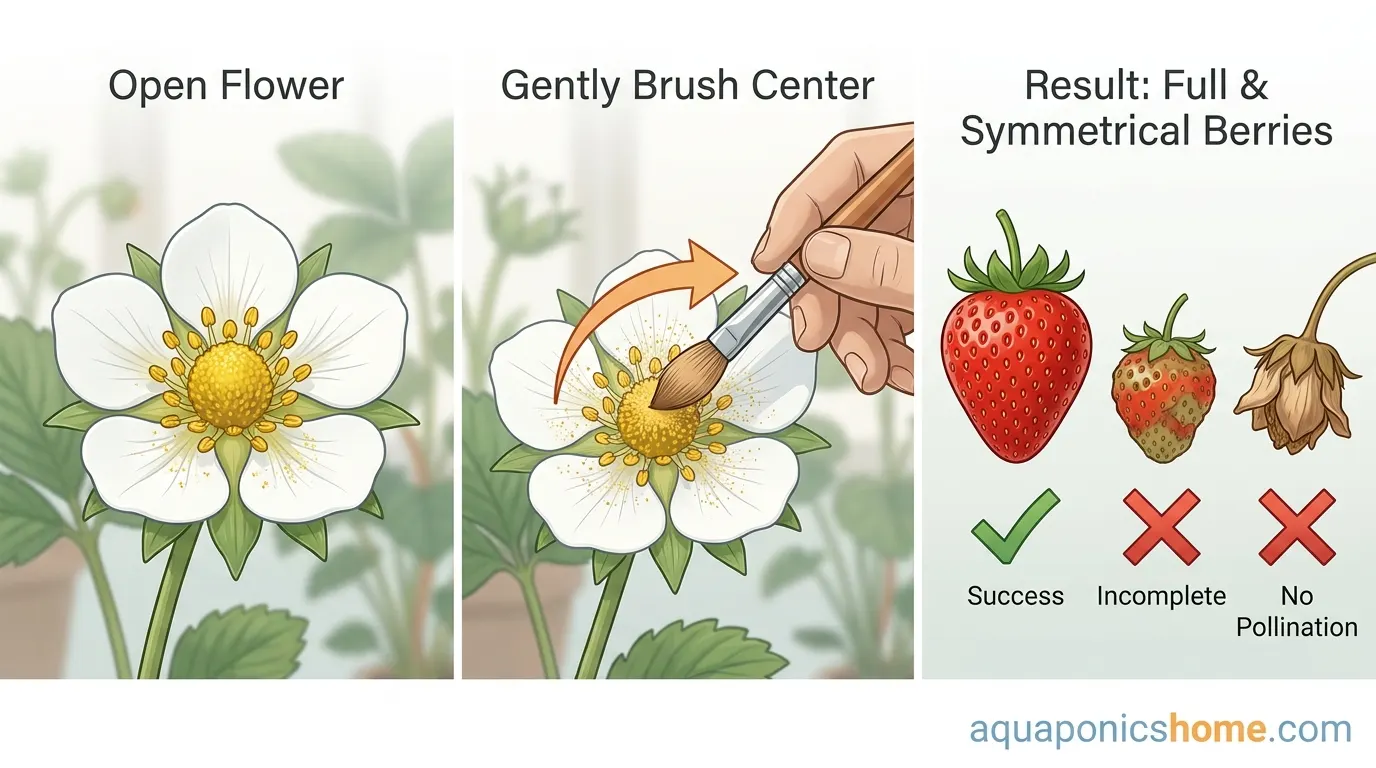
Strawberry flowers depend on pollination to form full berries. Oregon State University Extension notes that rain or cool weather during bloom can reduce fruit set “by limiting pollination directly or indirectly through reduced bee activity.”
Indoors there is no bee activity at all. Home growers usually take over the job by gently brushing the center of each open flower with a small, soft paintbrush every day or two while the plant is in bloom. If berries come out small or lumpy, pollination is one of the first things to check.
Heat: The Summer Pause
Day-neutrals have an upper limit as well as a lower one. Oregon State University Extension states that when it is too hot (90°F or higher), flowers do not form until temperatures drop. The Illinois Extension trial handled the same problem by stretching shade cloth over the high tunnel from the first of June to lower temperatures.
For a sunny patio or a hot sunroom, that means a strawberry plant that stops flowering in midsummer is not necessarily sick. Check the temperature where the plant actually sits before assuming anything is wrong with the water.
The Other Fruiting Crops, Judged by What They Cost You
Strawberries are not the only fruiting option, but each alternative asks for something different. This comparison is about space and effort in a small home system, not yield.
| Crop | What it asks of a small system | Verdict for a first fruiting crop |
|---|---|---|
| Strawberries (day-neutral) | Little height, no support, hand pollination indoors, careful crown depth | The easiest fruiting crop to fit |
| Peppers | A taller plant that may need a stake, hand pollination indoors, a warm spot | A good second step |
| Tomatoes | A large vine that needs support and a deep root run, steady warmth, hand pollination indoors | Worth it only with room to spare |
Fruiting crops of every kind draw harder on the system than leafy greens. If leaves start to yellow or fruit stalls, check the basics, such as pH and whether your system is fully cycled, before adding anything to the water.
Before You Eat the First Berry
Strawberries are eaten raw and often straight off the plant, which makes the food-safety side worth reading before the first one ripens.
Start with whether food from a home aquaponics system is safe to eat. And because anything sprayed on a plant above an open tank can reach the water, never spray a strawberry bed over a fish tank without first confirming the product is safe for fish and for food.
FAQ
What type of strawberry is best for aquaponics?
Day-neutral types suit most home systems. Oregon State University Extension says they fruit throughout the growing season except below 40°F or at 90°F and above, while June-bearers give one crop a year that usually lasts about four weeks.
Why are my aquaponics strawberry plants rotting at the base?
Check planting depth first. Oregon State University Extension warns that a crown set too low can have its growing tip smothered and rot. In a flood-and-drain bed, set the crown above the highest water level, not just level with the media.
Do aquaponics strawberries need hand pollination?
Indoors, usually yes. Oregon State University Extension notes that reduced bee activity lowers fruit set, and an indoor system has no bees. Brushing each open flower gently with a small soft brush does the job.
Why did my strawberries stop flowering in summer?
Heat. Oregon State University Extension says day-neutral plants stop forming flowers when it is 90°F or hotter and start again once temperatures drop.