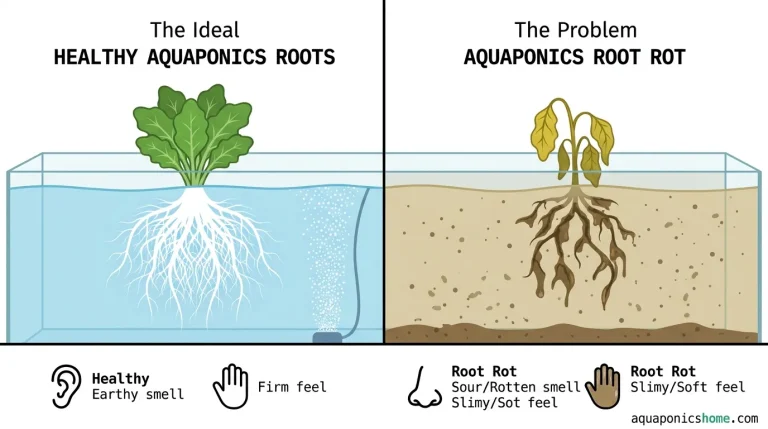
Aquaponics Root Rot: Causes, Checks and Fish-Safe Fixes
Aquaponics root rot shows as brown, slimy, smelly roots. Learn the real causes and fish-safe fixes, and why hydroponic cures can harm your fish.

Aquaponics root rot shows as brown, slimy, smelly roots. Learn the real causes and fish-safe fixes, and why hydroponic cures can harm your fish.
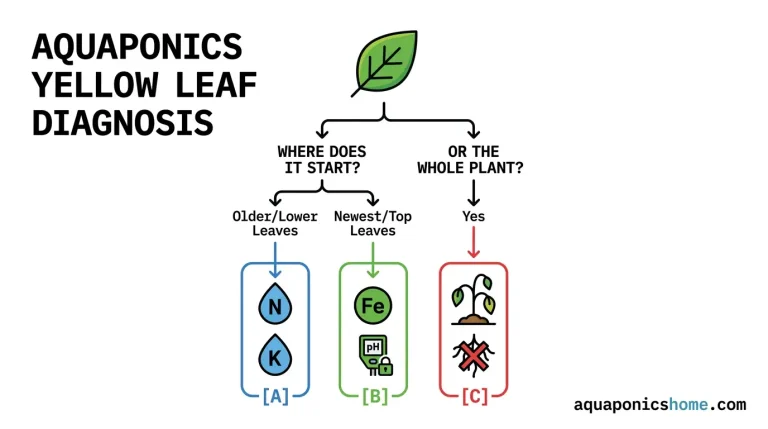
Aquaponics yellow leaves have five common causes. Use where the yellow starts, a pH test and a root check to find yours before adding anything.
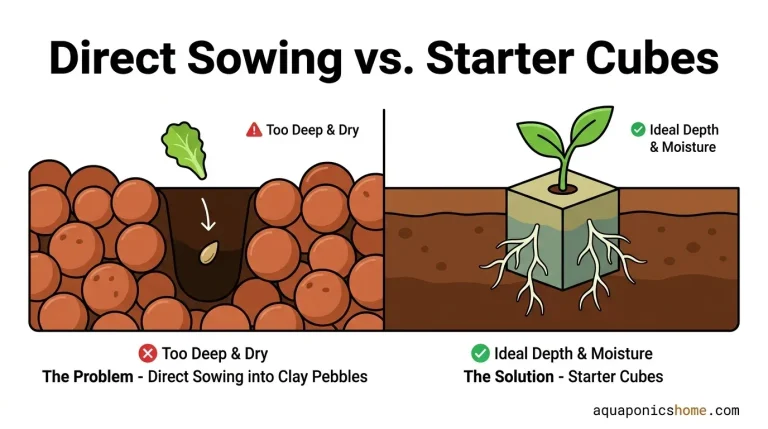
Aquaponics seed starting works best in plugs, not bare clay pebbles. Learn why, which starter to use, and when seedlings are ready to move into the bed.
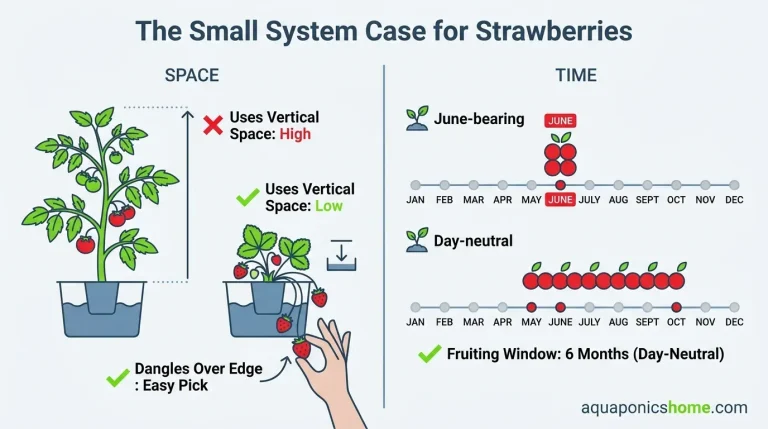
Aquaponics strawberries can fruit for months if you pick day-neutral plants and keep the crown dry. Here is how to set them up in a small system.
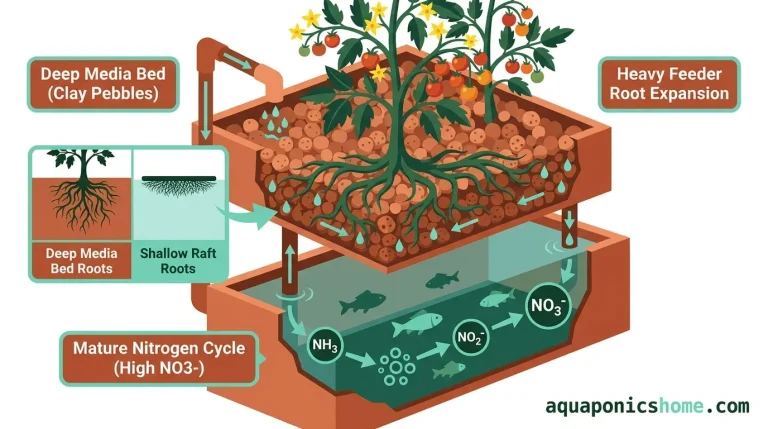
Aquaponics tomatoes can fruit in a small system, but they need more nitrate, steady warmth and hand pollination than lettuce. Here is what to expect.
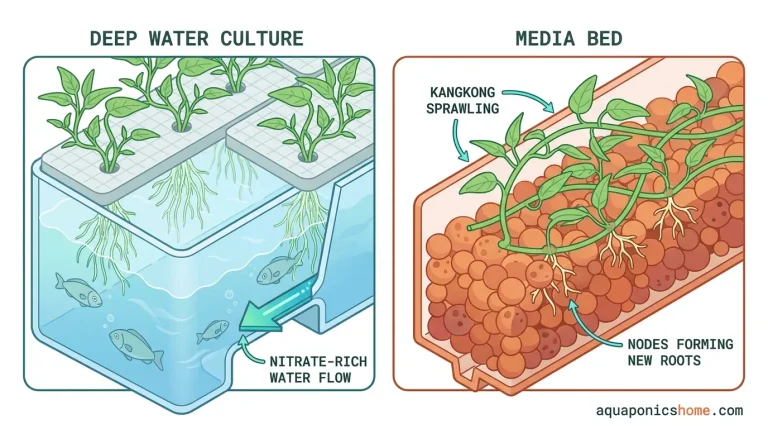
Kangkong aquaponics works because water spinach loves wet roots, but it is a federal noxious weed in the US. See the rules and a cool-season swap.
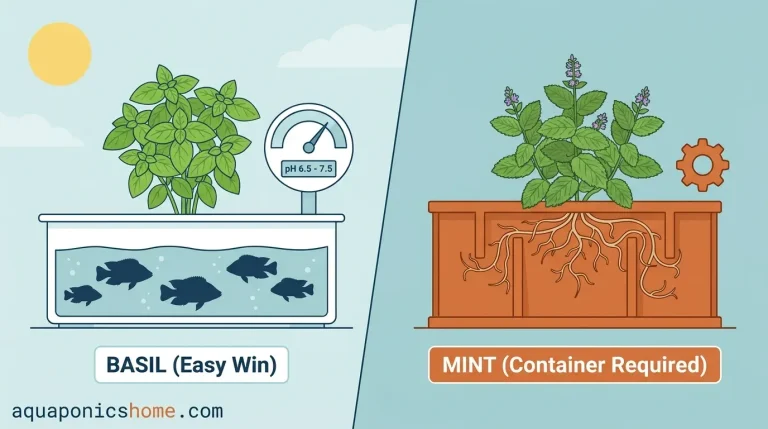
Aquaponics herbs like basil thrive fast in fish-fed water, but mint and other spreaders need containment. Here's what to grow, and what to avoid.
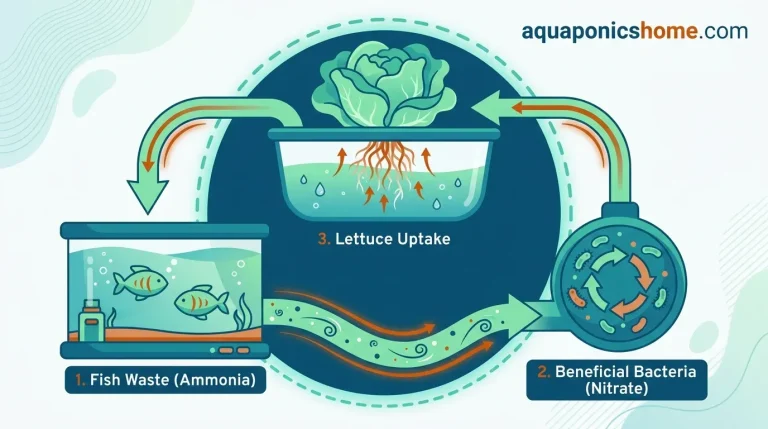
Aquaponics lettuce grows fast on fish waste alone, often in five to seven weeks. Learn which varieties, pH range and setup work best for beginners.
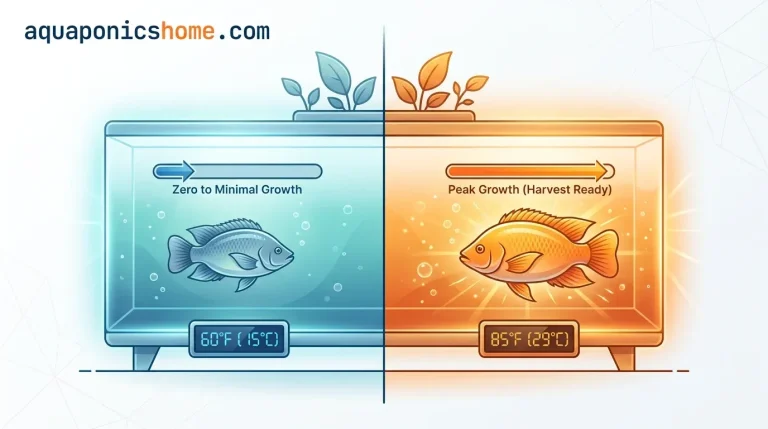
Aquaponics fish growth time depends on water temperature. See what university sources say for tilapia and catfish, and how to plan your own harvest.
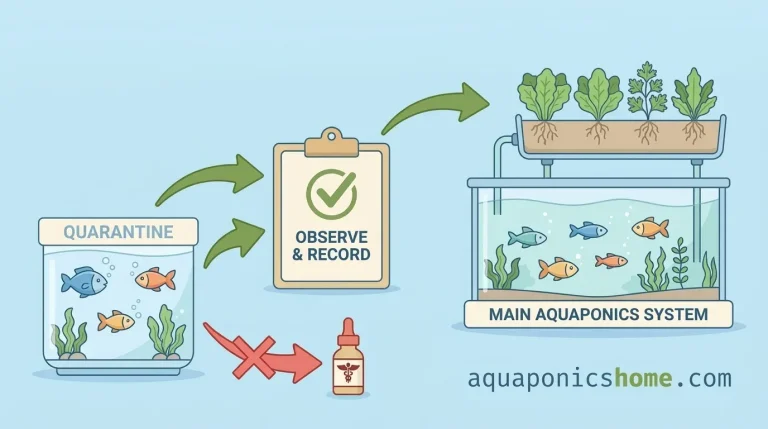
How to quarantine new fish before they enter an aquaponics system: a separate tank, what to watch daily, and why treatment is a vet's call.
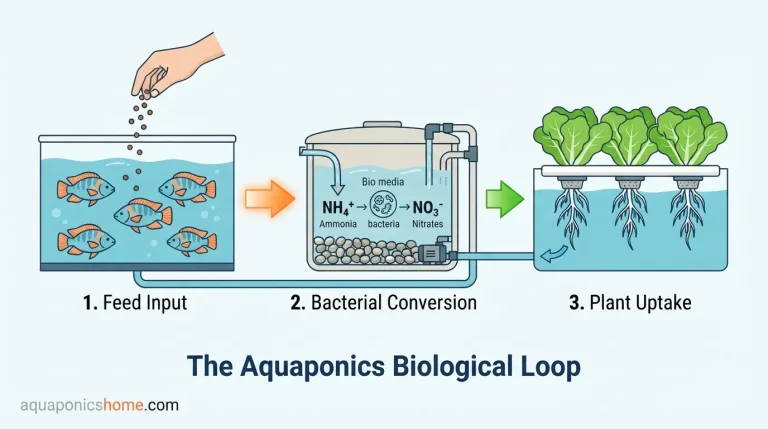
Aquaponics fish feeding sized by plant area, not fish count: sourced feed ranges, the overfeeding trap, and how feed choices reach your harvest.
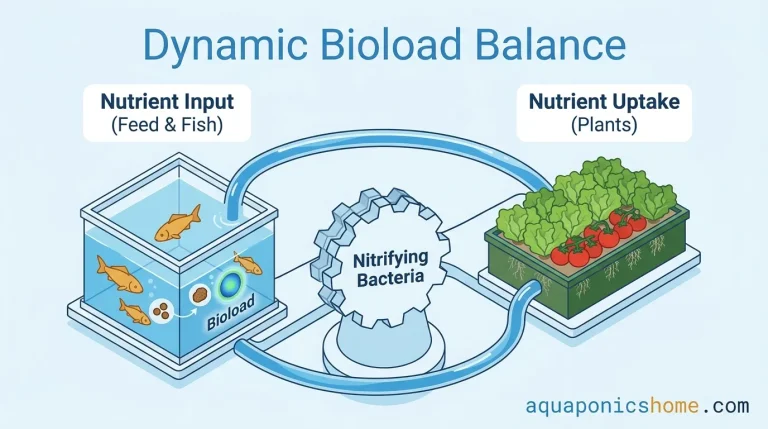
There is no fixed aquaponics fish to plant ratio. See the stocking density, volume and feed numbers that actually set how many plants a tank can feed.