
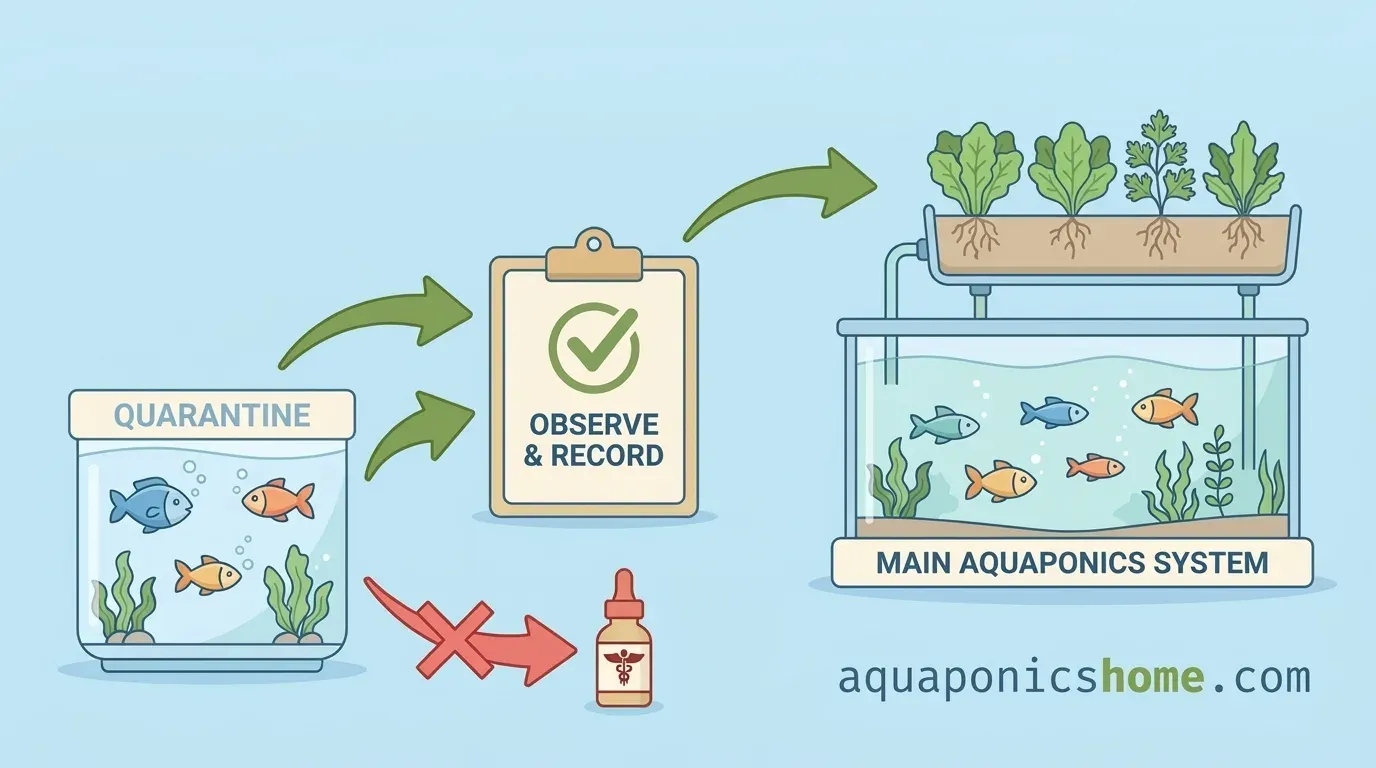
Yes, you should quarantine new fish before they go into an aquaponics system, and yes, that means a second container. It does not need to be fancy. It needs to be separate: its own water, its own net and siphon, and never plumbed into the system that feeds your plants.
New fish stay there while you watch them daily and keep simple records. How long depends on the species and the diseases of concern, so agree on a period with an aquatic veterinarian or an extension aquaculture specialist. What quarantine should not mean in a food system is medicating every new fish on arrival.
This page covers the procedure only. It does not diagnose illness or recommend any treatment or dose.
Why Aquaponics Raises the Stakes
An aquaponics system is a recirculating system: the same water loops past the fish, the bacteria and the plant roots again and again. That is what makes it efficient, and it is also what makes a sick newcomer expensive.
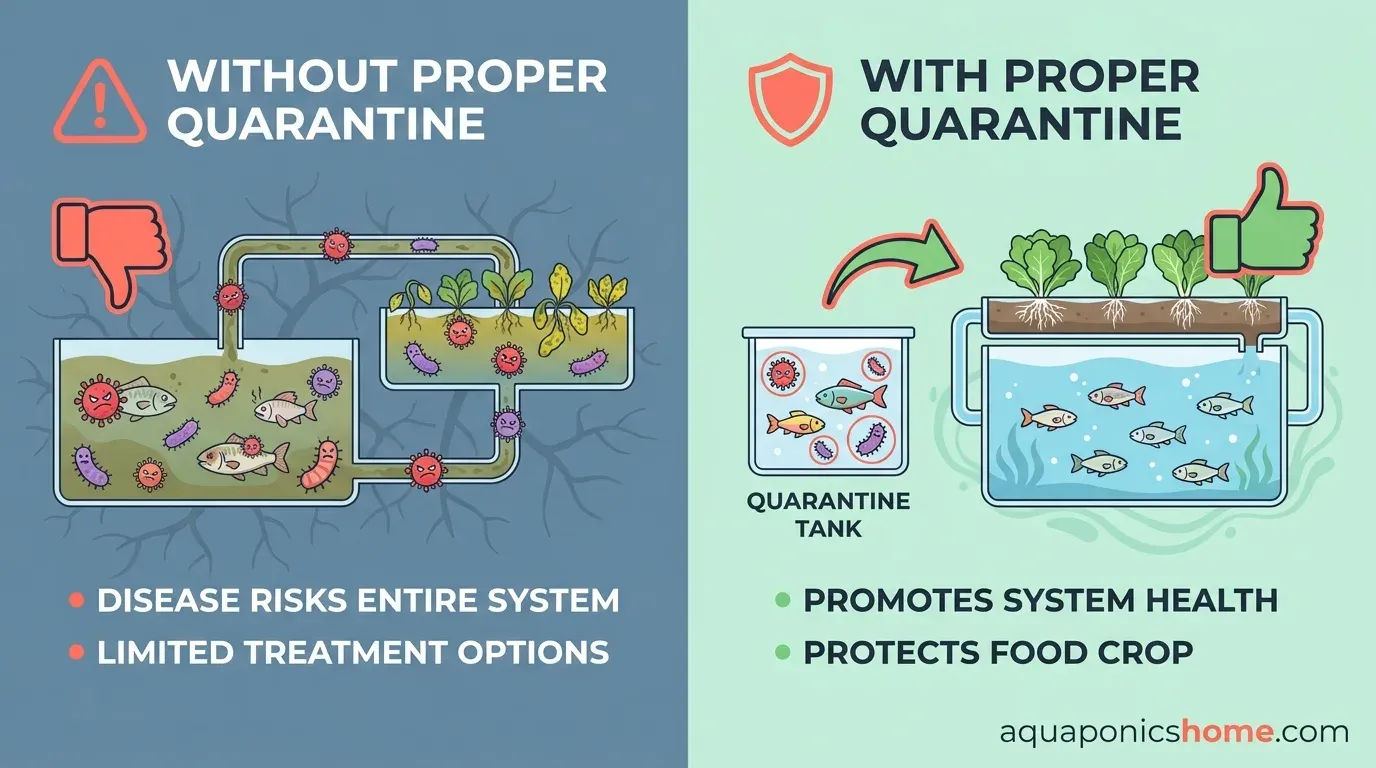
SRAC Publication No. 4708, Biosecurity in Aquaculture, Part 2: Recirculating Aquaculture Systems (Roy P. E. Yanong, University of Florida, February 2012, read September 24, 2026) warns that even a small number of disease-causing organisms on incoming fish will be amplified in a recirculating system, and lists new fish that are not properly quarantined among the situations where major biosecurity problems occur.
The second problem is that a fish that looks healthy may not be. The Center for Food Security and Public Health at Iowa State University’s College of Veterinary Medicine states in its Aquaculture Biosecurity: Incoming Aquatic Animals tip sheet (2025, read September 24, 2026) that infected animals may not always show signs of illness and can still spread pathogens through mucus or feces.
The third problem is specific to growing food. Once something is in your main system, your options shrink. SRAC Publication No. 454, the Southern Regional Aquaculture Center’s aquaponics fact sheet (Rakocy, Masser and Losordo, 2006 revision, read September 24, 2026), states that treatments for fish parasites and diseases should not be used in aquaponic systems because vegetables may absorb and concentrate them, and that the common practice of adding salt to treat fish diseases harms plant crops. In a food system, prevention is not one tool among many. It is close to the only one you have.
Why the Aquarium Playbook Does Not Transfer
Search for how to quarantine new fish and most of what ranks is written for ornamental aquariums. Some of it recommends treating new arrivals from untested sources with a combination of medications as a precaution, even when they show no symptoms. That advice was written for a glass box of pet fish, not for water that irrigates your lettuce and fish that may end up on your plate.
Farm biosecurity guidance is more careful. The CFSPH tip sheet limits any arrival treatment to approved products, notes that the preventive use of antibiotics is prohibited, and tells farmers to work with an aquatic animal health professional on the quarantine protocol for their species.
For a home aquaponics grower, the safe reading is simple: quarantine is isolation and observation. Any decision to treat belongs to an aquatic veterinarian, and it happens away from the system that grows your food.
How to Quarantine New Fish, Step by Step
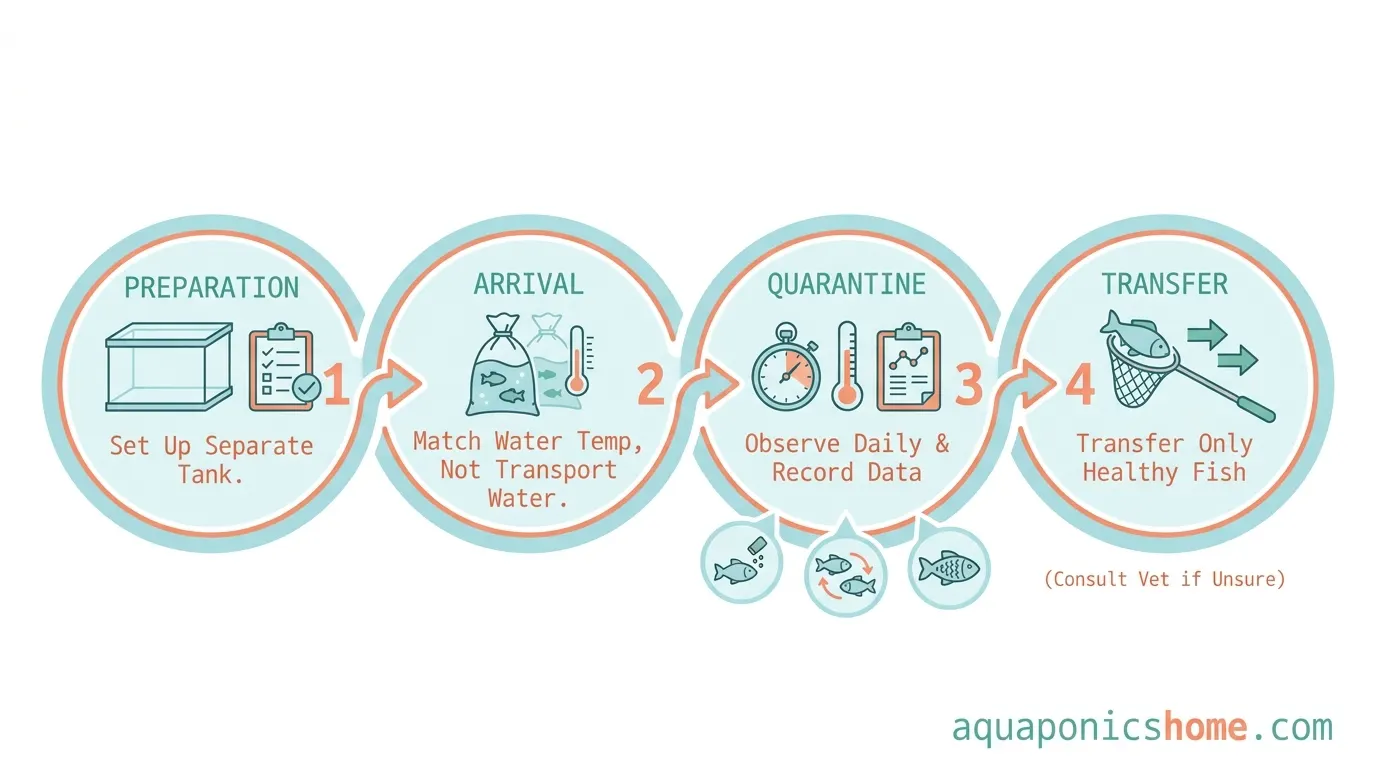
1. Before you buy
Quarantine starts with the seller. The CFSPH tip sheet recommends asking suppliers about disease history, testing, veterinary inspection results and their own biosecurity, and limiting both how often you bring in new animals and how many suppliers you use.
SRAC 4708 recommends buying, ideally, from a supplier who practices a high level of fish health management and provides a health certificate with the shipment.
It also describes an “all-in, all-out” approach: bring in one group from one source, keep it together for the whole quarantine, and add no new animals to that group partway through. For a home system, that means buying the whole batch at once rather than topping up with fish from a second seller next month.
2. Set up the quarantine tank
The CFSPH tip sheet calls for quarantine in a physically separate location, with water supplies and handling and cleaning equipment kept separate and not shared. In practice, for a home grower:
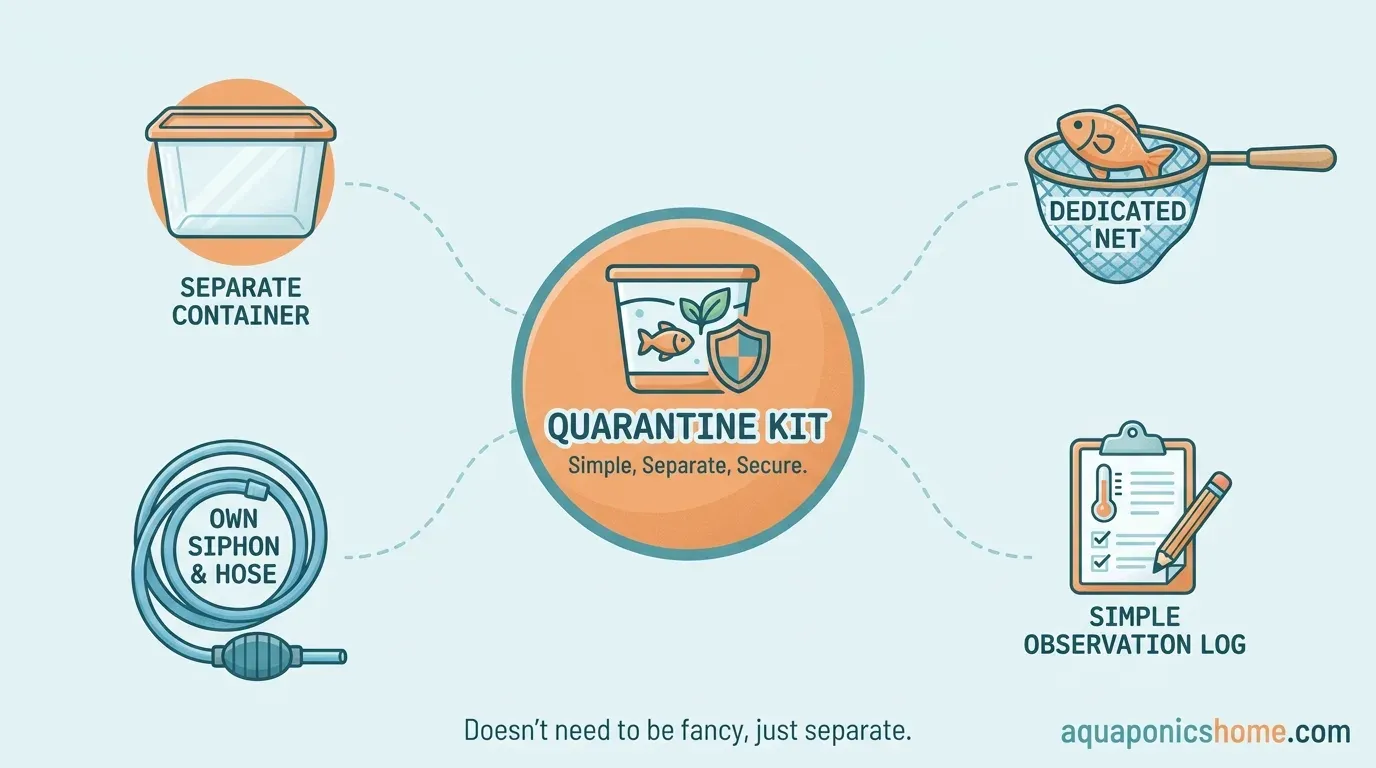
- A separate container with its own aeration and filtration, not connected to your aquaponics plumbing in any way.
- Dedicated equipment. Its own net, siphon hose and bucket. SRAC 4708 points out that siphon hoses can carry disease-causing organisms from one tank or system to another.
- Prepared water. If you use tap water, remove chlorine or chloramine first; our guide to dechlorinating water for aquaponics explains the difference.
- A working plan for water quality. A quarantine tank still needs its ammonia and nitrite watched, because fish in a small container foul it quickly. The 10-minute weekly water testing routine works here too, more often if readings move.
Your main system should also be fully ready before any fish arrive, so the quarantine period is not spent waiting on a system that has not finished cycling without killing fish.
3. Arrival day
The CFSPH tip sheet recommends inspecting animals on arrival for visible issues such as external lesions, poor body condition, lethargy or abnormal behavior, and it treats transport water as something to manage carefully.
Keep the shipping water out of both your quarantine tank and your main system as far as you can, and match water temperature before moving the fish.
4. Watch, and write it down
This is the core of quarantine. The CFSPH tip sheet recommends monitoring quarantined animals regularly, ideally daily, keeping daily records so changes are caught quickly, and caring for quarantined animals last, after everything else. SRAC 4708 lists what to observe:
| What to watch | What to record |
|---|---|
| Response to feeding | Did they eat, and how eagerly? |
| Behavior and position in the water | Normal swimming, or hanging at the surface, bottom or corners? |
| Physical appearance | Any change to fins, darkening, or bloody areas |
| Eyes, body shape and scales | Pop-eye, bloating, scale loss |
| The water and body surface | Extra mucus, lumps, or anything visibly attached to the fish |
SRAC 4708 describes these as signs that may indicate a potential disease problem. They are not a diagnosis, and this page cannot give you one. What they tell you is when to pick up the phone.
Wash your hands after working with the quarantine tank, and do your main system first each day.
5. Moving fish into the system
When the quarantine period you agreed on is over and nothing has changed, net the fish across and leave the quarantine water behind. Clean and disinfect the quarantine container and its equipment before its next use; SRAC 4708 stresses appropriate disinfection of equipment between uses.
How Long Should You Quarantine New Fish?
There is no single number that fits every species, and the authoritative sources say so. The CFSPH tip sheet states that quarantine times vary depending on the pathogens of concern and tells growers to talk with an aquatic animal health professional about the best time and protocol for their species.
SRAC 4708 says the length of quarantine depends on the diseases of concern, the species and what the animals will be used for, and gives 30 to 60 days as an ideal period for fish intended as future broodstock (the adults a farm breeds from).
Hobby guides disagree with each other on length, and none of them is written for fish whose water feeds your dinner. The practical move is to settle the period with a professional before you buy, so you have a quarantine tank ready for the whole stretch.
If Something Looks Wrong During Quarantine
Do not move the fish into your system, and do not add anything to the quarantine water on the advice of a forum or a product label.
Contact an aquatic veterinarian or your state’s extension aquaculture service, describe what you have recorded, and follow their instructions. The CFSPH tip sheet notes that a professional may ask you to collect sick or freshly dead animals for testing.
If a fish dies, remove it promptly. The steps in what to do in the first 10 minutes after finding a dead fish apply, with one change: a death in quarantine is exactly what quarantine exists to catch, so the rest of the group stays out of your main system until a professional has weighed in.
What Quarantine Cannot Do
Quarantine lowers risk. It does not remove it. Some infections do not show outward signs, as the CFSPH tip sheet notes, and confirming what a fish is carrying takes testing by a fish health professional, not observation from across the room.
SRAC 4708 also calls it a common and potentially dangerous misconception that ultraviolet or ozone sterilizers make quarantine unnecessary, because they only treat water that passes through them. A careful supplier, a separate tank and a daily log remain the tools a home grower actually controls.
FAQ
Do I really need a second tank to quarantine new fish?
Yes. Quarantine only works if the new fish share no water or equipment with your aquaponics system. The container can be simple, but it must be separate and have its own aeration, filtration and tools.
How long should I quarantine new fish for aquaponics?
It depends on the species and the diseases of concern. SRAC Publication No. 4708 gives 30 to 60 days as ideal for future broodstock, and the CFSPH at Iowa State recommends setting the period with an aquatic animal health professional.
Should I treat new fish with medication during quarantine?
Not as a precaution, and not on your own. SRAC 454 states that fish treatments should not be used in aquaponic systems because vegetables may absorb them. Any treatment is a decision for an aquatic veterinarian.
Can I skip quarantine if I buy from a good supplier?
A reputable supplier lowers the risk, but infected fish may show no signs, according to the CFSPH tip sheet. Quarantine is the check you run yourself.
What should I do with the quarantine tank afterward?
Clean and disinfect it and its dedicated equipment before the next use, and keep that equipment separate from your main system.