
Kangkong aquaponics is one of the few pairings where the plant suits the system instead of merely tolerating it. Water spinach (Ipomoea aquatica, also sold as kangkong or ong choy) is a floating, semi-aquatic vine that roots from its leaf nodes and grows fast in warm water.
For readers in the United States, though, the first question is not how to grow it but whether you may: water spinach is listed as a Federal Noxious Weed, which makes it illegal to import or move between states without a permit. Check with your state department of agriculture before buying seed or cuttings. If it is off the table, watercress is the cool-season green that also wants its roots wet.
Why Kangkong Suits Aquaponics Instead of Tolerating It
Most crops in an aquaponics system are land plants that happen to cope with wet roots. Lettuce and basil do well, but nothing in their biology asks for water. Water spinach is different.
The Texas Invasive Species Institute at Sam Houston State University (read September 24, 2026) describes it as “a floating herbaceous vine” with long, branching stems and roots growing from the leaf nodes.
The same profile says the vine can grow about 4 inches per day, that branching stems can reach 70 feet in length, and that the plant “requires warm, humid conditions.”
Put those facts next to an aquaponics grow bed and the appeal is obvious. A plant that roots wherever a node touches water will take hold in a raft or a flooded media bed without much help, and a plant that grows that quickly draws steadily on the nitrate your fish produce. The same facts are also why it is regulated, which is the next section and the one that matters most.
Check the Law Before You Plant Kangkong in Aquaponics
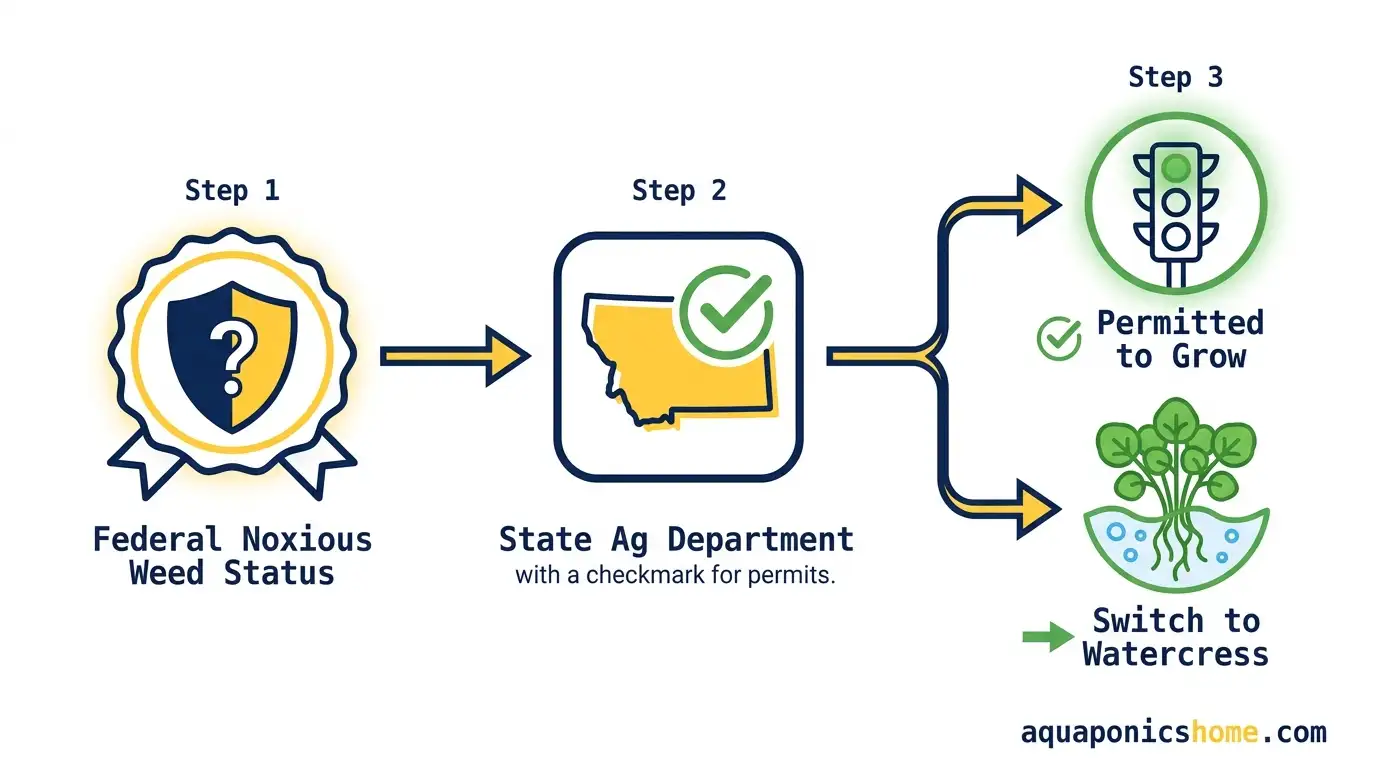
The National Invasive Species Information Center’s water spinach page, run by the USDA (read September 24, 2026), states that water spinach is listed as a Federal Noxious Weed under the Plant Protection Act, “which makes it illegal in the U.S. to import or transport between states without a permit.” The page also notes that Florida and Wisconsin carry their own noxious weed designations for it.
State rules vary and change. The Texas Invasive Species Institute notes, for example, that Texas Parks and Wildlife modified its regulations in 2005 to make production legal with an exotic species permit and possession for personal consumption legal. That is one state, at one point in time, and it is not a guide to anyone else’s rules.
What this means in practice:
- Before you order seed or cuttings, contact your state department of agriculture, or ask your county extension office who regulates aquatic plants where you live.
- If a seller would be shipping across a state line, ask them directly about permits before you pay.
- In Canada, check with the Canadian Food Inspection Agency and your provincial agriculture ministry.
This article does not tell you whether you may grow it. Only your own authority can.
Store-bought stems are still a plant
Water spinach is sold as a vegetable in many Asian grocery stores, and because it roots from its leaf nodes, fresh stems can root in a glass of water. It is tempting to treat that as a free starter.
Buying the vegetable to eat and rooting it to grow are different acts, and some states, Texas among them, regulate the second one separately. Ask before you root.
The Disposal Rule That Matters More Than Any Growing Tip
If you are permitted to grow it, one habit matters more than anything about light or spacing.
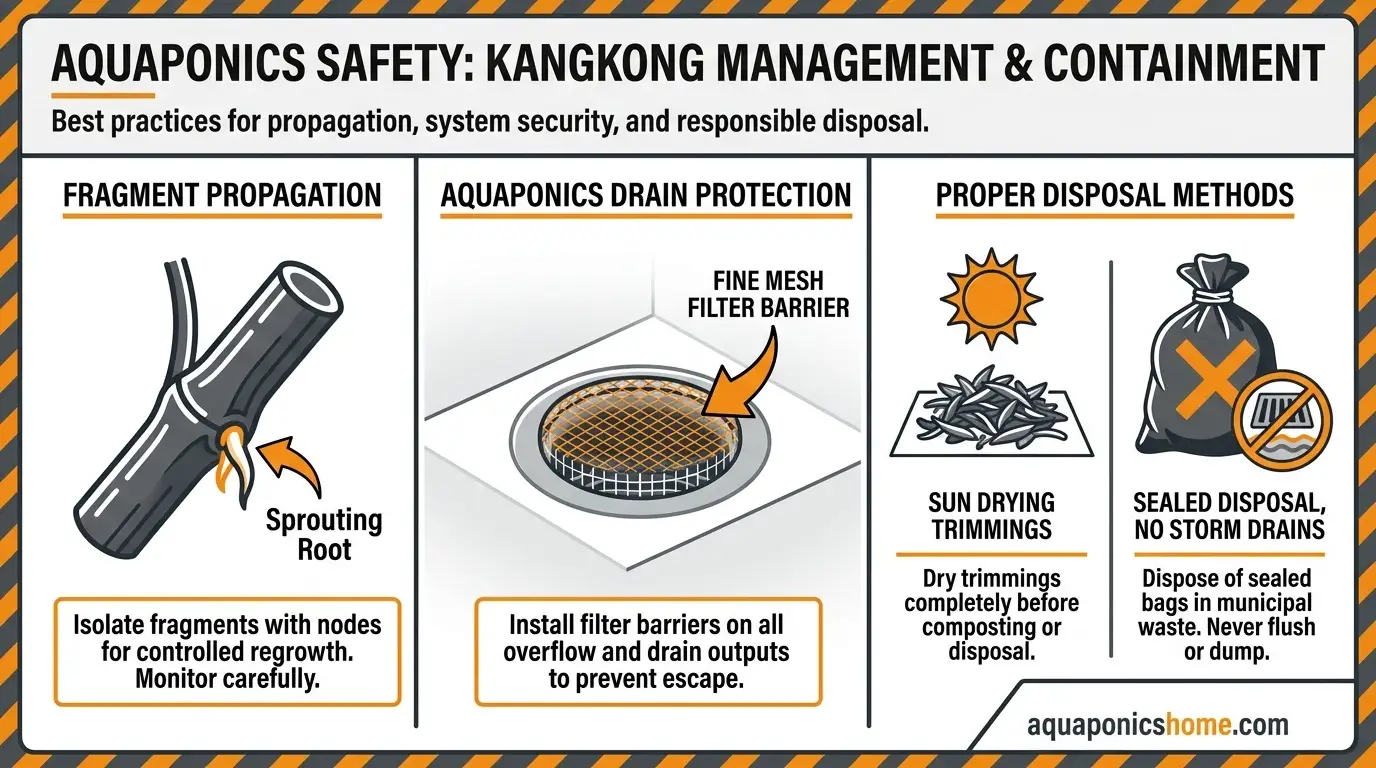
The Texas Invasive Species Institute states that the plant’s “reproduction is primarily by fragmentation” and that “both stem fragments and seeds are easily transported by water to become established in new areas.”
In a home system, that means:
- Never tip trimmings, roots or old plants into a storm drain, ditch, creek or pond.
- Never drain system water outdoors where a loose fragment could reach a waterway. Strain it first.
- Let trimmings dry out completely, or bag them for the trash, rather than composting them anywhere fragments could wash out.
An overflowing grow bed can carry fragments out of the system on its own, which is one more reason to fit the protections described in aquaponics leak and overflow protection before planting anything that spreads this readily.
Where It Goes in a Home System
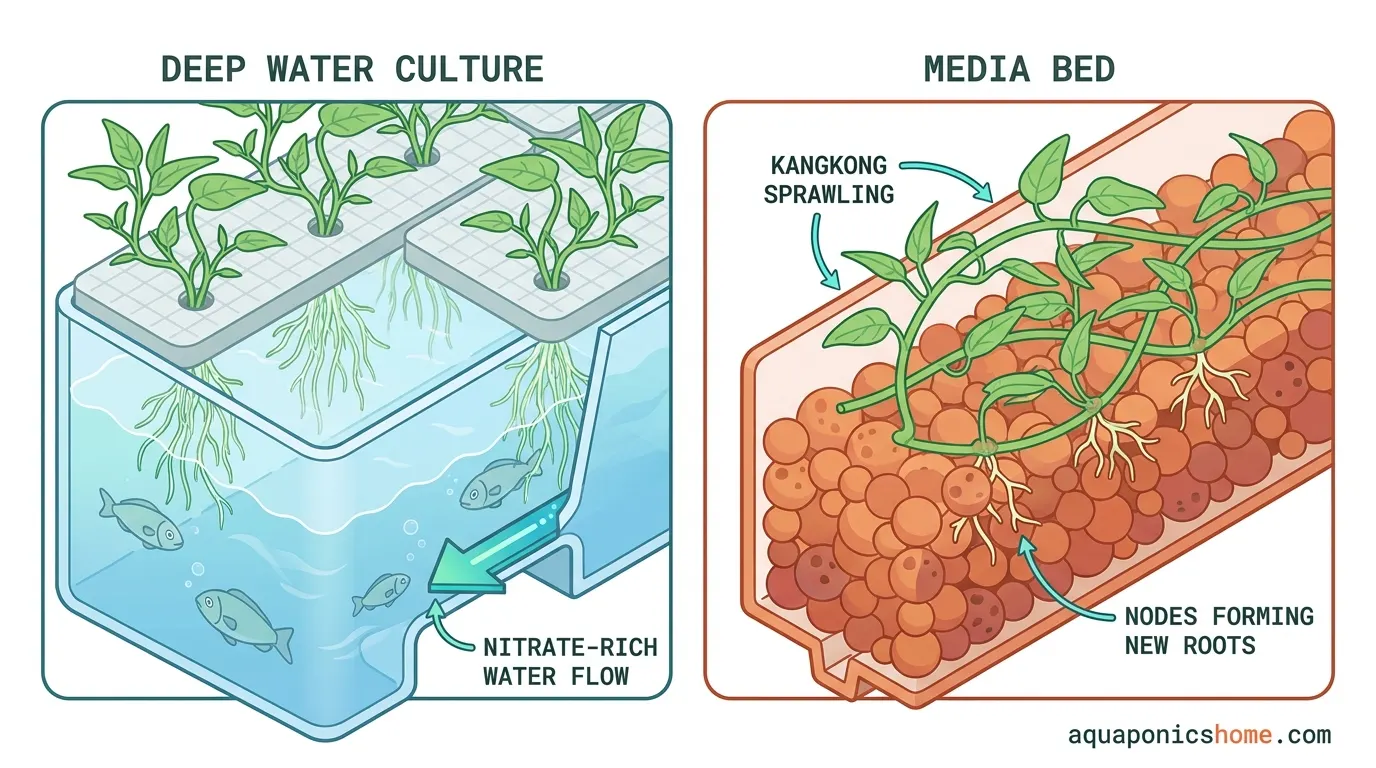
A floating vine with roots at every node fits two common bed types. On a raft, stems spread across the surface and roots hang into the water, which is the setup DWC aquaponics at home describes for lettuce.
In a media bed, the vine sprawls over the clay pebbles or gravel and roots down wherever nodes touch the wet media, the same bed design covered in why media bed aquaponics is the default.
Two cautions apply either way. First, a plant that roots from every node that touches water does not respect the edge of the bed, so check drains, siphon guards and return lines regularly. Second, a vine with that growth rate will shade out slower neighbors. Give it its own bed or section rather than tucking it between lettuce heads.
Harvesting the tender stem tips regularly does double duty: it gives you the part most people cook, and it keeps a vine that can grow inches a day from taking over the bed.
A Warm-Season Plant for Cool-Season Readers
For most of the US and Canada, the Texas Invasive Species Institute’s note that water spinach “requires warm, humid conditions” is the practical limit. Outdoors, it is a warm-weather crop. Indoors, it depends on how warm your room and your system water actually run through the year.
If your system sits in a cool garage or basement for half the year, that is not a problem to solve with kangkong. It is a signal to grow the cool-season wet-feet green instead. Temperature also shifts the fish and the bacteria, so it pays to know how warm your water really runs before choosing any crop.
Watercress: The Cool-Season Green That Also Wants Wet Feet
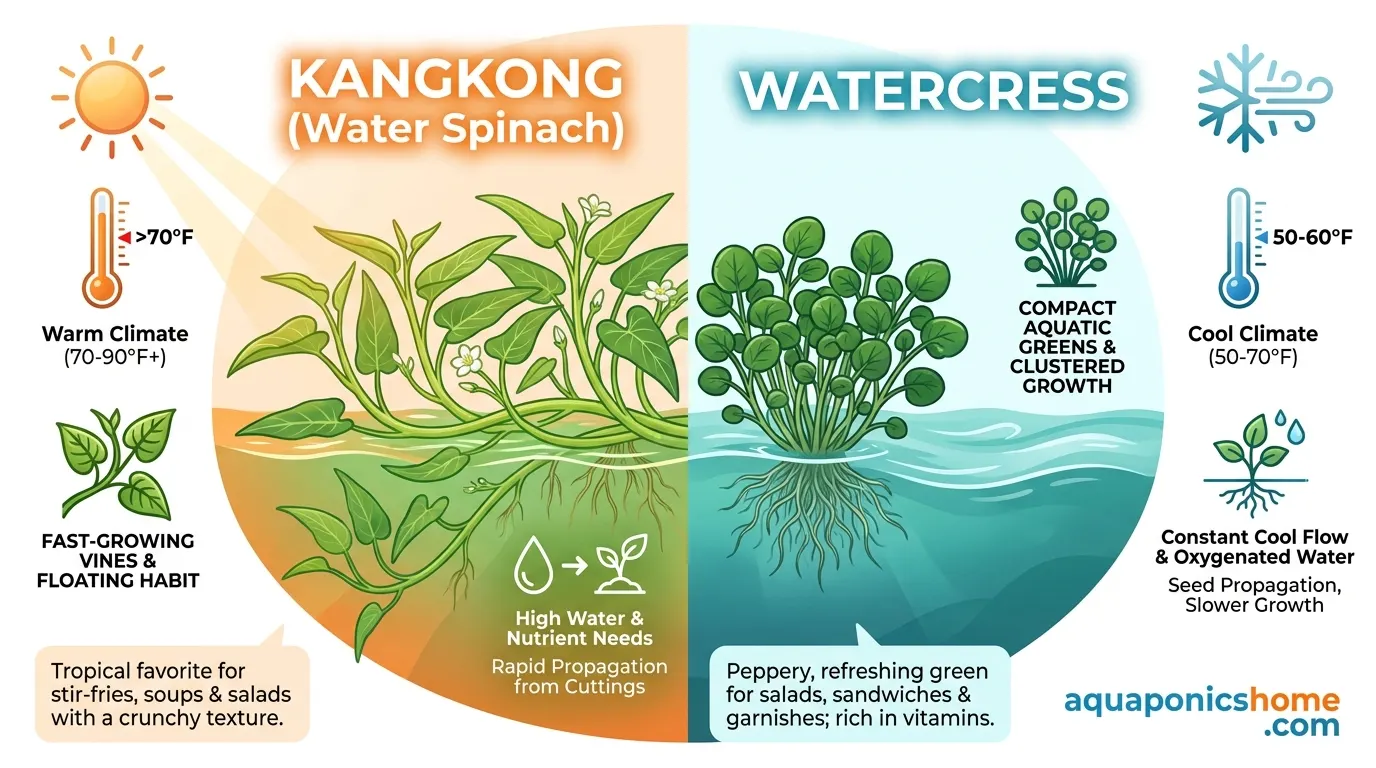
Utah State University Extension’s watercress guide (Trudy Kendrick and Dan Drost, April 2020, read September 24, 2026) describes watercress as “a sun and water loving perennial that grows naturally along running waterways” and says it “grows best in submerged or shallow moving water.” That is a close description of the water running through an aquaponics bed.
The same guide covers the details a home grower needs:
- Season: flavor is best during the cooler parts of the year, and the plant is hardy enough to harvest through the winter.
- Starting: seeds germinate under cool (50 to 60°F) wet conditions, and stem cuttings root quickly where the soil stays very wet.
- Harvest: leaves and young stems taste best if picked before the plant flowers; after bloom, the flavor weakens.
The guide also warns against gathering watercress from the wild, because pollutants have been reported to cause illness. Grow your own from a known source.
| Water spinach (kangkong) | Watercress | |
|---|---|---|
| Season | Warm, humid conditions (Texas Invasive Species Institute) | Cooler parts of the year; harvestable through winter (Utah State University Extension) |
| Growth habit | Floating vine, roots at leaf nodes, very fast | Perennial of running waterways, submerged or shallow moving water |
| Starting | Seeds or rooted stem fragments | Seeds in cool, wet conditions, or stem cuttings |
| Legal note | Federal Noxious Weed; permit rules for import and interstate movement | Check your state’s aquatic plant rules as with any new plant |
| Best fit | Warm indoor systems or summer outdoor systems, where permitted | Cool-season and winter systems |
Before You Eat Either One
Both plants are grown to be eaten, and both sit in water shared with fish. Before your first harvest, read whether food from a home aquaponics system is safe to eat, which covers the questions that apply to any leafy green grown over a fish tank.
FAQ
Is it legal to grow kangkong in the United States?
Water spinach is a Federal Noxious Weed, which the USDA’s National Invasive Species Information Center says makes it illegal to import or transport between states without a permit. States add their own rules. Ask your state department of agriculture before buying or rooting any.
Why is water spinach regulated if it is a vegetable?
Because it spreads easily in water. The Texas Invasive Species Institute says it reproduces mainly by fragmentation and that stem fragments and seeds are easily carried by water to new sites, where the floating vines can cover the surface and compete with native plants.
Can I root kangkong from the grocery store?
Fresh stems can root in water, but buying it to eat and growing it are treated differently in some states. Check with your state authority before rooting store-bought stems.
What can I grow instead of kangkong in a cool aquaponics system?
Watercress. Utah State University Extension describes it as a perennial that grows best in submerged or shallow moving water, tastes best in cool weather, and can be harvested through the winter.