
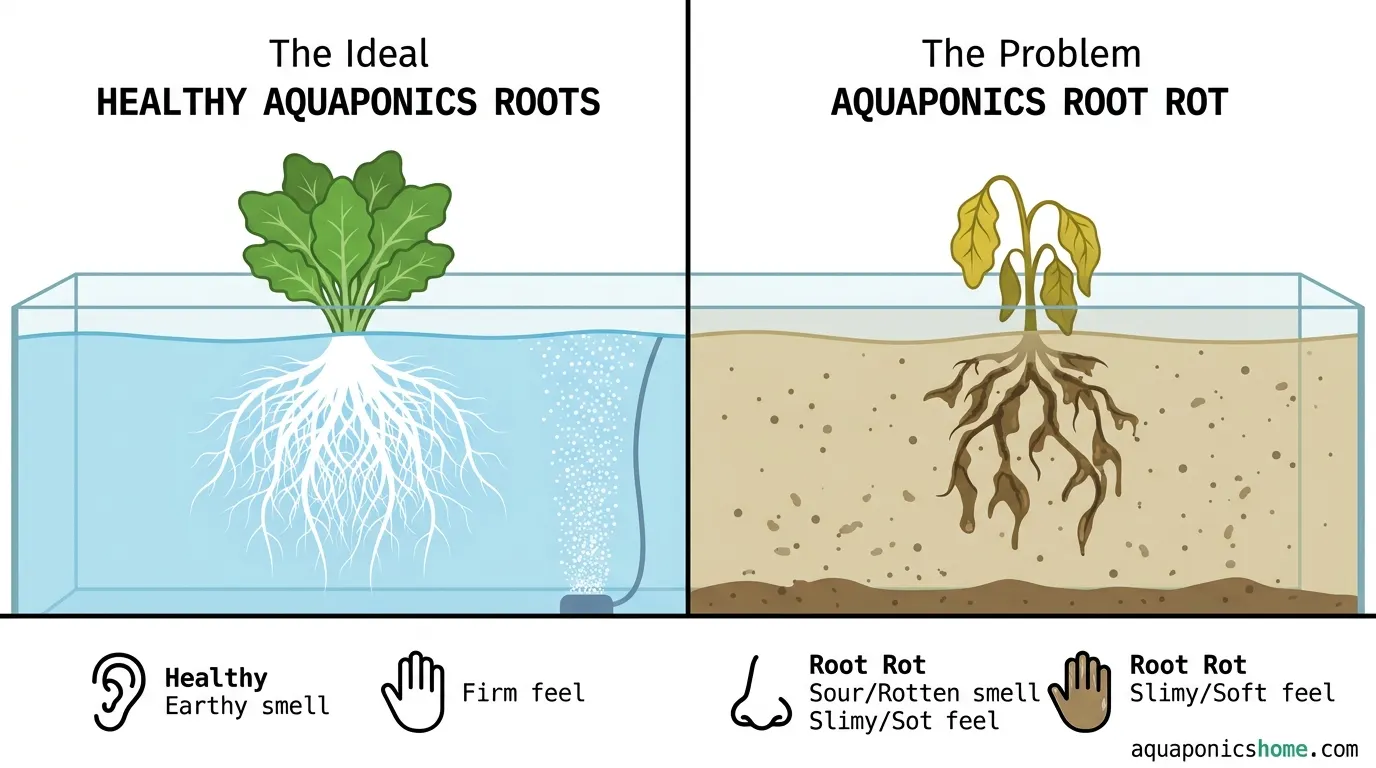
Aquaponics root rot is roots that turn brown, soft and slimy, often with a sour or rotten smell, while the plant above wilts, yellows or stops growing.
It starts with conditions in the root zone: too little dissolved oxygen, water that runs too warm, and fish solids coating the roots. Those conditions let water molds such as Pythium take hold.
The fix starts with oxygen, temperature and solids, not with a bottle, because anything you add to the grow bed also reaches your fish and the bacteria that feed your plants.
This guide walks through how to tell rot from harmless staining, the causes in the order worth checking, and the one mistake that turns a plant problem into a fish problem.
What Aquaponics Root Rot Looks Like
Healthy roots in an aquaponic system are pale: white to cream, firm, with fine root hairs. Rotting roots look and feel different.
Cornell University’s Neil Mattson, writing for the e-GRO greenhouse education program in a piece reprinted by HortiDaily as Pythium root rot on hydroponically grown basil and spinach (read 2026-09-27), describes the signs growers see:
- Discolored roots. Brown instead of white or cream.
- The “rat tail.” The outer part of the root decays, so when you slide a root between your fingers the soft outer layer comes away and a thin inner strand is left behind.
- Above-ground signs. Mattson notes that plants “may become severely stunted and leaves may be chlorotic (yellow).”
Add two things you notice at home: a slimy feel to the root mass, and a smell that is sour or rotten rather than earthy.
Not every brown root is rot
Roots growing in aquaponic water can pick up a light tan tint from the water itself, especially in older systems. That kind of stain tends to be even across the whole root mass, and the roots stay firm with no slime and no smell.
Rot is patchy, soft and slimy, and the rat-tail test gives it away. If the roots are tinted but firm, and the plant is growing well, you probably do not have a root problem.
A fine brown coating that rinses off is also not rot. It is fish solids stuck to the roots, which is its own problem and is covered below.
Why It Happens: The Conditions Come First
Water molds like Pythium are common in recirculating systems. They become a problem when the root zone gives them an advantage. Mattson’s e-GRO guidance lists the conditions that favor Pythium: “excessively high fertility, waterlogged substrates, low dissolved oxygen, and extreme temperatures.”
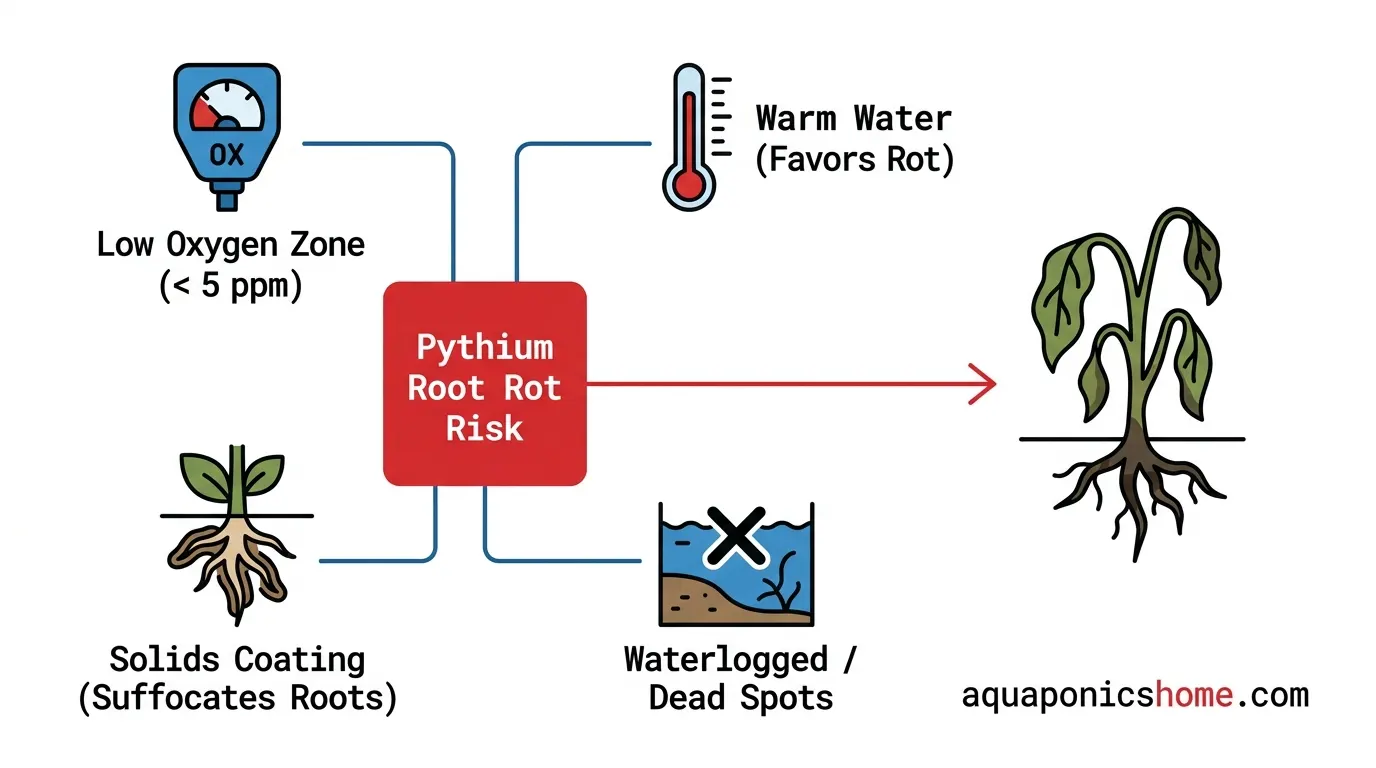
In a home aquaponics system, those map onto four things you can check.
1. Low dissolved oxygen around the roots
Roots need oxygen, just like the fish do. When oxygen in the water drops, roots weaken and rot organisms move in. The Cornell guidance recommends aeration strong enough to reach “greater than 6 ppm dissolved oxygen and ideally saturated dissolved oxygen (about 8-9 ppm O2)” in hydroponic systems.
For aquaponics as a whole, New Mexico State University’s Circular 680 by Rossana Sallenave (revised June 2026, read 2026-09-27) recommends keeping dissolved oxygen “at 5 ppm or higher,” because the fish need it too.
The roots and the fish are drawing on the same water, so low oxygen is rarely a plant-only problem. If you have never measured it, start with dissolved oxygen in aquaponics, the number nobody tests.
Common household causes: an air pump that has weakened or stopped, an air stone clogged with growth, a slowed water pump, or deep water rafts with no aeration under them.
2. Water that runs too warm
Warm water holds less oxygen, and warmth favors some of the worst root rot species. The Cornell guidance suggests a root zone target of 68 to 75 °F (20 to 24 °C) for hydroponic crops, and reports that chilling hydroponic ponds to about 68 °F was effective in reducing Pythium aphanidermatum, though not in eliminating it.
Here aquaponics has a conflict. NMSU Circular 680 notes that warmwater fish prefer 65 to 85 °F and that vegetables grow best at 70 to 75 °F. In a hot climate, the water can sit well above what the plants’ roots like while the fish are perfectly comfortable.
That is one reason root problems tend to show up in the hottest weeks of the year. Our guide to aquaponics water temperature covers shading, placement and what you can realistically control.
3. Fish solids coating the roots
This is the cause most hydroponic articles never mention, because hydroponic systems have no fish. NMSU Circular 680 explains that if solids are not removed, “they will adhere to plant roots, decreasing DO levels as they decay.”
So a system that feeds heavily without a way to settle or filter solids is building a low-oxygen film right on the root surface. The roots suffocate from the outside in, even when the water test looks fine.
If you notice sludge building in the grow bed or a smell from the system, see why your aquaponics system smells bad, because the same decaying solids are often behind both.
4. Waterlogged or stagnant root zones
Mattson lists waterlogged substrates among the risk factors. In a media bed, that means dead spots where water sits and never refreshes: a siphon that no longer drains fully, a timer that has drifted, or a corner of the bed packed with fine debris.
In a raft or deep water bed, it means slow or no flow through the channel. Moving, oxygenated water is the goal in both.
What to Do Once You Find It
The order matters. Fix the conditions first, then deal with the damaged plants.
- Check the air and water flow today. Confirm the air pump runs, bubbles come out of every stone, and the water pump is delivering its normal flow. This is the fastest improvement you can make.
- Test the water. At minimum, check temperature and, if you can, dissolved oxygen. Record the numbers so you can compare after changes.
- Look for solids. Check the bottom of the fish tank, the grow bed and any settling container. If sludge is building up, clean out the excess in stages rather than all at once, so you do not disturb the whole system in one day.
- Pull the worst plants. A plant whose root mass is mostly rotted is unlikely to recover and can keep releasing spores into shared water. Remove it with its roots, bag it and put it out with household waste, not into compost you use on edible plants.
- Trim, do not scrub. On plants with partial damage, trim off the soft, brown roots with clean scissors and leave the firm white ones. Clean the scissors between plants.
- Watch new growth. New white roots over the following days are the sign conditions are better. If new roots also turn brown, the cause is still there.
The Cornell guidance also recommends that growers “periodically sanitize surfaces that come into contact with plants” in hydroponic systems. In aquaponics that step needs care, and it leads to the most important point in this guide.
The Mistake to Avoid: Hydroponic Cures in a Fish System
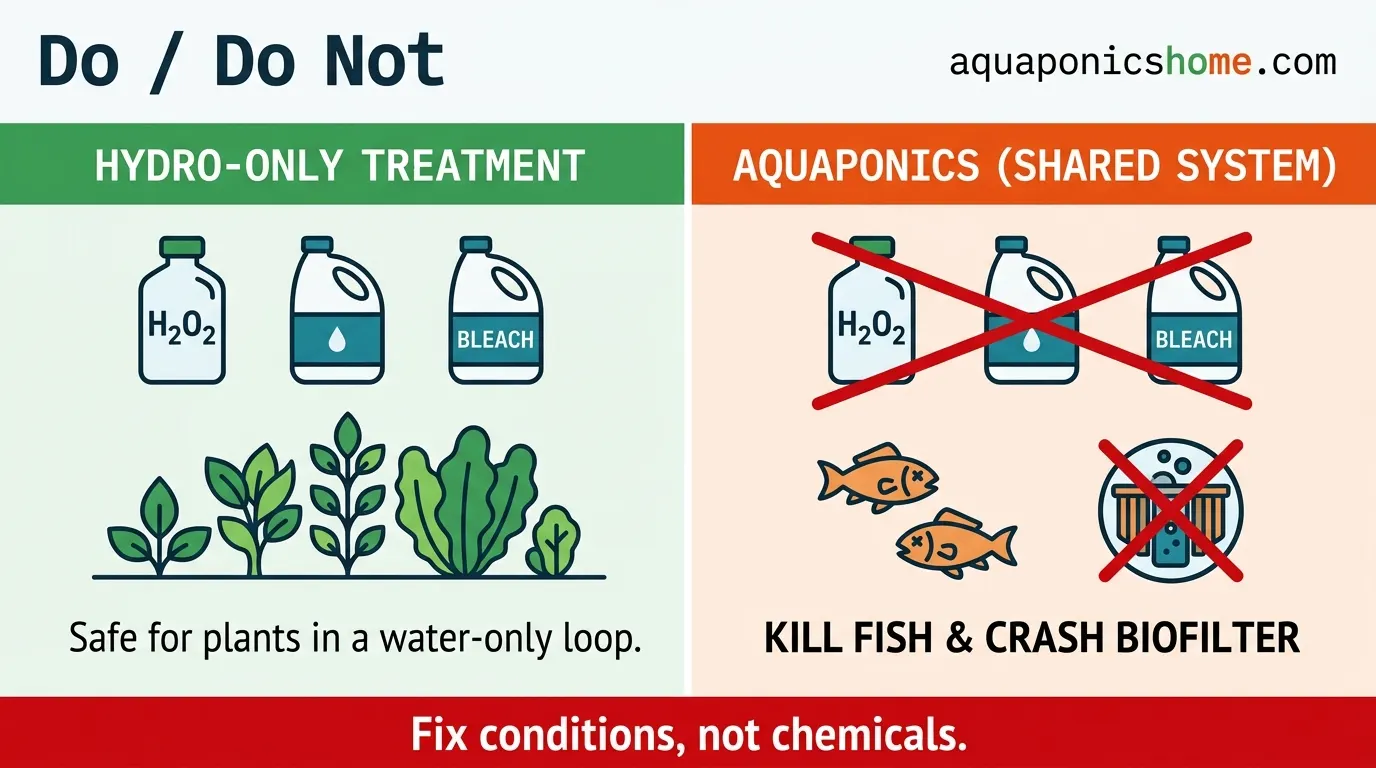
Search for root rot fixes and you will find hydrogen peroxide doses, bleach dips, chlorine treatments and fungicides. Almost all of that advice is written for hydroponic systems, where the water holds plants and nutrients and nothing else.
An aquaponic system is one body of water. Whatever you add to the grow bed flows back to the fish tank and through the bacteria colony that turns fish waste into plant food.
Oxidizers and disinfectants are designed to kill living cells. Your fish and your bacteria are living cells. A treatment that is routine in a hydroponic reservoir can harm fish or crash the biofilter in a shared system, and a crashed biofilter means ammonia builds up for the fish while the plants lose their nitrate supply.
So:
- Do not dose the system with a hydroponic root rot product unless its maker states it is intended for systems containing fish, and follow its label exactly.
- Do not add fish medications or salt to fix a plant problem. They are not plant treatments, and anything the plants absorb ends up in food you eat.
- If you want to sanitize equipment, do it outside the system: rafts, net pots or tools removed, cleaned, and rinsed thoroughly before they go back. Ask your local extension service which products suit a system that grows food alongside fish.
Also resist the urge to sterilize the whole system in a panic. The bacteria and other microbes living in your water are what make the system work. Wiping them out creates a second emergency on top of the first, and the root zone conditions that caused the rot will still be there afterward.
If the Fish Are Struggling Too
Root rot and fish trouble often share a cause: low oxygen, warm water or decaying solids. If fish are gasping at the surface, refusing food or behaving oddly while you are dealing with rotting roots, treat it as a water emergency first.
Restore aeration, test ammonia and nitrite, and reduce feeding until you know what is wrong. Fish illness itself is outside what a home guide can diagnose: contact an aquatic veterinarian or your local extension aquaculture service.
Is the Rest of the Crop Safe to Eat?
Plants with healthy roots elsewhere in the system are a separate question from the rotted ones, which should be discarded. Root rot organisms are plant pathogens, but any system with fish waste and decaying matter needs basic food handling care before you eat what it grows.
Read whether food from a home aquaponics system is safe to eat before harvesting from a system that has had a problem.
Preventing It Next Time
Prevention is mostly the same list as the fix, done routinely:
- Keep aeration strong and constant, and clean air stones when output drops.
- Manage heat: shade the fish tank and grow bed in hot weather where you can.
- Remove solids before they build into sludge around the roots.
- Keep water moving through every part of the grow bed.
- Inspect roots of new seedlings before they go in, and do not plant any with brown, soft roots.
- Do not overcrowd plants, which makes it easier for a problem to spread root to root.
FAQ
What does root rot look like in aquaponics?
Brown, soft, slimy roots, often with a bad smell, while the plant wilts, yellows or stops growing. A quick test: slide a root between your fingers. If the outer layer strips away and leaves a thin strand, that “rat tail” is a classic sign of Pythium root rot.
What causes aquaponics root rot?
A combination of low dissolved oxygen, warm water, fish solids stuck to the roots and stagnant spots in the grow bed. Those conditions let water molds such as Pythium take over roots that would otherwise resist them.
Can I use hydrogen peroxide for root rot in aquaponics?
Most hydrogen peroxide advice is written for hydroponic systems without fish. In aquaponics the same water reaches your fish and nitrifying bacteria, so do not add it or any other disinfectant to the system unless the product is made for systems with fish and you follow its label. Fix oxygen, temperature and solids first.
Should I remove plants with root rot?
Plants whose roots are mostly brown and soft rarely recover and can spread the problem through shared water, so removing them is the safer choice. Plants with some healthy white roots can often recover once the conditions are fixed.
Are brown roots always root rot?
No. An even tan tint on firm roots is often just staining from the water, and a brown film that rinses off is fish solids. Rot is soft, slimy, patchy and often smelly.