
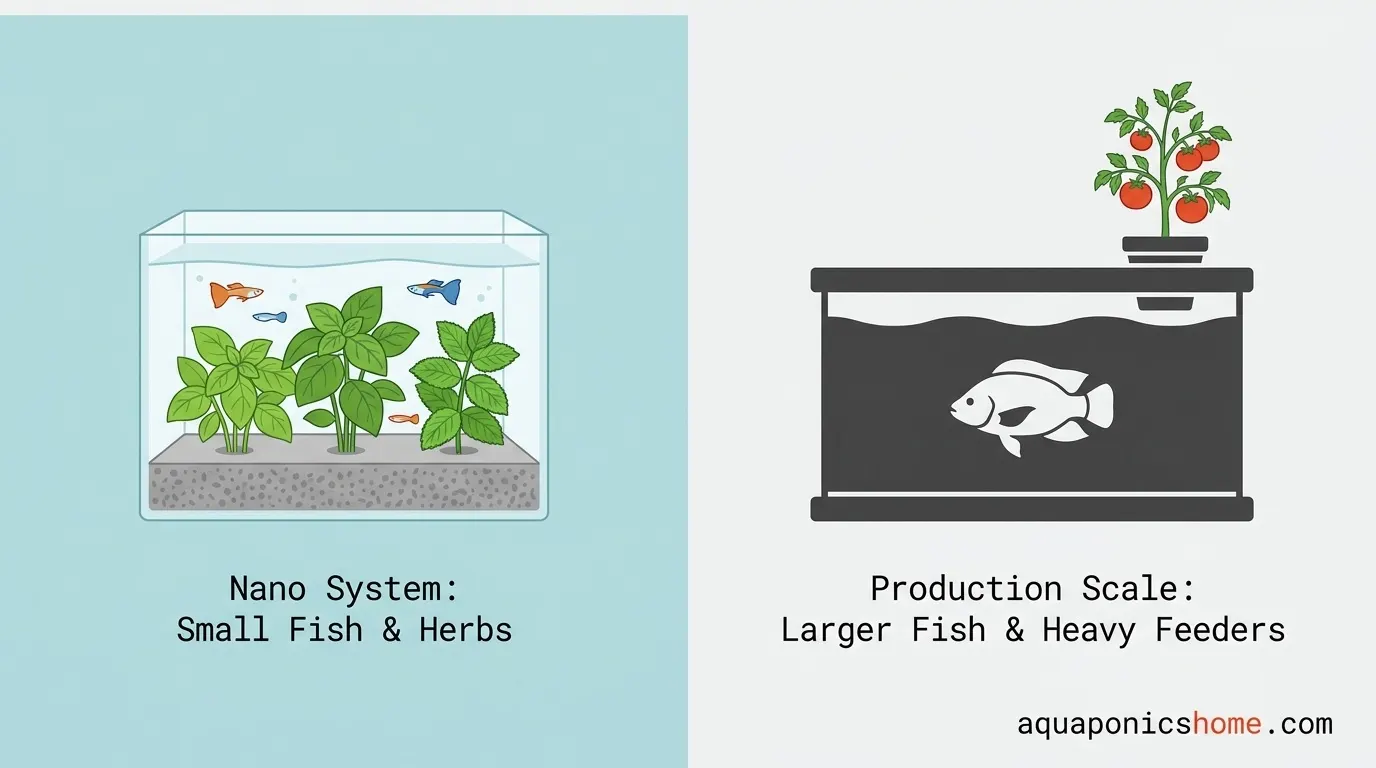
Small fish for aquaponics, mainly guppies and white cloud mountain minnows, are a real option for a nano system, and they are hardy enough that a beginner will not kill them by accident the way a tropical species might punish a mistake.
The limit is on the plant side, not the fish side: a handful of half-inch fish produces a fraction of the waste that a single pound of tilapia or goldfish produces, so a system built around them will grow herbs and leafy greens well and will not grow anything that needs a heavy, steady feed of nutrients.
Choose small fish for the tank you actually have, not for a yield you have seen promised by a bigger system.
The small fish for aquaponics people actually stock
Every list of aquaponics fish repeats the same handful of names, because the same handful of names actually survives the conditions a small tank creates: temperature swings, imperfect filtration and an owner who is still learning to read the water.
| Fish | Adult size | Typical lifespan | Water needs | Best for |
|---|---|---|---|---|
| Guppy | Roughly 1.5 to 6 cm (0.6 to 2.4 in) | About 2 to 3 years | Warmer end of room temperature; a heater helps in a cold room | Nano tanks, beginners, watching breeding behavior |
| White cloud mountain minnow | Roughly 3 to 4 cm (1.2 to 1.6 in) | About 3 to 5 years | Cool tolerant; often runs without a heater indoors | Unheated indoor systems, cooler rooms |
| Zebra danio | Roughly 4 to 5 cm (1.6 to 2 in) | About 3 to 5 years | Wide tolerance, active swimmer, needs a lid | Slightly larger nano tanks with more swimming room |
| Goldfish | Grows well past nano size; not a true nano fish long-term | Many years with room to grow | Cool tolerant, but outgrows a small tank | A step-up choice once you accept it needs more space |
None of these fish are raised for the table. They are ornamental stock, and that distinction matters more than the species list does, which is the part most aquaponics blogs skip.
Why size is the real question, not species
The species list above answers “which fish will survive.” It does not answer “what will this system grow,” and that second question comes down to how much waste the fish produce, not how attractive they are.
Fish waste, mainly ammonia from gills and uneaten feed, is what nitrifying bacteria convert into the nitrate a plant’s roots actually use. More fish biomass means more ammonia means more nitrate.
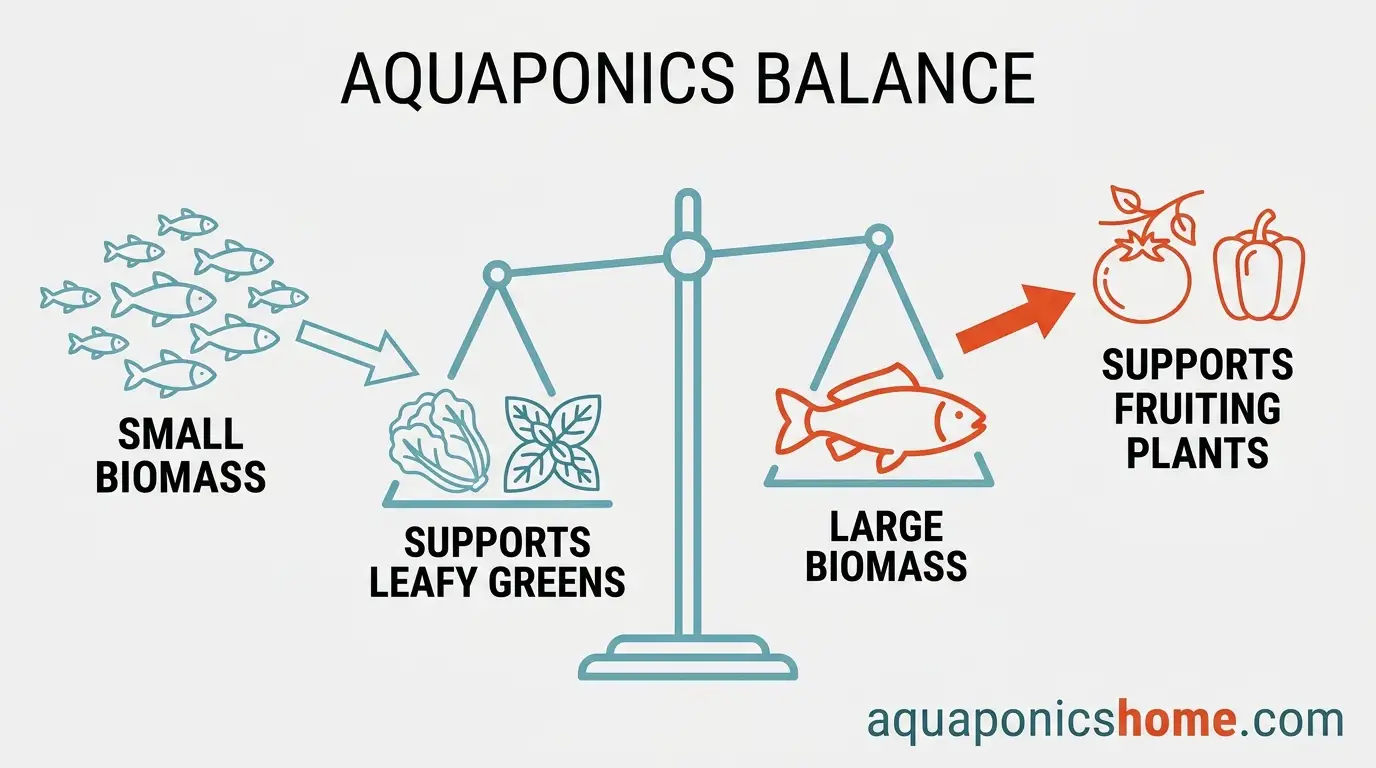
A guppy weighs a few grams. A market-size tilapia or a mature goldfish weighs far more, body for body, than a whole tank of guppies combined.
Stock a tank with two dozen guppies instead of a few pounds of tilapia and the total waste output, and therefore the total plant food, is nowhere close, even though the guppies fill the tank visually and the fish count looks similar on paper.
Oklahoma State University Extension’s fact sheet on small-scale aquaponics (read September 18, 2026) frames tilapia as the species most commonly cultured in aquaponic systems specifically because it grows fast, tolerates crowding, and produces the steady bioload a production-style system is built around. Ornamental fish were never bred or selected for that job.
Texas A&M AgriLife Extension’s fish species selection guide, EHT-148 (read September 18, 2026), frames aquaponics as a two-crop system, fish and plants, and notes that in small, hobby-scale setups the fish are often treated as fuel for the plants rather than as a crop in their own right. Small fish for aquaponics fit that framing exactly: they are the engine, sized to match a small tank, not a small ambition.
The nitrogen math behind all of this, from ammonia through nitrite to the nitrate a plant can use, is explained step by step in the aquaponics nitrogen cycle, walked through with one tank, which is worth reading before you decide how many fish to add.
Guppies in a small aquaponics system
Guppies are livebearers, meaning they give birth to free-swimming fry instead of laying eggs, and they breed readily in a warm, stable tank without any intervention from the keeper. That is a feature for a beginner who wants to watch a self-sustaining population, and a nuisance for anyone who wants a fixed fish count, because guppies also eat their own fry given the chance.
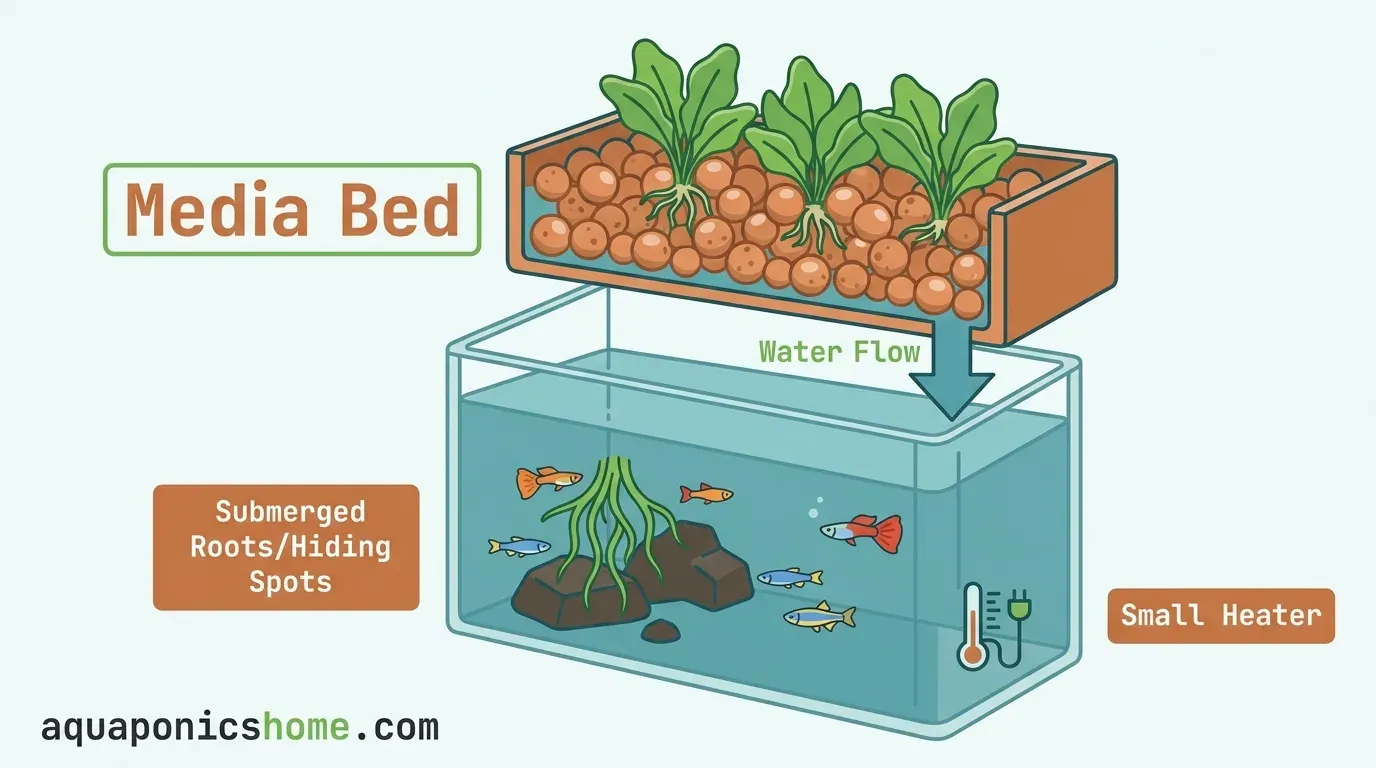
Dense plant growth or floating roots in the grow bed give the fry somewhere to hide, which is one more reason a guppy tank benefits from visible root mass rather than bare water.
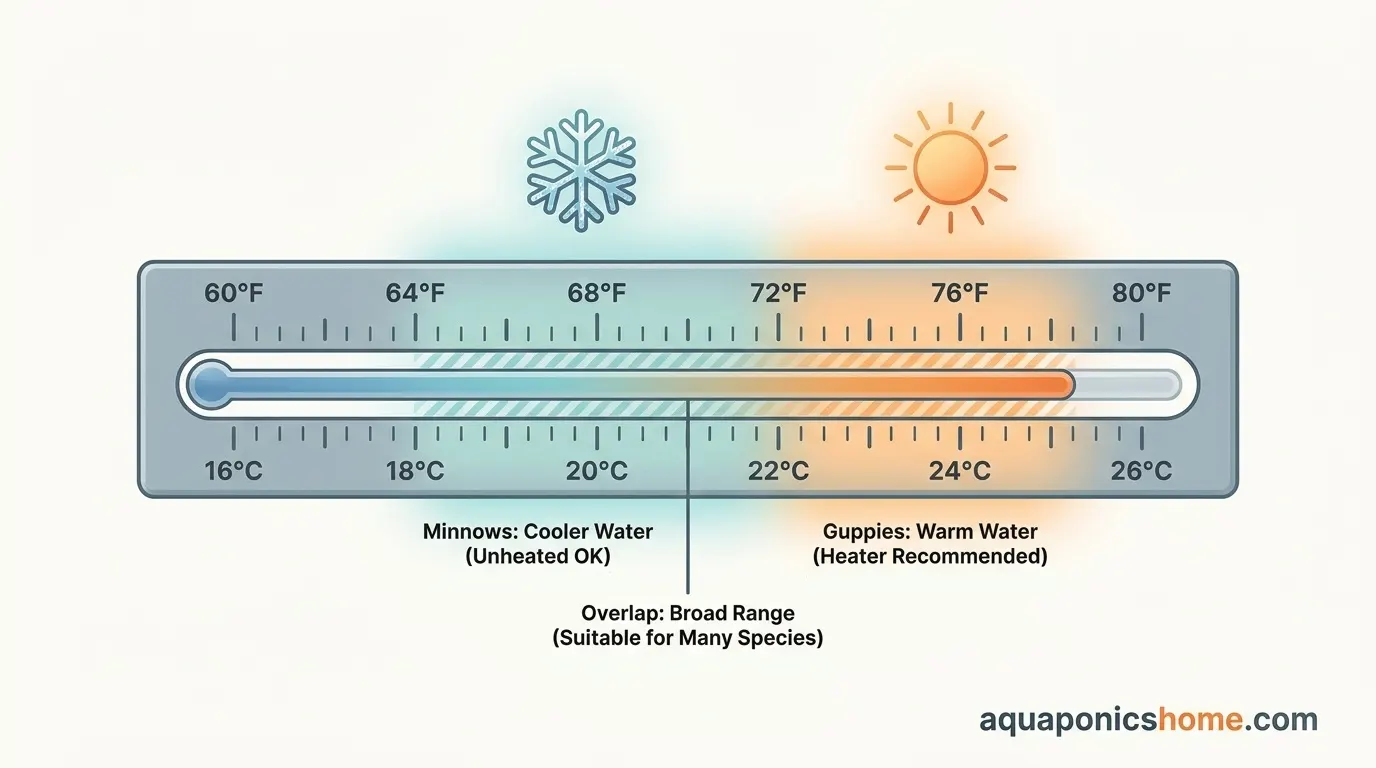
Guppies do best in the warmer end of typical room temperature, so a system kept in a consistently cool room, an unheated porch or a drafty room in winter, will stress them faster than it stresses a hardier coldwater species. They are not a fish you should mix with anything large enough to see them as food.
White cloud mountain minnows: the coldwater option
White cloud mountain minnows solve the temperature problem guppies create. They tolerate the cool end of aquarium conditions well enough that many small indoor systems run them without a heater at all, which lowers both the cost and the number of things that can fail in the system.
They shoal, meaning they are calmer and less stressed kept in a small group rather than alone, and they are peaceful enough to share a tank with guppies or other small, non-aggressive species.
The trade-off is the same one guppies carry: a small, cool-tolerant fish is still a small fish, and its waste output does not change because it happens to be hardier.
Choosing a white cloud minnow over a guppy solves a temperature and equipment problem. It does not solve the nutrient-ceiling problem this whole article is about.
What a handful of small fish can grow, and what it cannot
Herbs, lettuce and other leafy greens are the realistic ceiling for a nano system stocked with guppies or minnows. These plants need a comparatively light, steady nutrient supply, and a small population of small fish can usually keep pace with that.
Fruiting plants, tomatoes and peppers being the usual examples people ask about, need a heavier and more sustained nutrient load than a nano fish population produces.
Stock a tank of guppies expecting tomatoes and the plants will grow slowly, stall, or show the yellowing and stunted growth that comes from an underfed root zone, not from anything wrong with the water chemistry. This is not a design flaw in your system, it is the same waste-to-plant-food relationship extension programs use tilapia to solve at production scale, showing up at the other end of the size range.
Tank volume compounds the same limit. A genuinely small tank swings faster on temperature, pH and ammonia than a larger one does, for the simple reason that less water means less buffer against every change.
Small aquaponics tank size and its honest limits walks through what the published guidance actually says about volume, and it pairs directly with the stocking limits here: a small tank of small fish is doubly capped, once by water volume and once by fish biomass.
Setting up a nano system around small fish
A nano system built around guppies or minnows still needs the same basic components as any aquaponics setup, just sized down. The aquaponics equipment list for beginners covers the pump, air stone, grow media and testing kit a tank this size still requires; nothing on that list becomes optional just because the fish are small.
The grow bed style matters more than usual at nano scale. A media bed, gravel or expanded clay holding both the plant roots and the bacteria that process fish waste, is forgiving of the uneven, low flow rates a small system tends to run, and it is the reason media bed aquaponics is the default setup most beginners land on.
A raft or deep-water culture system depends more heavily on consistent aeration and a larger water volume to stay stable, which works against the small-tank realities already covered above.
Legal and ecological notes before you stock
Guppies and white cloud mountain minnows are common, unregulated aquarium-trade fish in most countries, sold at ordinary pet shops without a license or permit.
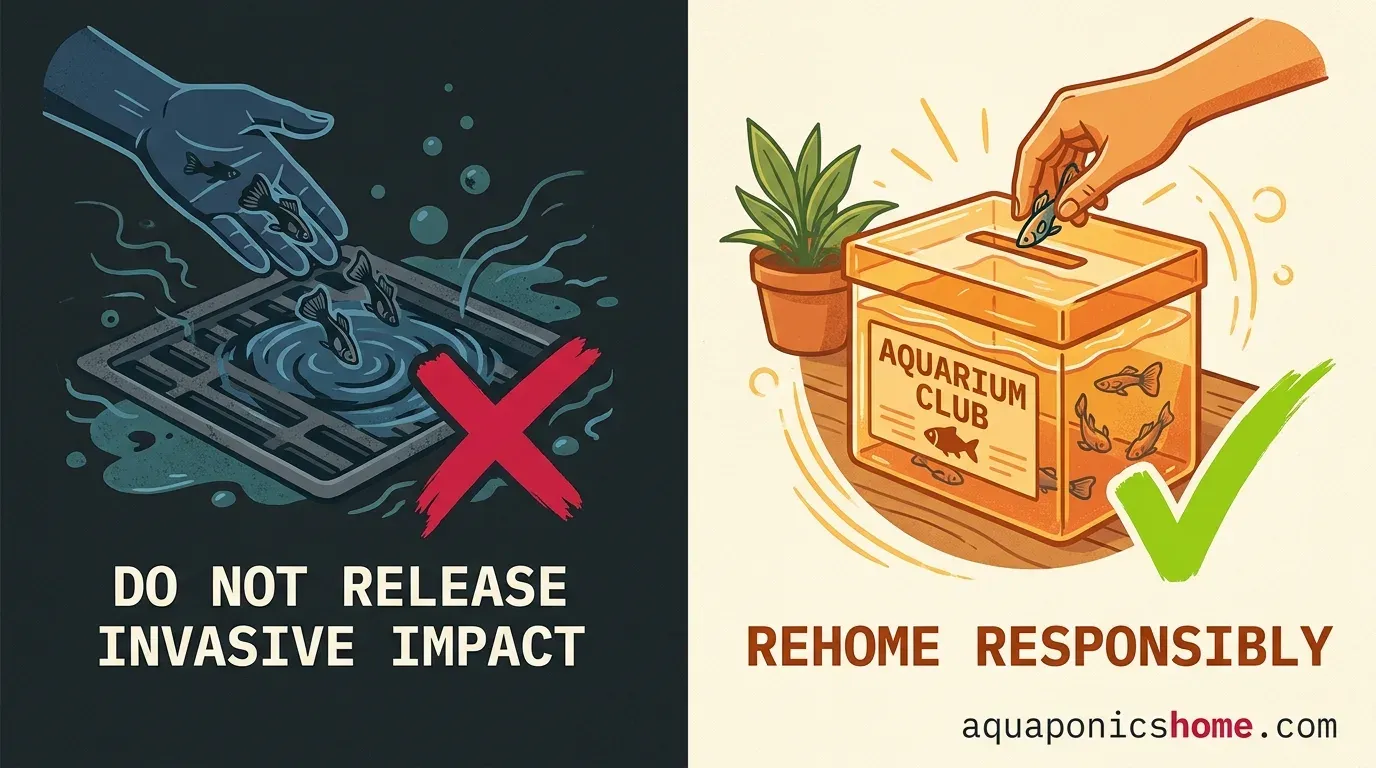
The rule that does matter is about release, not possession: never release aquarium fish, guppies included, into a local pond, stream or storm drain. Escaped and released guppy populations have established themselves as invasive species in warm-climate waterways in multiple parts of the world, competing with native fish.
If a system is being shut down or a population outgrows the tank, rehoming to another keeper or a local aquarium club is the responsible route, not the drain or the nearest canal.
When to size up beyond ornamental fish
Small fish for aquaponics are a legitimate, permanent choice for anyone whose goal is herbs, a working demonstration of the nitrogen cycle, or a low-maintenance system in a small space.
They stop being the right choice the moment the goal shifts to growing food that needs a heavier feed, or to raising fish that end up on a plate, because neither guppies nor white cloud minnows are raised for that purpose.
At that point the honest move is not to add more guppies, since a large group of guppies still does not add up to the bioload of a much smaller number of tilapia or goldfish; it is to plan a system built around a production species from the start.
FAQ
Can guppies live in an aquaponics system long-term?
Yes. Guppies are hardy livebearers that tolerate typical aquaponics conditions well, and they will breed on their own in a stable, warm tank without any intervention.
Do small fish produce enough waste to grow vegetables?
For herbs and leafy greens, generally yes, in a well-run nano system. For fruiting vegetables like tomatoes or peppers, a small population of guppies or minnows typically cannot sustain the heavier nutrient load those plants need.
What is the best small fish for a nano aquaponics tank?
Guppies suit a warmer room and an owner who does not mind them breeding. White cloud mountain minnows suit a cooler room or a system run without a heater. Both are common, hardy choices for a tank too small for tilapia or goldfish.
Can I eat fish raised in a small aquaponics system?
Guppies and white cloud mountain minnows are ornamental fish, not food fish, and are not raised or sold for consumption. A system meant to produce edible fish needs a production species like tilapia, sized to a much larger tank than a nano setup.
Do guppies or white cloud minnows need a heater in aquaponics?
Guppies generally do better with steady, warmer temperatures, so a heater helps in a cool room. White cloud mountain minnows tolerate cooler water well enough that many indoor systems run them without a heater at all.