
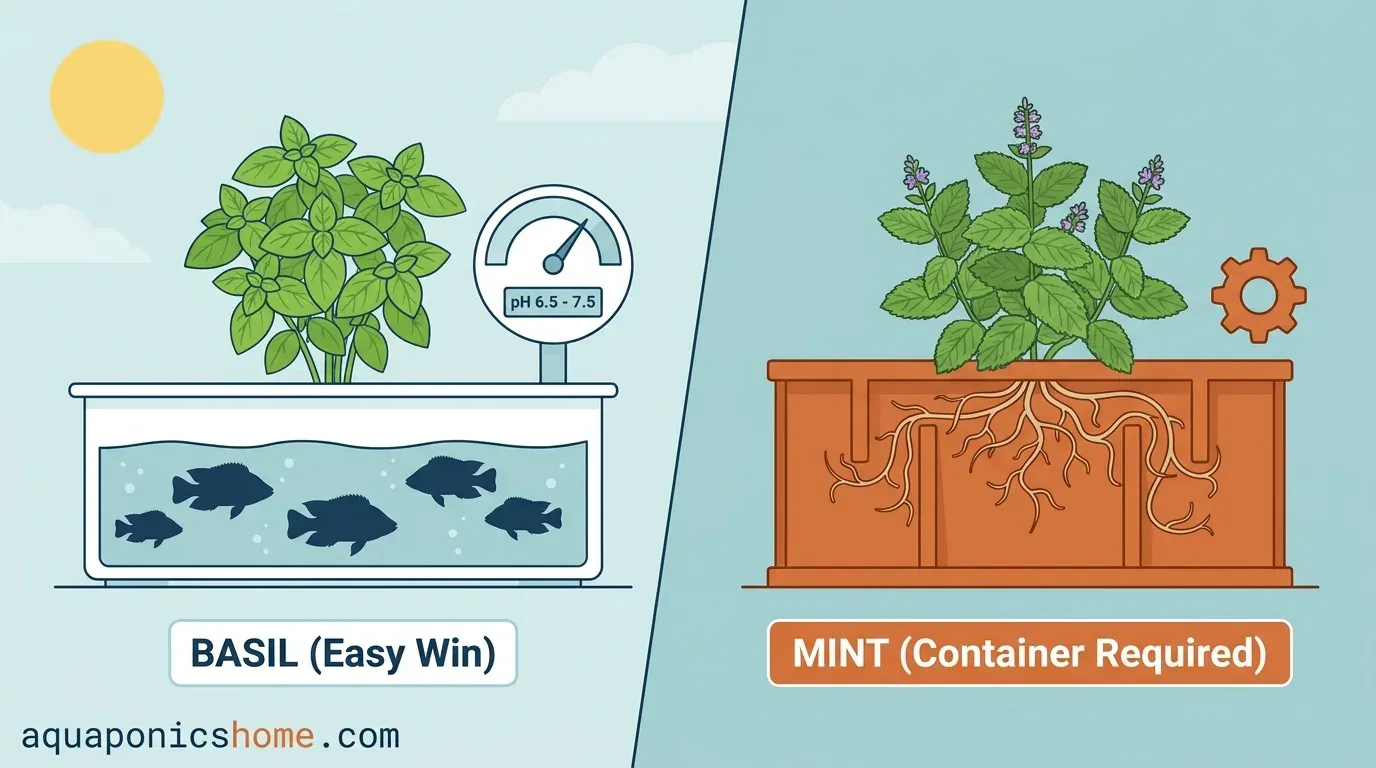
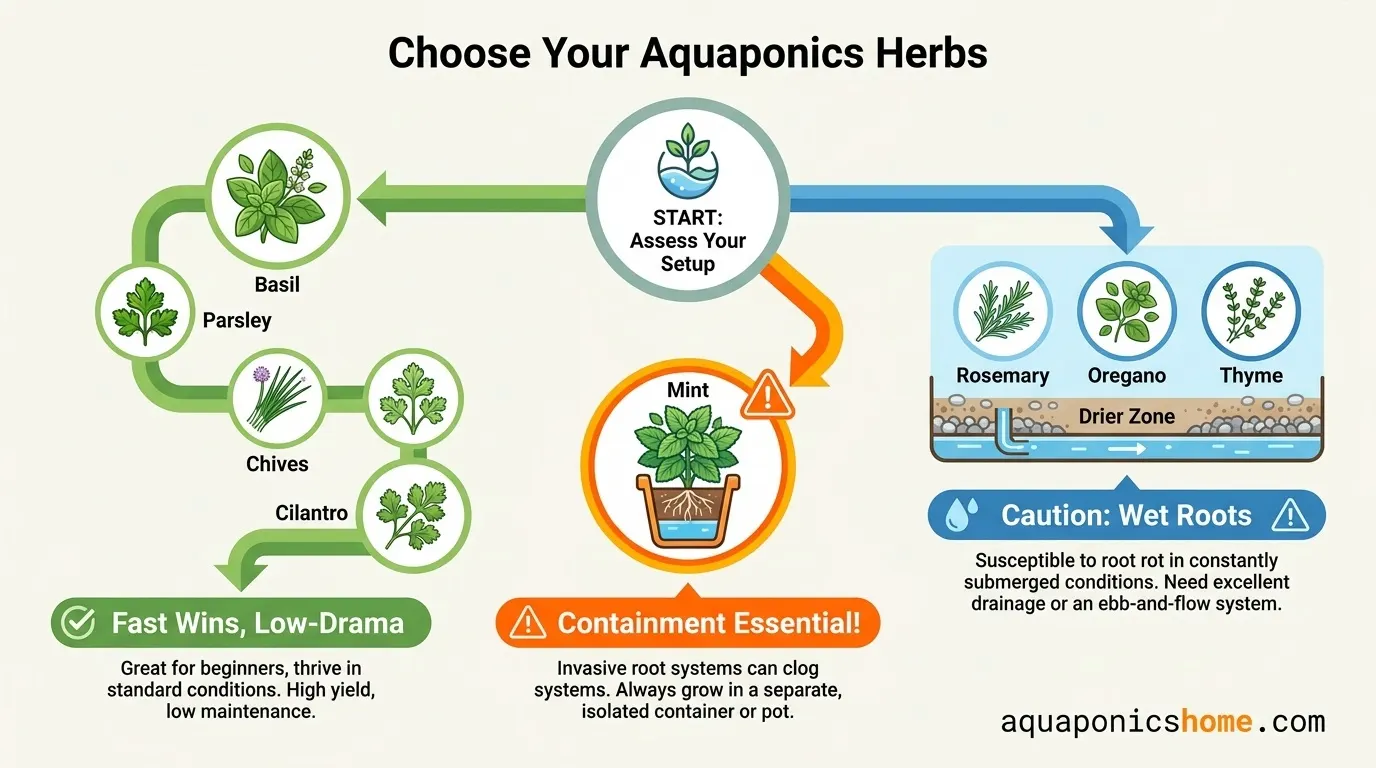
Most aquaponics herbs fall into two groups: easy growers that reward you almost immediately (basil, parsley, chives), and vigorous spreaders (mint above all) that will grow just as well but need their roots physically boxed in or they crowd out everything sharing the bed.
Herbs that dislike constantly wet roots, such as rosemary and oregano, are the ones that struggle in a standard flood-and-drain media bed. Pick the right herb for the system you actually have, and most of the common “why did my herbs die” questions never come up.
Which herbs actually do well in an aquaponics system
Leafy, fast-growing herbs are the safest starting point for anyone still learning how their system behaves. Basil, parsley, chives and cilantro all tolerate the nutrient load and pH swing of a young aquaponics system better than woody, Mediterranean herbs do.
According to Oklahoma State University Extension (read 2026-09-18), aquaponics systems generally run best in a pH range of roughly 6.5 to 7.5, and a warm-water fish like tilapia pairs naturally with a warm-season crop like basil, since both want similar water temperatures.
That overlap is exactly why basil shows up in almost every aquaponics starter list: the fish and the plant are asking the system for the same conditions, so you are not fighting yourself to keep both happy.
If your setup is a standard media bed, which is the default for most home builds covered in media bed aquaponics, herbs root into the gravel or expanded clay exactly the way they would in a well-drained garden bed, just with a constant supply of dissolved nutrient instead of an occasional feed.
Basil: the easy win, with a few real conditions
Basil is forgiving of a young system’s uneven ammonia and nitrate levels, but it is not indestructible. It wants warmth, strong light and steady water flow past its roots.
Cold snaps slow it down fast, and a basil plant that sits in cold, sluggish water for days will yellow and drop leaves before anything else in the bed shows stress.
Regular trimming, taking leaves from the top rather than stripping a whole stem, keeps the plant bushy and delays it going to flower, after which the leaves turn bitter.
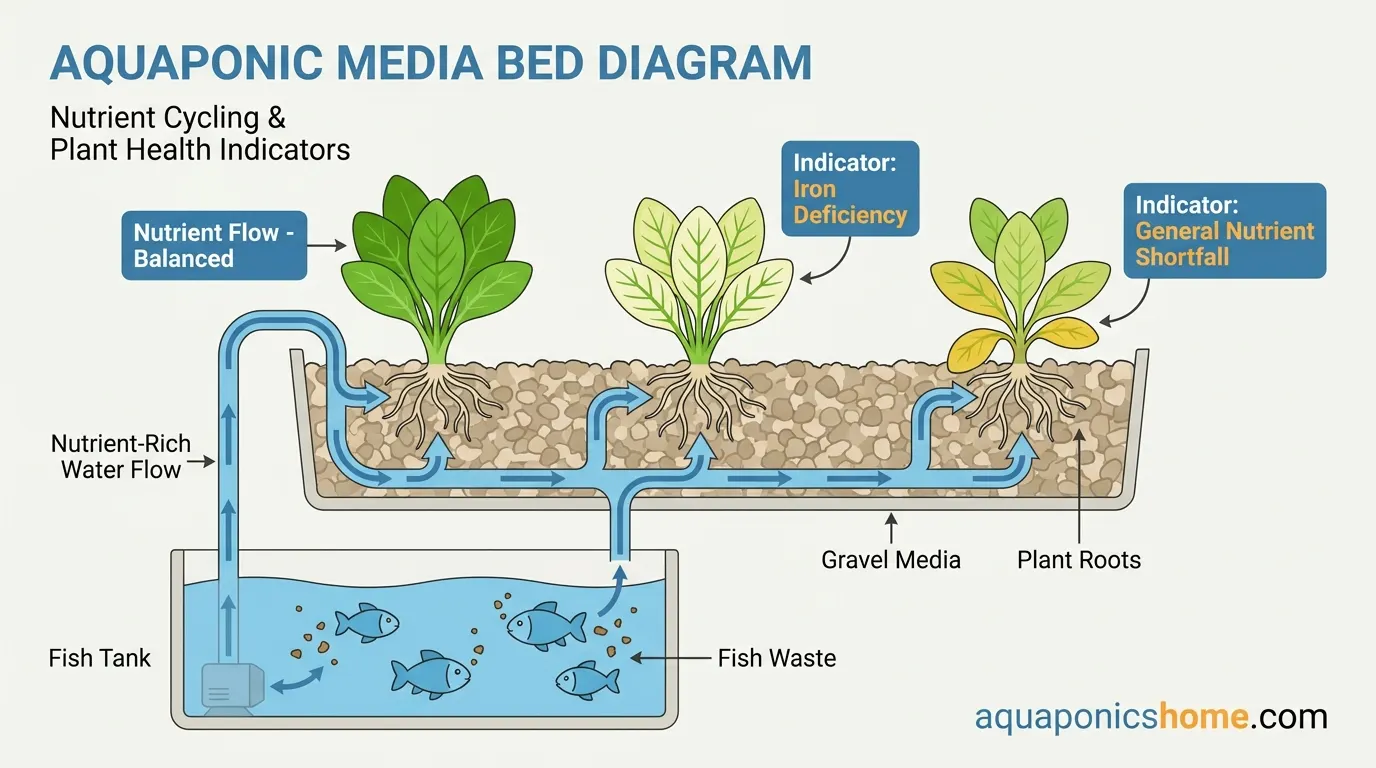
Where basil struggles is nutrient completeness, not nutrient volume. Aquaponics water is rich in nitrogen from fish waste and the bacteria that process it, covered in more depth in aquaponics nitrogen cycle, explained with one tank, but it can run short on iron and potassium as a system matures and multiple plantings pull from the same water.
Pale new growth on basil, veins staying green while the leaf between them fades, is a classic iron-deficiency pattern in soilless growing generally, not something specific to fish tanks. It is worth ruling out before assuming disease.
Mint: the herb that takes over
Mint grows extremely well in aquaponics, which is precisely the problem. Mint does not spread by seed the way most garden nuisances do; it spreads by rhizomes, underground stems that push out sideways and send up a new shoot every few inches.
Illinois Extension (read 2026-09-18) puts it plainly: peppermint and spearmint grow one to three feet tall and spread aggressively by underground rhizomes, and the extension’s own advice for home gardeners is to grow mint in a container rather than in open soil, because even a buried, bottomless pot does not reliably stop it once rhizomes find a gap.
That advice carries straight over to a shared aquaponics grow bed. Media beds do not have a soil boundary at all, so a mint plant given the run of the gravel will send roots through the whole bed within a season, competing with anything planted nearby for the same nutrient stream.
The fix is not to skip mint, it is to isolate it: a dedicated net pot or its own small grow bed on a separate line, listed among the basic containment gear in aquaponics equipment list for beginners, keeps the rhizomes physically fenced away from your basil and lettuce instead of relying on the plant to behave.
If mint is already established in a shared bed, the retrofit is the same idea worked backward: lift the whole plant and as much of its rhizome mass as you can find, since a fragment left behind will resprout, and move it into its own net pot or a small dedicated bed before returning any of it to the system.
Trying to simply “trim it back” leaves the underground rhizomes untouched and buys only a few weeks before it reclaims the ground it lost. If you want mint at all, plan its container before you plant it, not after it has already spread.
Other herbs worth adding
Parsley and chives are the quiet, low-drama options: neither spreads aggressively, both tolerate the same pH window as basil, and both are slower to bolt in warm weather, which means a longer harvest window before the plant goes to seed and the leaves turn bitter.
Chives in particular can be cut back hard and regrow from the base repeatedly, making them one of the better herbs for a system you harvest from every week rather than occasionally.
Cilantro is the outlier worth knowing about before you plant it: it grows fast in a nutrient-rich system, which sounds like an advantage, but fast growth also means it races toward flowering (bolting) sooner than in a slower-growing garden bed, especially once daytime temperatures climb.
Succession planting, starting a new batch every few weeks rather than relying on one planting to last all season, works better for cilantro in aquaponics than trying to keep a single plant productive for months.
Herbs that fight the wet roots: rosemary, oregano, thyme
Mediterranean herbs evolved in dry, well-drained, often poor soil, and a flood-and-drain aquaponics bed is the opposite environment: constantly moist, nutrient-dense growing media.
Rosemary and thyme can be grown in aquaponics, but they need a section of the bed that drains faster than the rest, or a raised net pot that keeps the crown of the plant above the waterline between floods.
Oregano is a little more forgiving but is still prone to root rot if its roots sit wet continuously rather than cycling between flood and drain.
None of this means these herbs are off-limits. It means they belong in the driest corner of a media bed, or in a system built around media beds specifically rather than a raft or nutrient film system, a distinction covered in aquaponics system types compared, since raft systems keep roots permanently submerged in a way that woody herbs generally dislike.
A quick decision table for herb choices
| Herb | Grows well in aquaponics | Needs containment | Main risk |
|---|---|---|---|
| Basil | Yes, one of the best | No | Iron/potassium deficiency, cold slows growth |
| Parsley, chives | Yes | No | Slower start, otherwise low-maintenance |
| Cilantro | Yes, but bolts fast | No | Races to flower in warm, nutrient-rich water |
| Mint | Yes, very well | Yes, always | Rhizomes overrun the shared bed |
| Rosemary, thyme | With adjustment | Needs a drier zone | Root rot in constantly wet media |
| Oregano | With adjustment | Needs a drier zone | Root rot if roots never dry between floods |
Troubleshooting the most common herb complaints
Yellowing that starts on older, lower leaves and works upward across several herbs at once usually points to a general nutrient shortfall in the water rather than one plant being unhealthy, and is worth checking against your system’s overall nitrogen balance before treating any single plant.
Yellowing that appears as pale leaf tissue with the veins still green, especially on new growth, points more specifically to iron. Wilting despite wet media, on the other hand, is more often a root problem, either rot from a herb that wanted a drier zone, or root damage from overcrowding where a spreader like mint has been left uncontained.
Sticky leaves, sooty-looking patches, or clusters of small insects on new growth are usually aphids or whitefly rather than a water-chemistry problem, and they spread fastest on stressed, overcrowded plants, which is one more reason to keep vigorous spreaders in their own space rather than packed against their neighbors.
FAQ
Can you grow mint in an aquaponics system?
Yes, mint grows vigorously in aquaponics, but it should go in its own net pot or a separate small grow bed rather than a shared media bed, because it spreads by rhizomes that will crowd out neighboring plants.
What pH should I keep for herbs in aquaponics?
Oklahoma State University Extension puts the workable range for aquaponics systems generally at roughly 6.5 to 7.5, which covers basil, parsley and most common culinary herbs without adjustment.
Why are my aquaponics herbs turning yellow?
Overall yellowing across several plants often points to a general nutrient shortfall in the water; pale leaves with green veins on new growth points more specifically toward an iron shortage, which is a known issue in soilless growing generally.
Can I grow basil and fish in the same system safely?
Yes. Basil is a warm-season plant that shares its preferred water temperature with warm-water fish such as tilapia, which is part of why the pairing is so common in small aquaponics setups.
Which herbs should beginners avoid at first?
Woody Mediterranean herbs like rosemary and thyme are harder to place correctly in a standard flood-and-drain media bed, since they want drier roots than most aquaponics setups provide by default. Start with basil, parsley or chives instead, and add rosemary once you have a dry section of the bed worked out.