
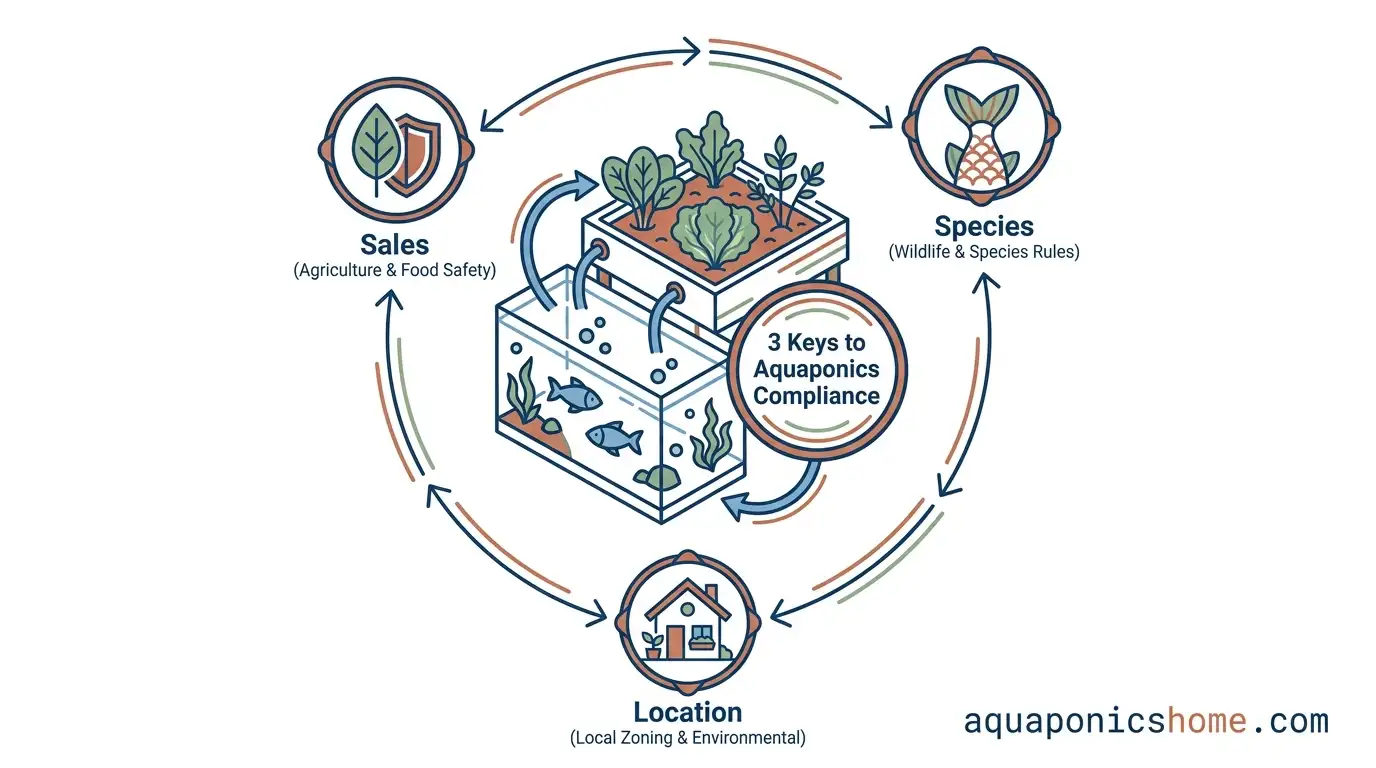
Whether you need a permit for aquaponics depends on three things: which fish you keep, whether you sell anything, and where your water and fish waste end up. Aquaponics permits, regulations and restricted-species lists are set mostly at the state level, with local rules layered on top, so there is no single national answer.
Before you buy fish, ask your state fish and wildlife agency which species you may keep. Before you sell fish, vegetables or prepared food, ask your state agriculture and food safety offices. This page maps the categories of rule and who to ask about each. It does not rule on your situation.
Why There Is No Single Answer
Two things make aquaponics legally awkward. It involves live animals, which wildlife and agriculture agencies regulate, and it produces food, which food safety agencies regulate. Each of those can have its own office, its own permit and its own definitions.
The fish side is where most people get caught out. The Southern Regional Aquaculture Center’s fact sheet on tilapia biology (SRAC Publication No. 283, read September 24, 2026) notes that because tilapias are native only to Africa, many US states treat them as exotic or non-indigenous species and have restricted their transport and culture.
SRAC Publication No. 5007, Principles of Small-Scale Aquaponics (Mullins, Nerrie and Sink, Virginia State University Cooperative Extension and Texas A&M AgriLife Extension, 2015, read September 24, 2026) tells small-scale growers to check with the local Cooperative Extension office or state fish regulatory agency to be sure all permits and regulations on fish production are understood.
How split up the answer can be shows clearly in one state’s own paperwork. Florida’s Department of Agriculture and Consumer Services, in its Commercial Aquaponics: Rules and Regulations fact sheet (FDACS-P-01770, Rev. 12/25, read September 24, 2026), sends the aquatic animals, the commercial vegetables and processed food for sale to three different divisions. Treat that as an illustration of structure, not as the rule where you live.
Aquaponics Permits, Regulations and the Offices Behind Them
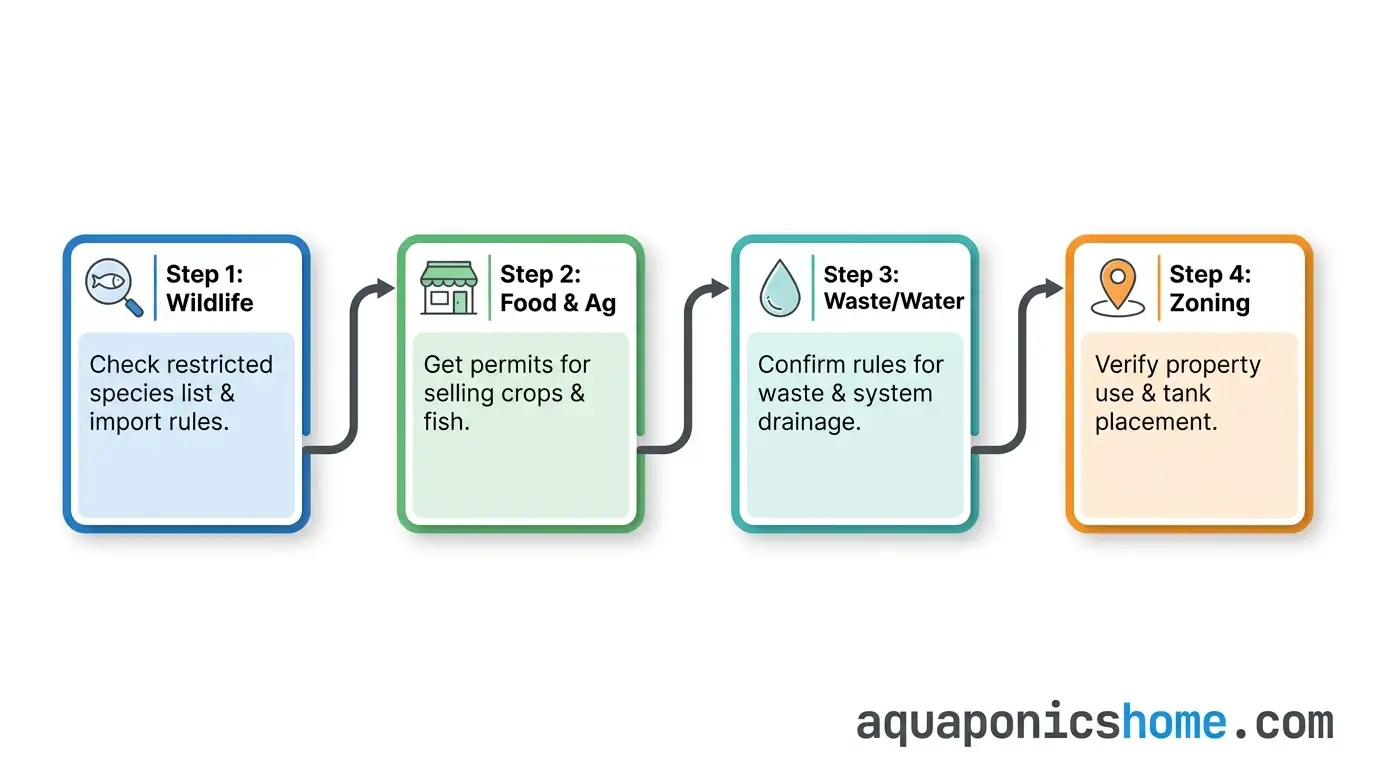
Use this map to work out which questions apply to you and where to start asking. The offices listed are starting points; in your state the responsibility may sit somewhere else, and that office can redirect you.
| Your question | Category of rule | Where to start asking |
|---|---|---|
| Which fish may I keep at home? | Possession of live fish, restricted and prohibited species lists | State fish and wildlife agency; in some states the agriculture department |
| Can I buy fish by mail or bring them from another state? | Transport and import of live fish | State fish and wildlife agency |
| Can I sell or give away live fish, or sell fish to eat? | Aquaculture licensing or registration | State agriculture or wildlife agency; extension aquaculture specialist |
| Can I sell my vegetables? | Produce safety and sales rules | State agriculture department |
| Can I sell something I prepared, such as cleaned fish or a packaged product? | Food processing and food sales permits | State or local food safety office or health department |
| Where can drained water and fish solids go? | Wastewater discharge and applying manure to edible crops | State and local regulatory agencies; extension office |
| What do I do with dead or unwanted fish? | Disposal and release rules | State agencies; local rules |
| Where may the system sit? | Zoning, homeowners association rules, building rules, your lease | Local zoning office, HOA, landlord |
Keeping fish: the question to settle first
Possession rules apply whether or not you ever sell anything, which is why they come first. Lists are typically written by species, and a rule can allow one species while banning a close relative or a hybrid.
Some agencies go further than requiring a permit: the FDACS fact sheet states that neither of Florida’s two relevant agencies will issue a permit to possess certain species, which it calls conditional species, in backyard aquaponic systems.
When you ask, give the scientific name of the fish you intend to buy, not just the common name on a seller’s website.
Getting fish home
Mail-order fingerlings and fish carried across a state line raise transport and import questions separate from keeping them.
SRAC 283 names transport alongside culture as something states restrict for tilapia. Ask the same agency whether receiving or moving the species you want needs its own authorization.
Selling fish, vegetables or food
Many rules turn on sale. The FDACS fact sheet, for example, says anyone starting an aquaponic facility as a business producing and selling aquatic animals must apply for an aquaculture certificate, and that anyone planning to process and sell products for human consumption needs a food processing permit from a separate division.
Selling raw vegetables, selling fish, and selling anything you have prepared can each be a different conversation. Ask as well whether giving fish or produce away changes anything, rather than assuming it does not. For the food safety side of eating your own harvest, start with whether food from a home aquaponics system is safe to eat.
Water, fish solids and dead fish
Aquaponics produces waste even when it recycles most of it. SRAC 5007 notes that settled solids removed from the fish tank can be applied to gardens in some states but not all, and tells growers to check with local and state regulatory agencies about wastewater discharge and applying manure to edible raw crops.
If you ever drain a system, the question of where that water goes applies too; our guide to whether an aquaponics system ever needs a water change covers when that happens.
Biosecurity guidance from SRAC and from Iowa State’s Center for Food Security and Public Health also tells producers to follow local and state regulations for disposing of dead fish.
One rule is close to universal in spirit: never release fish from an aquaponics system into a pond, stream, lake or storm drain. The FDACS fact sheet cites a Florida rule prohibiting the release of any non-native species into that state’s waters. Ask your agency what legal options exist for surplus fish before you have any.
Where the system sits
The fish and food rules say nothing about whether your building, neighborhood or lease allows a large water tank. Those are separate, local questions: zoning, homeowners association covenants, building rules and your rental agreement.
Renters should start with whether you need to tell your landlord about aquaponics, and anyone choosing a location will find the practical side in where to put an aquaponics system at home.
Finding Your Own State’s Rules
The Association of Food and Drug Officials maintains an Aquaculture Regulatory Guidance page (read September 24, 2026) with federal resources and a state-by-state list of links to regulations, permit applications and aquaculture resources.
The page describes itself as covering topics such as shellfish farming, aquaponics, fish health, licensing and federal guidance. It is a directory, not a ruling, so use it to find the right office and then confirm with that office directly.
Readers in Canada face their own mix of provincial and federal rules, which this page does not attempt to summarize. The same categories of question still apply.
How to Ask So You Get a Usable Answer
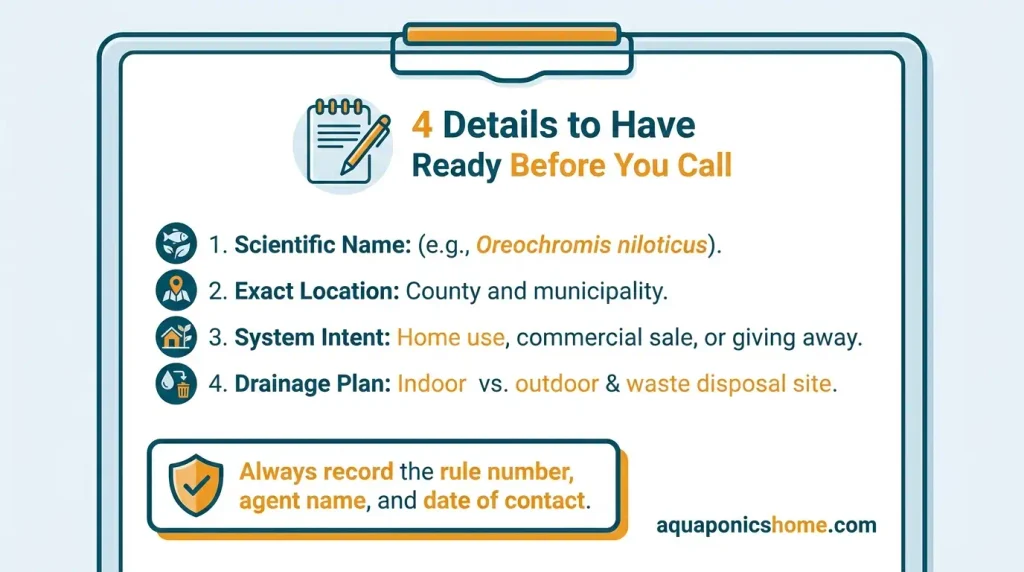
A vague question gets a vague answer. Before you call or email, have these ready:
- The exact species, by scientific name, and where you plan to buy it.
- Your location, including county, since some rules vary within a state.
- What you plan to do: keep fish for your own table, give any away, or sell fish, vegetables or prepared food.
- Your setup: indoor or outdoor, and where drained water and solids will go.
Then ask for three things back: the answer, the name of the rule or permit it comes from, and the name of the person or document giving it. Write down the date. Rules change, and a dated note of who told you what is worth more than a remembered phone call.
What This Page Will Not Do
This page does not tell you that anything is legal or illegal where you live, and it does not interpret any state’s rules. It names the kinds of rule that commonly apply to home aquaponics and the offices that answer them.
If an answer from an agency conflicts with something you read online, including here, the agency’s answer is the one that counts.
FAQ
Do I need a permit for a home aquaponics system?
It depends on your state, the fish species and whether you sell anything. Possession rules for fish can apply even to a system that only feeds your household. Ask your state fish and wildlife agency before buying fish.
Is tilapia legal to keep in aquaponics?
Not everywhere. SRAC Publication No. 283 notes that many US states treat tilapia as exotic species and restrict their transport and culture. Check the specific species with your state agency.
Do I need a license to sell aquaponics vegetables?
Selling produce, selling fish and selling prepared food can each fall under different rules and offices. Start with your state agriculture department, and ask your state or local food safety office about anything you prepare or package.
Can I put fish waste from my aquaponics system on my garden?
It depends on where you live. SRAC 5007 says settled solids can be applied to gardens in some states but not all, and advises checking local and state rules on wastewater discharge and manure applied to edible raw crops.
Where can I find my state’s aquaculture rules?
The Association of Food and Drug Officials keeps a state-by-state aquaculture regulatory guidance page. Use it to find the right agency, then confirm directly with that agency.