
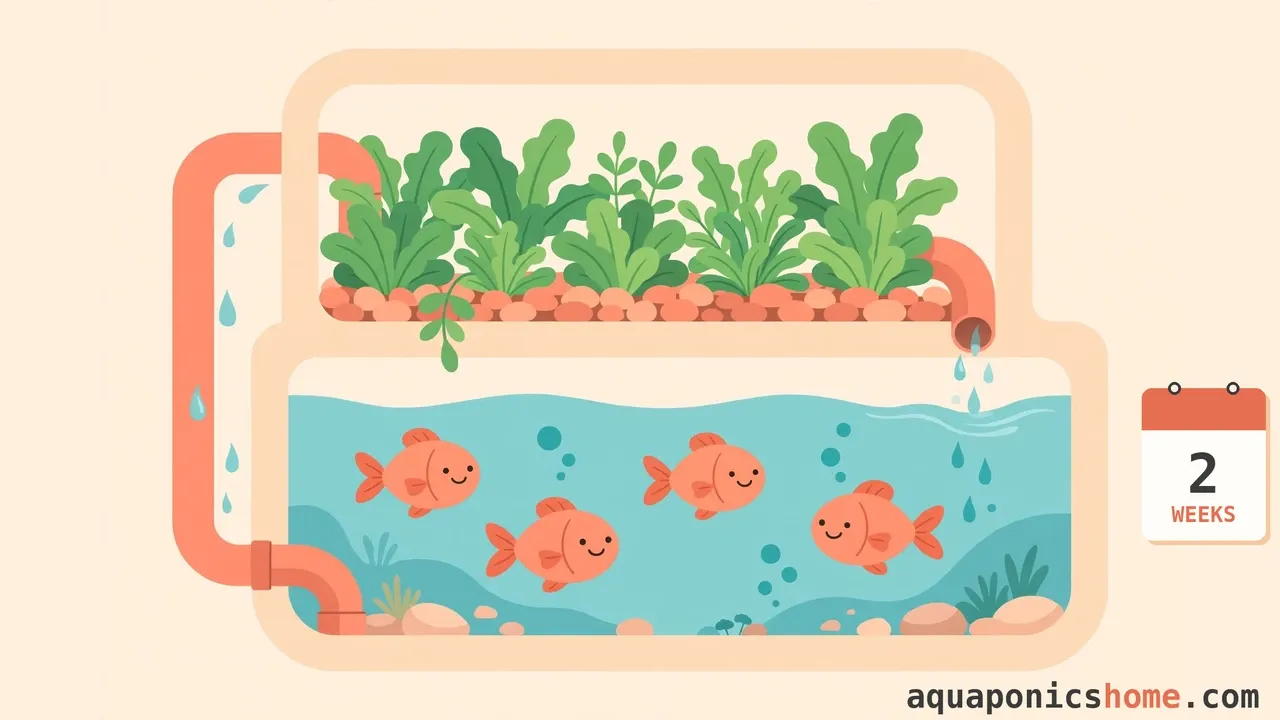
Running aquaponics while on holiday is possible, but food is rarely what goes wrong. Healthy adult fish can manage a period of light feeding or no feeding. What kills a system while you are away is a stopped pump, a lost air supply, a leak or a slowly falling water level that nobody sees.
So the plan for a two-week trip is mostly about those failures: prepare the system a week ahead, test every piece of backup, reduce the load on the water, and arrange for a person, not just a gadget, to look at it.
This guide walks through what to do in the weeks before you leave, what to set up, and what to tell whoever checks on it.
What Goes Wrong When You Are Away
It helps to separate the risks, because they need different answers.
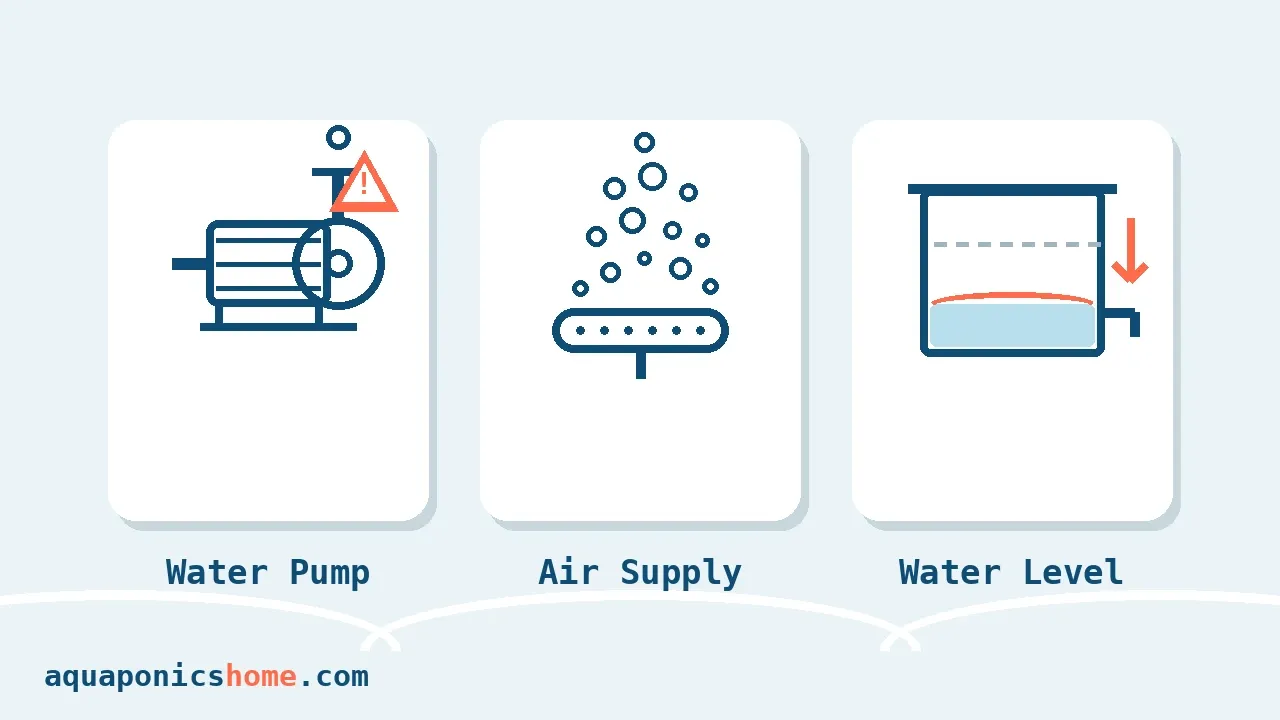
Feeding. This is the one people worry about most and it is usually the least dangerous. Overfeeding by a sitter or a faulty feeder is often a bigger problem than underfeeding.
The pump. In most home systems, one pump moves all the water. If it clogs, fails or loses power, water stops reaching the grow bed and stops moving in the fish tank. That is an oxygen problem within hours, not days.
Aeration. An air pump running into an air stone keeps oxygen going into the fish tank. It is on the same electrical supply as the water pump, so a power cut takes out both.
Water level. Water leaves every system through evaporation and through the plants. A leak or a siphon that sticks open can drain a tank much faster. Two weeks is long enough for either to matter.
Temperature. In a hot spell or a cold snap, the water can drift outside the range your fish handle well, especially if a heater fails or the room gets hot with the air conditioning off.
If you want the background on why water keeps disappearing, our guide to aquaponics topping up water explains where it goes and what that does to the water left behind.
Should You Feed at All While You Are Away?
This depends on your fish, their size and the water temperature, so there is no single rule. What a reliable source can tell you is that adult fish are not as fragile as people fear.
In its Q&A on keeping a fish tank safe during a power outage (October 28, 2025, read September 27, 2026), Florida Sea Grant quotes Dr. Roy Yanong, an Extension Veterinarian and Professor in UF Fisheries and Aquatic Sciences.
He notes that fish can survive approximately one week without food, and advises stopping feeding one to two days before an expected outage so there is less ammonia for the system to deal with. That advice is written for outages, not holidays, but the principle carries over: less feed in the water means less waste.
A two-week trip is longer than that one-week figure, so for most people the choice is between a light feeding plan and a check-in by another person.
Young or small fish may need feeding more often than adults, so if you have them, ask an aquatic veterinarian or your local extension aquaculture service what suits your species.
Automatic feeders: useful, with limits
A timer-driven feeder can hand out small portions while you are away. The limits are worth knowing:
- Test it for a week before you leave. Watch how much it drops. Some drop more than the dial suggests.
- Keep the food dry. A feeder above an open tank sits in damp air, and food that sticks together can drop all at once or not at all.
- Set it lighter than your normal feed. It is easier for fish to cope with a little less food than for the system to cope with extra waste.
Slow-release feeding blocks sold for aquariums are a different product. They dissolve into the water rather than being eaten on a schedule, which adds to the waste load you are trying to reduce.
The Week Before You Leave
Changes made the night before a trip are how problems start while you are gone. Give yourself a week.
Test the water and fix anything off
Test ammonia, nitrite, nitrate and pH at least a week ahead. If anything is off, you have time to deal with it and see that it has settled. Our guide to a 10-minute weekly water testing routine covers the tests and what each one tells you.
Clean the pump intake and check the plumbing
Clear any debris from the pump intake and pre-filter. Run the system and watch at least one full flood and drain cycle. Check every joint for drips. A slow drip you can live with for a weekend can empty a tank over two weeks.
Do any maintenance early
Do partial water changes, solids cleaning or media work early in that week, not the day before. If you disturb something, you want time to see whether the system recovers.
Harvest what is ready
Mature plants that are ready to harvest will bolt or go past their best while you are away. Harvesting before you go also means fewer plants drawing water during your absence.
Do not add fish or make big changes
New fish, a new pump or a change to your plumbing should wait until you are back.
Backup Equipment Worth Setting Up
A battery air pump
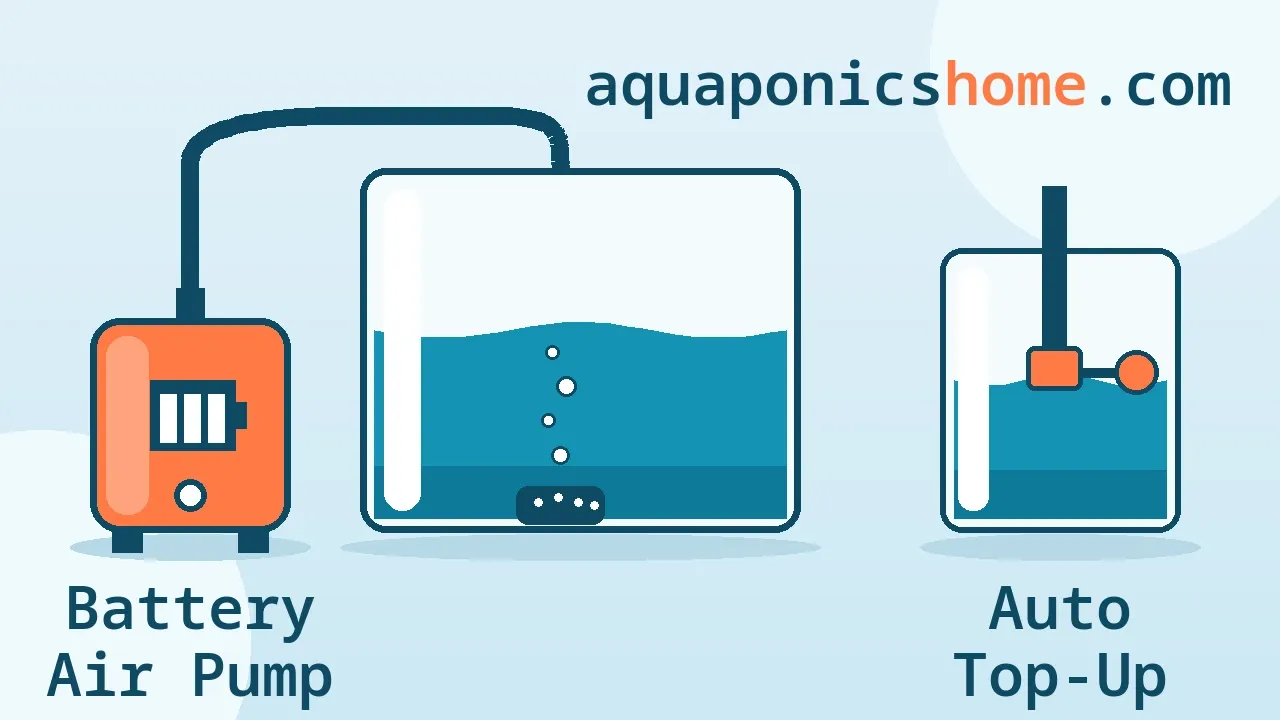
A battery-powered or rechargeable air pump with its own air stone in the fish tank is the most useful backup for a trip. Some switch on automatically when mains power fails, which matters when nobody is home. Check the label for run time, fit fresh batteries and test it before you leave.
An overflow and leak check
Make sure every tank and bed can overflow safely back into the system rather than onto the floor. If your system sits indoors or on a balcony, our guide to aquaponics leak and overflow protection covers how to set this up.
A top-up plan
For two weeks, water loss is almost certain. Options include a reservoir of treated water with a float valve that tops up the tank as the level falls, or a sitter who adds treated water.
If your tap water contains chlorine or chloramine, top-up water needs to be treated first. Florida Sea Grant reminds readers in the same Q&A that chlorine and chloramine harm fish.
Alarms, if you have them
A water-level alarm or a power-failure alert that reaches your phone does not fix anything on its own, but it tells you to call someone.
What to Tell Whoever Checks on It
Even with good backups, a person looking at the system every few days is the single best safeguard. Leave them a short, written sheet near the tank.
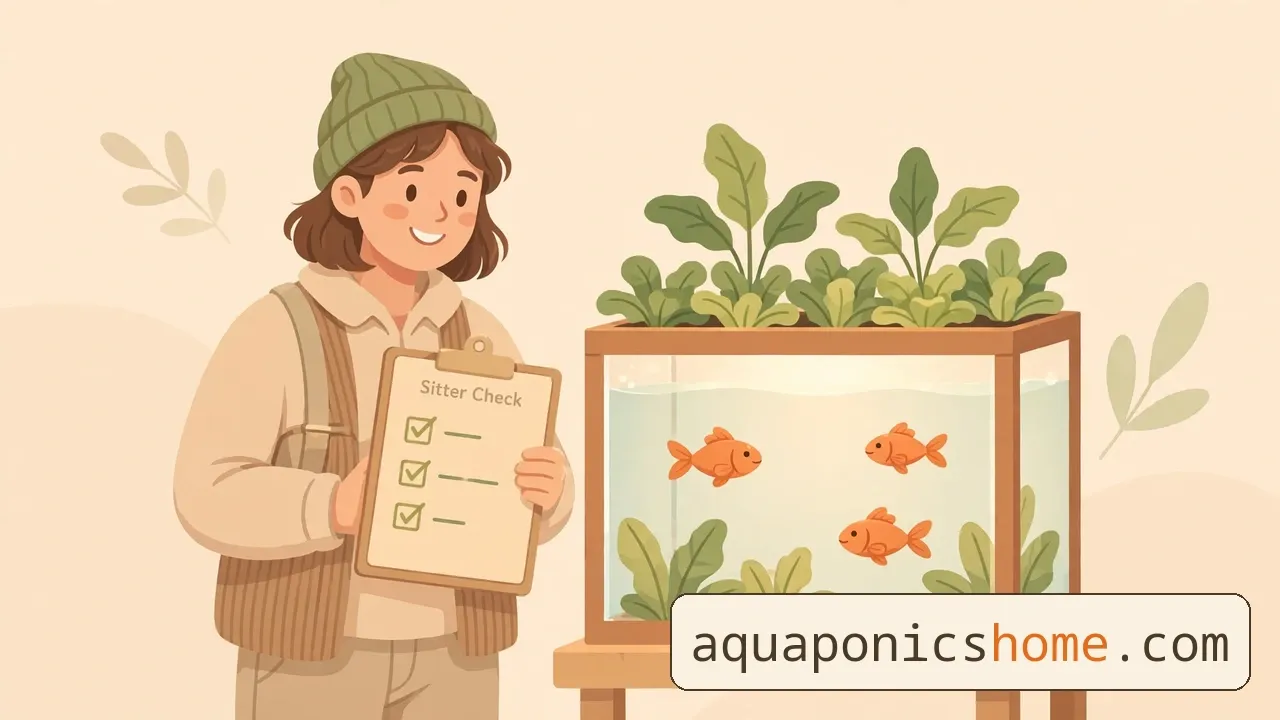
What normal looks like. Water flowing into the grow bed, bubbles from the air stone, fish moving normally, water at the usual level. A photo helps.
What to do if the pump stops. Where the plug is, how to check it is getting power, and where the battery air pump is.
What not to do. Most sitter problems come from kindness. Tell them clearly not to feed beyond what you have set out, not to clean anything, and not to add tap water unless it has been treated.
Who to call. Your number, and the number of someone local who knows the system if you are hard to reach.
What counts as an emergency. Fish gathering at the surface and gulping air, water much lower than normal, water on the floor, or several fish dead. If the pump has stopped, our guide on what to do when an aquaponics pump is not working is worth sending them in advance.
When You Get Back
- Look before you feed. Check flow, air, water level and the fish.
- Test the water. Ammonia and nitrite first, then nitrate and pH.
- Restart feeding gradually. Smaller portions at first, then back to normal over a few days.
- Remove dead plant material and any dead fish. If several fish have died or others look unwell, contact an aquatic veterinarian or your local extension aquaculture service rather than guessing at a treatment.
Aquaponics While on Holiday: A Short Summary
Aquaponics while on holiday is mostly a question of what fails when nobody is watching. Food is the smaller risk; the pump, the air supply, leaks and falling water are the bigger ones.
Prepare a week ahead, test the water, clean the pump intake, set up a tested battery air pump and a top-up plan, and leave clear written instructions with someone who can look at it.
FAQ
Can I leave my aquaponics system alone for two weeks?
It is risky with no one checking. A stopped pump, a power cut or a leak can cause serious problems within hours. A tested battery air pump, a top-up plan and a person who checks every few days make it far safer.
How long can aquaponics fish go without food?
Florida Sea Grant notes that fish can survive approximately one week without food. That depends on species, size and temperature, so young fish need more care. Ask an aquatic veterinarian or extension service about your species.
Should I use an automatic fish feeder while on holiday?
It can help if you test it for a week first, set it lighter than your normal feed and keep the food dry. A feeder does nothing about a stopped pump, so it is not a substitute for a person checking the system.
What should I tell a sitter about my aquaponics system?
What normal looks like, what to do if the pump stops, where the battery air pump is, not to overfeed or clean anything, and who to call. Write it down and leave it by the tank.
Do I need to top up the water while I am away?
Usually, yes, for a two-week trip. Use a reservoir with a float valve or ask a sitter to add treated water, since chlorine and chloramine in tap water harm fish.