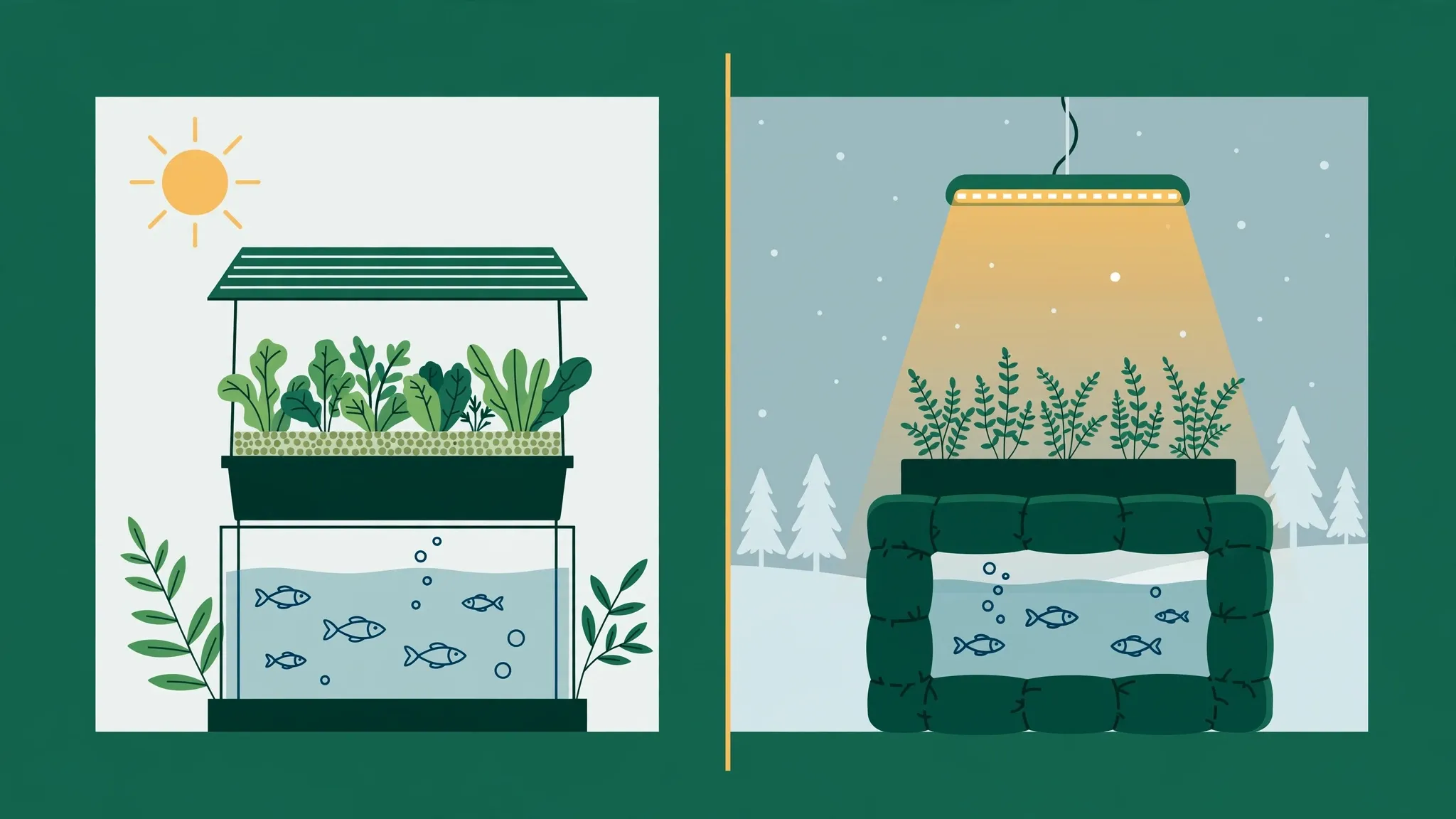
Aquaponics summer winter care comes down to one thing: water temperature, and everything it drags along with it.
In summer, warm water holds less oxygen, the toxic share of ammonia can rise and fish can overheat, so the priorities are shade, extra aeration and careful feeding.
In winter, cold water slows the fish, the plants and the bacteria that clean the water, and outdoor tanks can freeze, so the priorities are keeping the water inside your fish’s range and adjusting feeding to what they actually eat.
The routine that worked in June can quietly fail in January.
This guide explains what changes in each season and what to adjust, for a small home system.
Why the Same Routine Fails in a Different Month
An aquaponics system has three living parts: the fish, the plants and the nitrifying bacteria that turn fish waste into plant food. Each has its own preferred temperature, and those preferences do not line up neatly.
New Mexico State University’s Circular 680, Important Water Quality Parameters in Aquaponics Systems (Rossana Sallenave, Extension Aquatic Ecology Specialist, revised June 2026, read September 27, 2026) says water temperature influences not only which fish can be reared but also plant growth and how well the biofilter performs. It gives these ranges:
| Part of the system | Preferred range, per NMSU Circular 680 |
|---|---|
| Warmwater fish (goldfish, bass, catfish, tilapia) | 65 to 85°F |
| Coldwater fish (such as trout) | 55 to 65°F |
| Vegetables | 70 to 75°F |
| Biofilter (nitrifying bacteria) | 77 to 86°F |
The circular’s advice is that the key is to find a temperature that falls within the acceptable range for all three components.
A season shift pushes the water toward the edge of one range or another, and that is where problems start.
Our guide to aquaponics water temperature goes deeper into how to choose a working range for your own system.
Summer: Heat, Oxygen and Ammonia
Warm water holds less oxygen
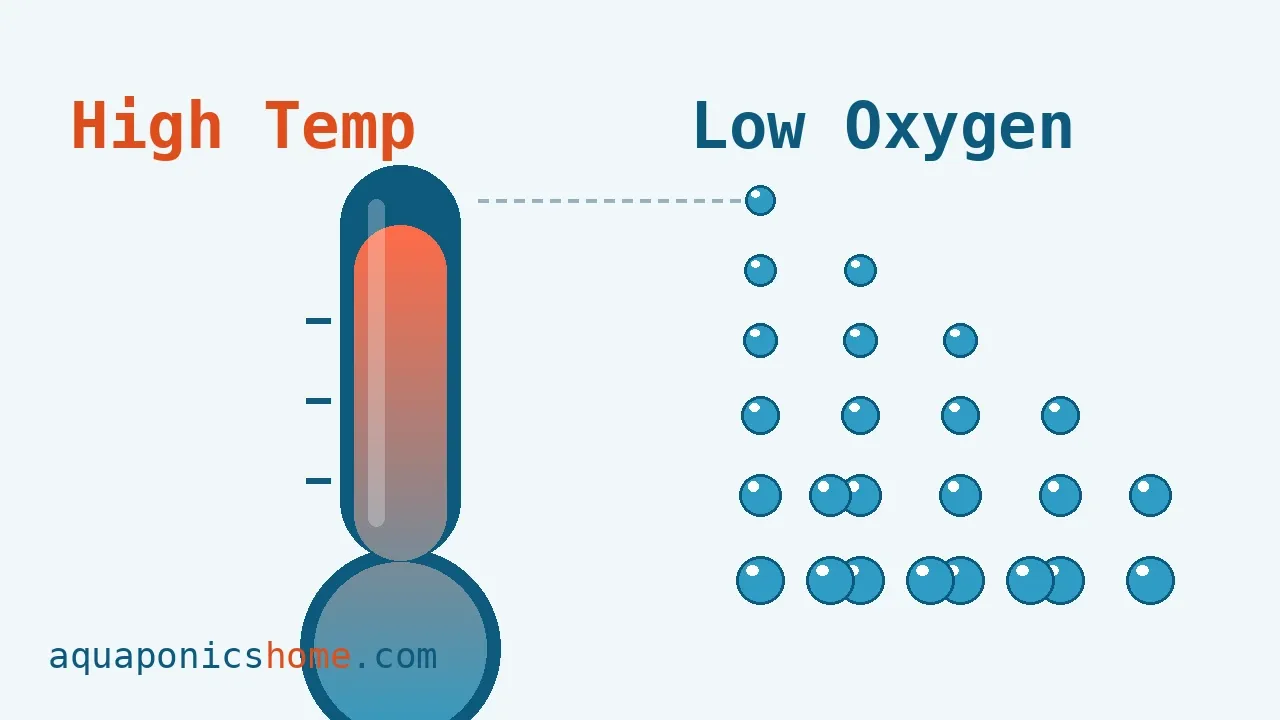
NMSU Circular 680 states it directly: dissolved oxygen levels are strongly related to temperature, and the warmer the water, the less oxygen it can hold.
The same circular says warmwater fish such as bass, bluegill and catfish require about 5 ppm of dissolved oxygen, and coldwater fish such as trout about 6.5 ppm, to maintain good health and maximum growth.
So in a heat wave, your fish need oxygen at the same time as the water is able to hold less of it. That is why summer trouble so often traces back to oxygen, not to the heat alone. Our guide to dissolved oxygen in aquaponics explains how to think about it and why it is worth testing.
The toxic share of ammonia depends on temperature
Ammonia in water exists in two forms. NMSU Circular 680 explains that the ratio between the toxic form (NH3) and the less harmful form (NH4+) depends on both the pH and the temperature of the water.
As an example, it notes that at 82°F the toxic share is 2 percent at pH 7.5, compared with 18 percent at pH 8.5. The practical point is that the same ammonia test result does not always carry the same risk, so read it alongside your pH and temperature, particularly in hot weather.
Our guide to aquaponics ammonia explains how to read the test.
What to adjust in summer
- Shade the fish tank. Direct sun on a tank heats the water. Shade from a cover or a wall helps, while leaving the grow bed in the light the plants need.
- Strengthen aeration. An extra air stone, or a check that your existing one is not clogged, costs little and matters most in the hottest weeks.
- Feed what gets eaten. Watch the fish at feeding time and remove uneaten food. Food that sits and breaks down adds to the ammonia load.
- Test more often. Ammonia, nitrite and pH are worth checking more often during a heat wave, not less.
- Check the water level more often. Warm weather and growing plants pull more water out of the system. Top up with treated water.
- Have a plan for a power cut. Summer storms bring outages, and an outage in hot weather is more dangerous because the water starts with less oxygen. A tested battery air pump is the most useful backup.
Winter: Cold, Slow and Sometimes Frozen
Everything slows down
In cold water, the whole system runs slower. NMSU Circular 680 says biofilters perform optimally at 77 to 86°F, so as the water drops well below that range, the bacteria that clear ammonia and nitrite work less efficiently. Plants also grow more slowly when water is below their preferred range.
For warmwater fish, cold matters a great deal. The same circular says that for tilapia, when water temperature drops below 70°F, growth slows dramatically, reproduction stops and the incidence of disease increases, and that tilapia will die when temperatures drop below 50°F.
Other species have different limits, so check a reliable source for yours. Keeping some species, tilapia included, is regulated in some places, so check your state or provincial wildlife agency’s rules before you stock any fish.
What to adjust in winter
- Match feeding to appetite. Fish in cooler water often eat less. Feed what they take in a few minutes and remove the rest, because slower bacteria have less capacity to deal with leftover food.
- Keep testing. A slower biofilter can let ammonia or nitrite creep up without any change in your routine. Weekly tests catch it.
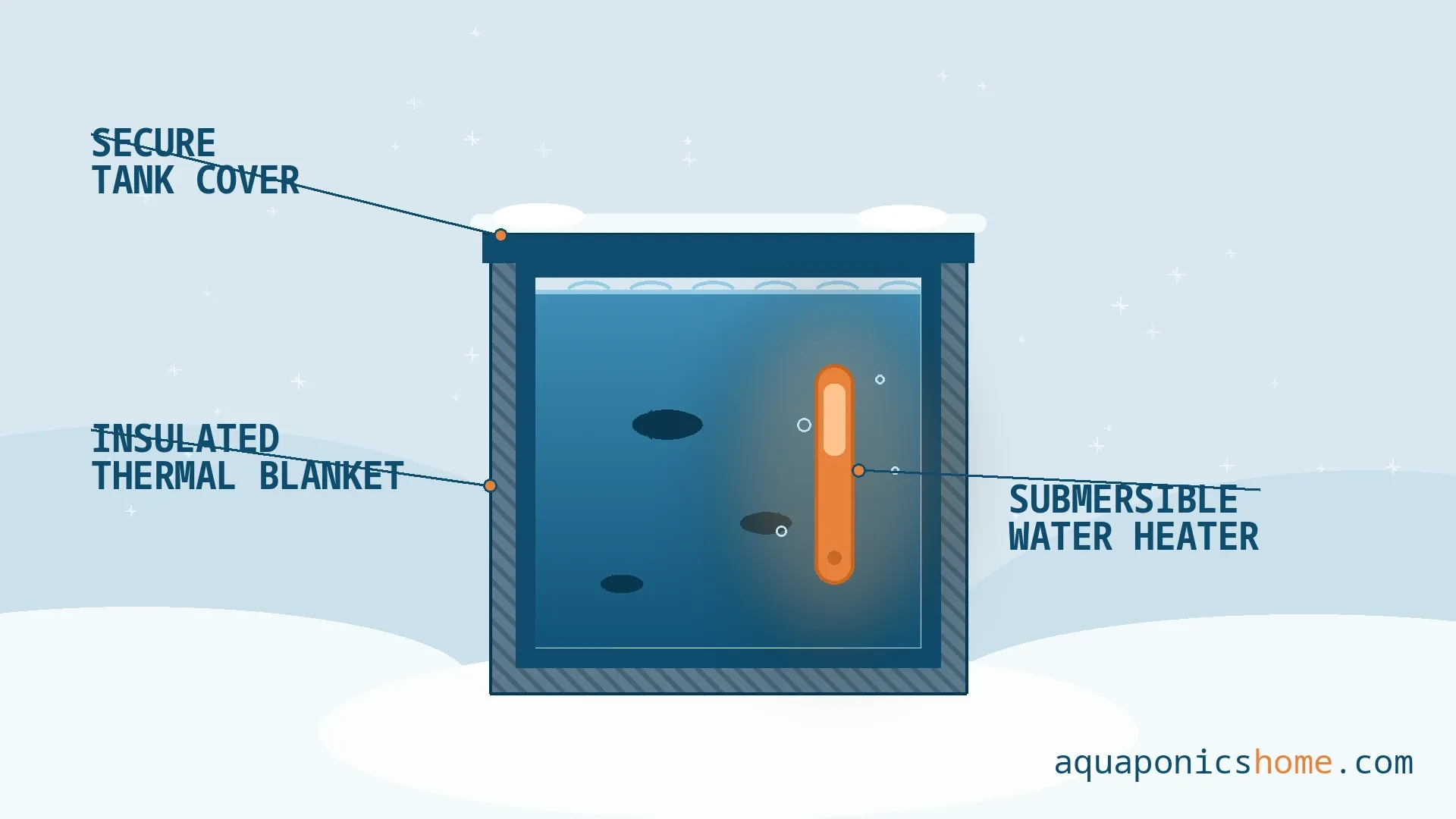
- Protect outdoor tanks from freezing. In much of the US and Canada, an outdoor tank faces freezing nights. Options include moving the system indoors, insulating and covering the tank, or heating it. A frozen pipe can split, and a frozen surface cuts off air exchange.
- If you use a heater, treat it as electrical equipment beside water. Use a heater designed for the job, follow the manufacturer’s manual, and keep cords and plugs where water cannot reach them. If you are unsure whether your outlet is suitable for equipment near water, ask a licensed electrician.
- Think about light. Shorter days mean less light for the plants. Moving the system or adding grow lights can help. If you add a lamp, keep it and its cord well clear of splashing water.
If you are deciding where a system should sit through the year, our guide on where to put an aquaponics system at home covers the trade-offs between indoors, balconies and outdoors.
Spring and Fall: The Transition Months
The most overlooked risk is the change itself. When temperatures swing between warm days and cold nights, the water can move a long way in a day, especially in a small tank.
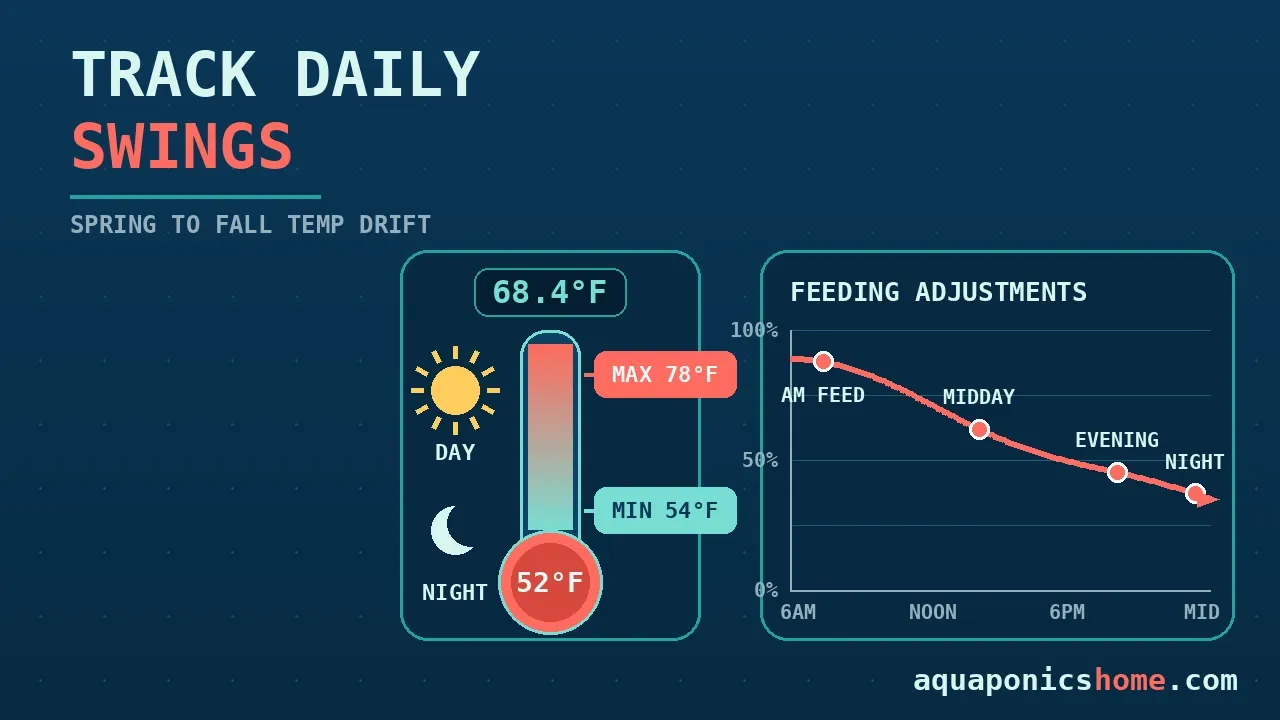
- Increase or reduce feeding gradually. As water warms in spring, fish usually eat more. Raise feeding in small steps and keep testing, because the bacteria also need time to catch up.
- Watch for swings, not just averages. A thermometer you check at the same time each day will miss a night-time dip. A minimum and maximum thermometer, or a simple logging sensor, shows the real range.
- Change your crops with the season. Leafy greens and herbs tend to handle cool conditions better, while fruiting crops generally need warmth and more light. Growing with the season is easier than fighting it.
Aquaponics Summer Winter Care Checklist
Summer:
- Shade the fish tank
- Add or check aeration
- Feed only what gets eaten
- Test ammonia, nitrite and pH more often
- Top up water more often
- Keep a tested battery air pump ready
Winter:
- Keep water inside your fish’s range
- Protect outdoor tanks and pipes from freezing
- Match feeding to appetite
- Keep weekly tests going
- Use heaters and lights with electrical safety in mind
Spring and fall:
- Change feeding gradually
- Track daily temperature swings
- Adjust crops to the season
When to Get Help
If fish are behaving abnormally or dying and your water tests do not explain it, contact an aquatic veterinarian or your local extension aquaculture service. NMSU notes that disease incidence rises in tilapia when water gets too cold, and diagnosing disease is their job, not a guess.
FAQ
What is the best water temperature for aquaponics in summer and winter?
There is no single number. NMSU Circular 680 gives 65 to 85°F for warmwater fish, 55 to 65°F for coldwater fish, 70 to 75°F for vegetables and 77 to 86°F for the biofilter. The aim is a temperature acceptable to all three, year-round.
Why do aquaponics fish struggle in summer?
Often because of oxygen. NMSU Circular 680 notes that the warmer the water, the less oxygen it can hold. Temperature also affects how much ammonia is in its toxic form, alongside pH.
Do I need a heater for aquaponics in winter?
It depends on your fish and where the system sits. Warmwater species like tilapia do poorly in cold water; NMSU says tilapia growth slows dramatically below 70°F and they die below 50°F. Coldwater species have lower ranges.
Should I feed my fish less in winter?
Feed what they eat in a few minutes and remove the rest. Fish in cooler water often eat less, and the bacteria that clean the water work less efficiently in the cold.
Can I leave an outdoor aquaponics system out in winter?
Only if you can keep the water within your fish’s range and stop tanks and pipes from freezing. In colder parts of the US and Canada, that usually means moving indoors, insulating or heating.