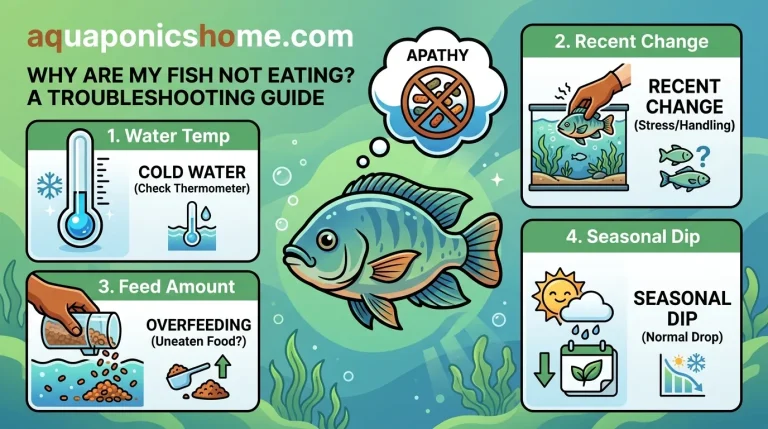
Aquaponics Fish Not Eating? Real Causes
Fish ignoring food? See the real behavior causes, cold water, stress, overfeeding, and where illness starts, which needs a vet, not a home remedy.

Fish ignoring food? See the real behavior causes, cold water, stress, overfeeding, and where illness starts, which needs a vet, not a home remedy.
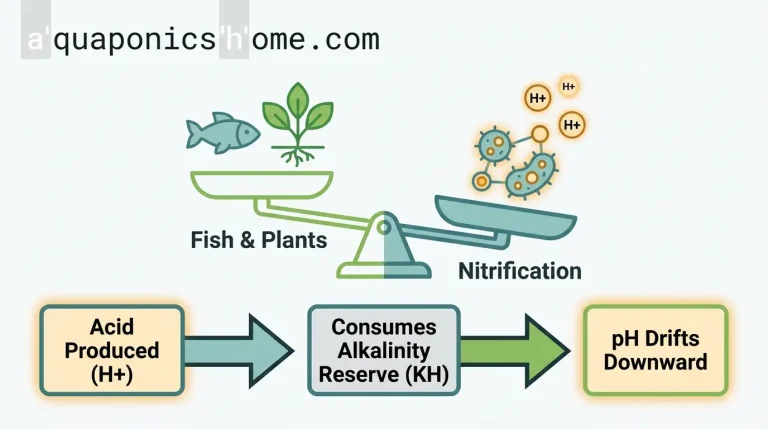
Aquaponics pH drifting down again? See why nitrification consumes alkalinity, produces acid, and why chasing a fixed number in circles rarely helps.
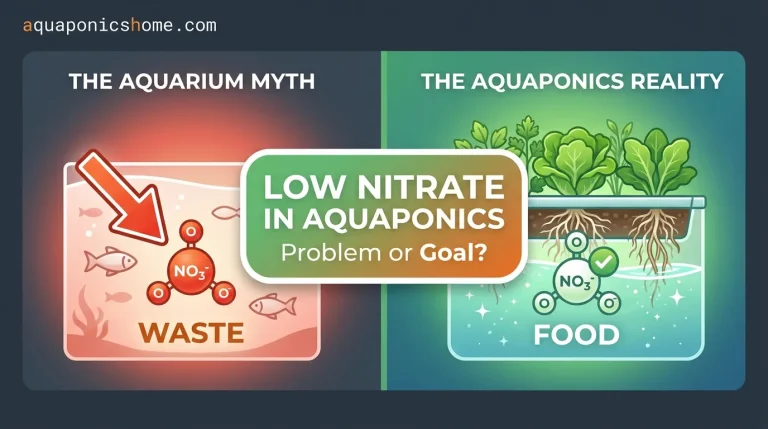
Zero nitrate in aquaponics is not fish waste to remove. It means your plants are starving for nitrogen. Here is why, and what to check first.
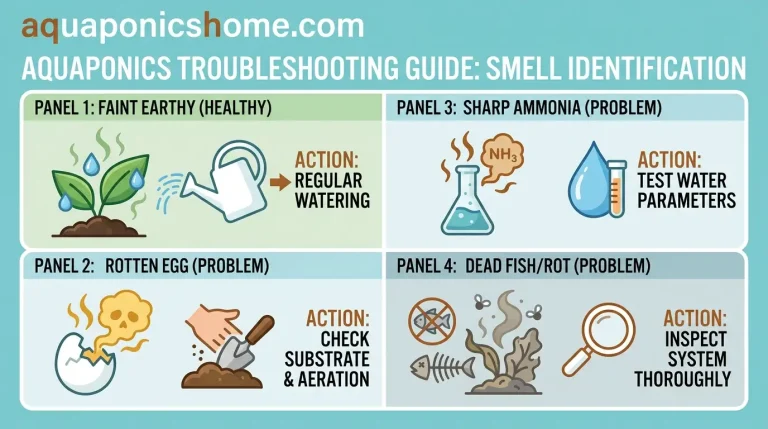
A healthy aquaponics system smells earthy, not foul. Learn what rotten egg, ammonia, and dead-animal smells actually mean, and the next step for each.
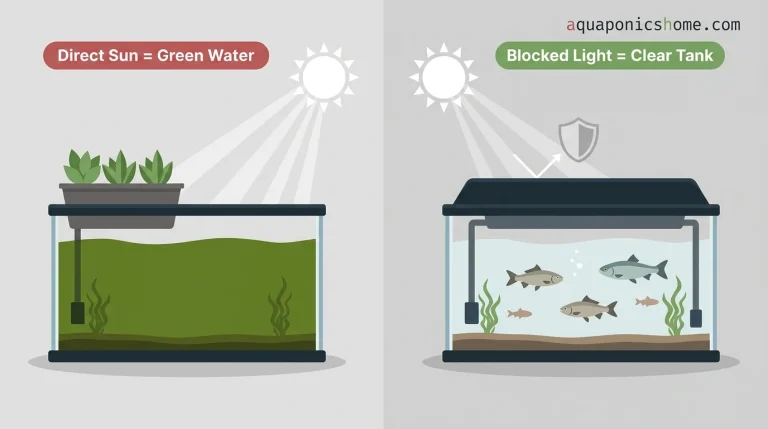
Green aquaponics water is almost always sunlight hitting nutrient-rich water, not a chemical problem. Here is how to block the light and actually fix it.
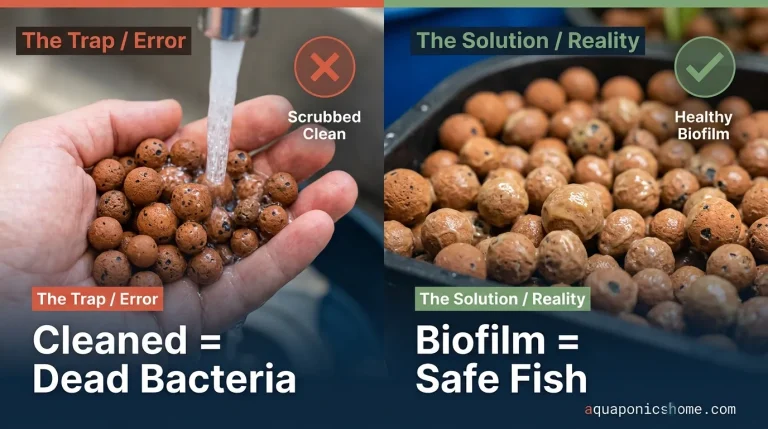
Cleaning too well killed my first fish batch. Here's how nitrifying bacteria live on biofilter media, why scrubbing strips them, and how to clean safely.
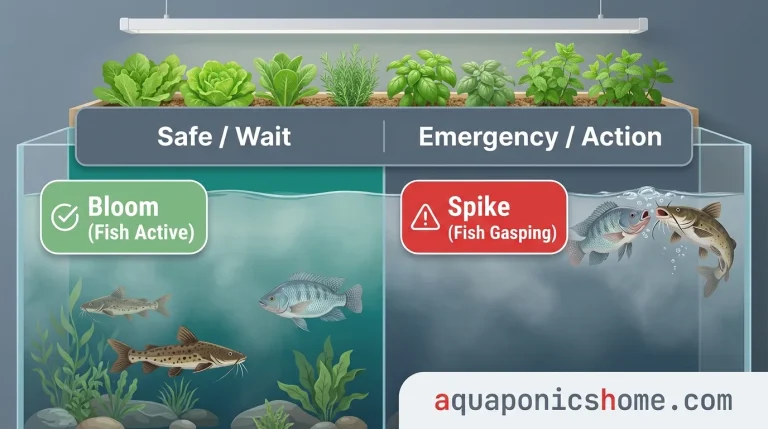
Cloudy aquaponics water can be a harmless bloom, disturbed solids, or a real warning sign. Here is how to tell which one you have and what to check next.
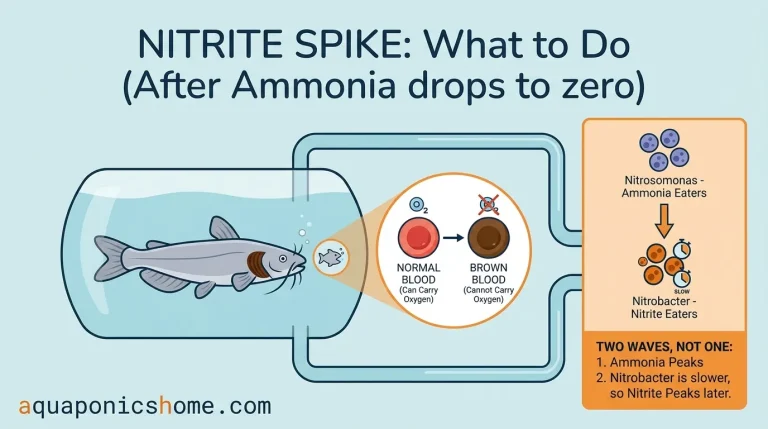
Ammonia cleared but fish keep dying? Nitrite is aquaponics' second wave. See the brown blood mechanism, sourced levels, and safe chloride steps.
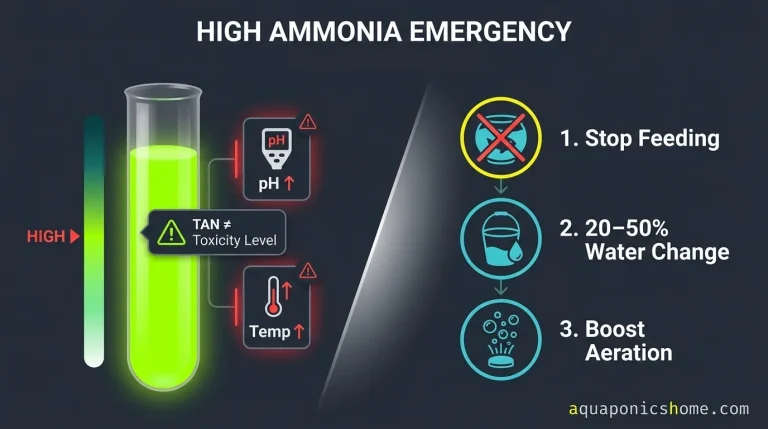
Ammonia test dark green? Stop feeding, change part of the water, boost aeration, then read numbers sourced to OSU, UF/IFAS and FAO, not a bare ladder.
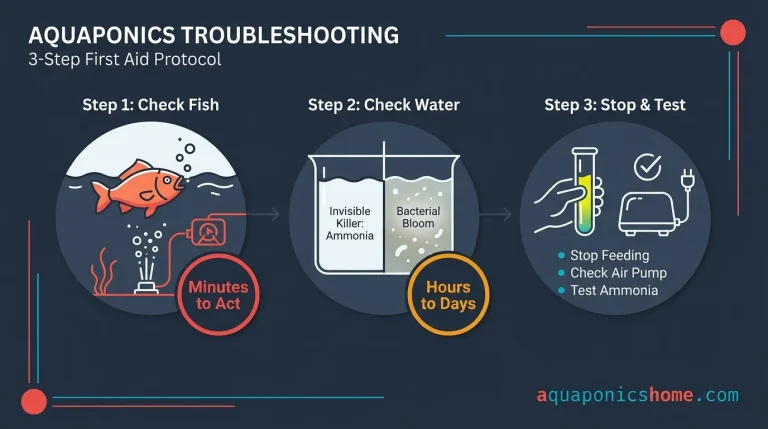
Fish acting wrong or dying? Stop feeding, check the pump, test the water, then use this kill-speed table to find out what is wrong and where to go next.
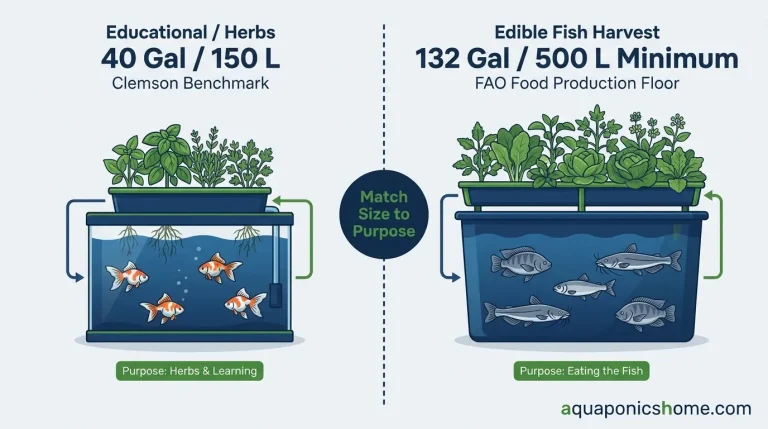
The smallest tank is the hardest to run. What the FAO, Clemson and Rutgers actually publish on aquaponics tank size, and how the answer splits by purpose.
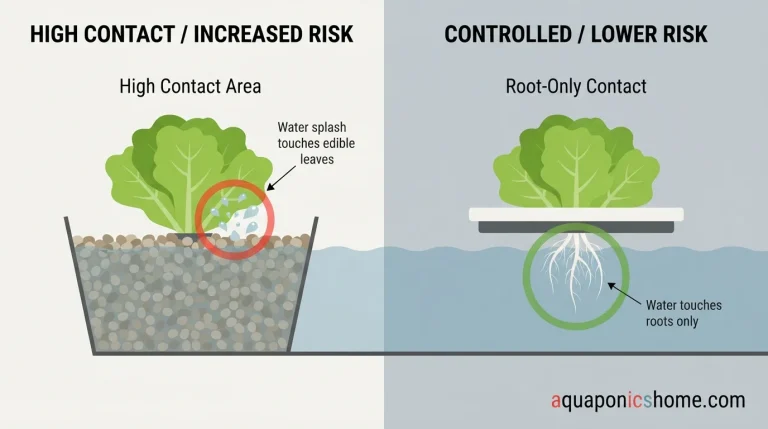
An honest, sourced answer on aquaponics food safety: where contamination risk actually comes from, what washing does, and what the research has not settled.