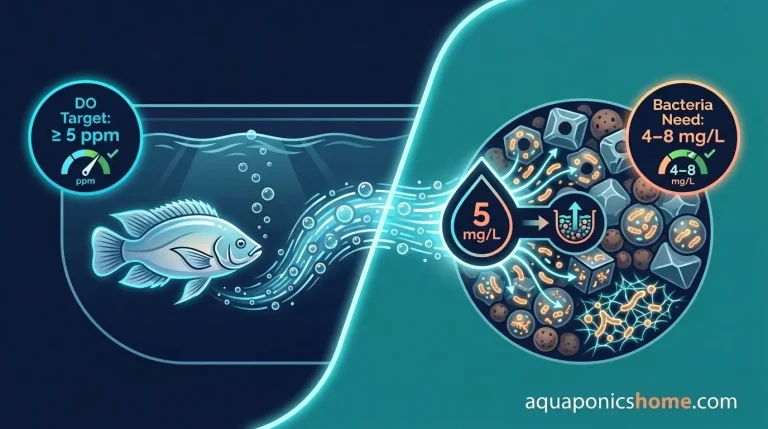
Dissolved Oxygen in Aquaponics: The Number Nobody Tests
Dissolved oxygen aquaponics target: keep it at or above 5 ppm for fish and biofilter bacteria alike. Why it drops, how to test it, and how to fix it.

Dissolved oxygen aquaponics target: keep it at or above 5 ppm for fish and biofilter bacteria alike. Why it drops, how to test it, and how to fix it.
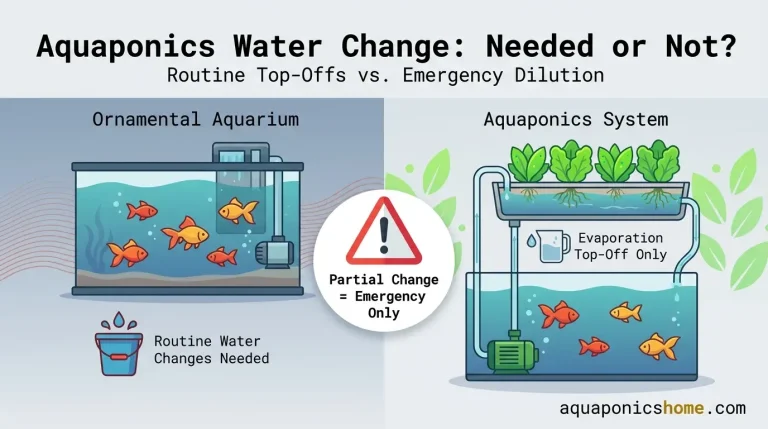
Do you need an aquaponics water change? Usually no, because plants use the nitrate. Here are the sourced exceptions: nitrite, sodium and dissolved salts.
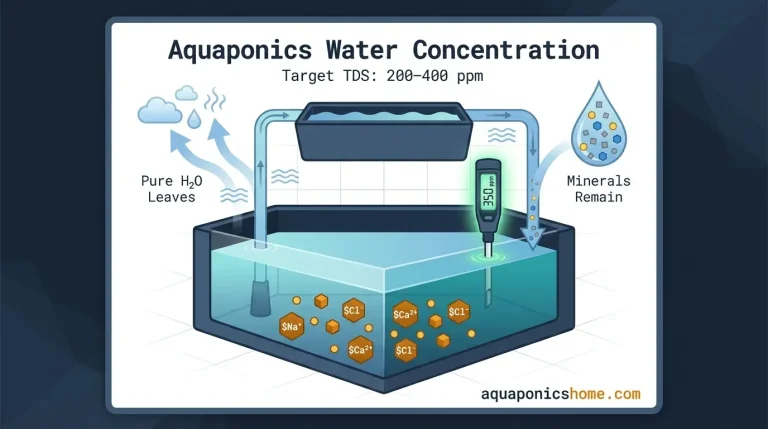
Aquaponics topping up water is not neutral. Evaporation leaves minerals behind, top-up water adds its own, and a logged meter spots leaks early.
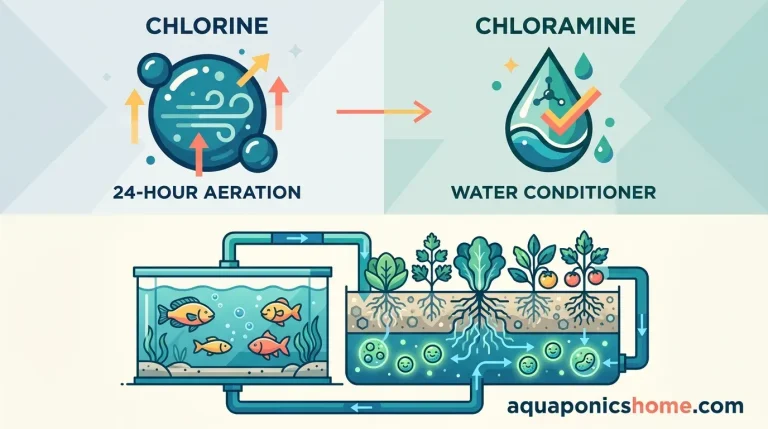
How to dechlorinate water for aquaponics: why letting it sit handles chlorine but not chloramine, and how to find out which your tap has.
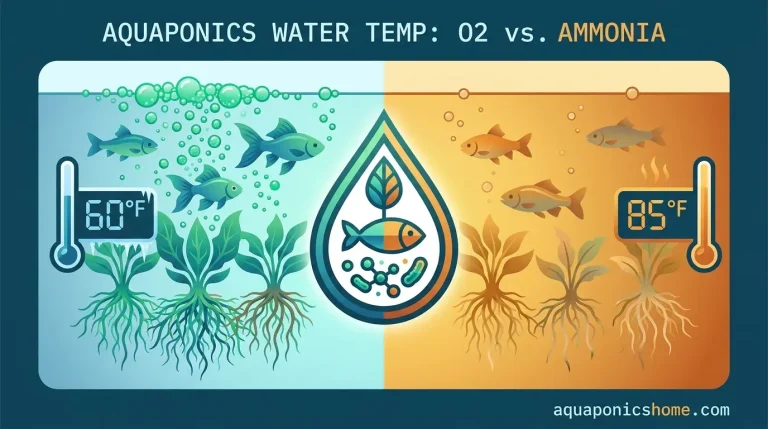
Aquaponics water temperature sets oxygen, ammonia toxicity and bacterial speed. Sourced ranges for fish, plants and bacteria, and heating it safely.
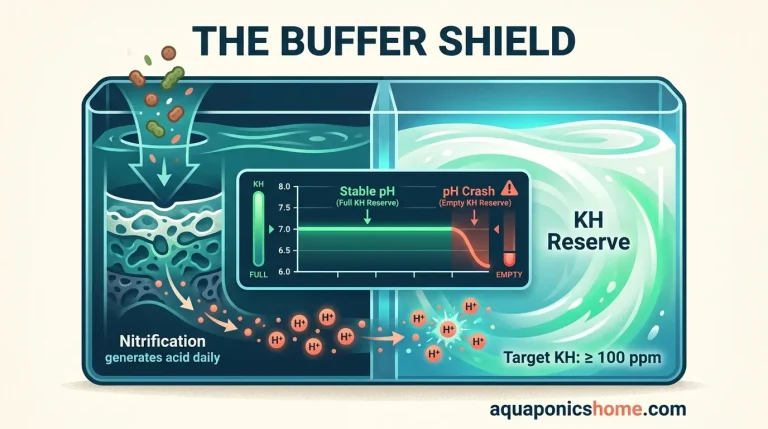
Aquaponics KH buffering explained: why the biofilter spends alkalinity, how KH differs from GH, and why a pH fix snaps back once the buffer is gone.
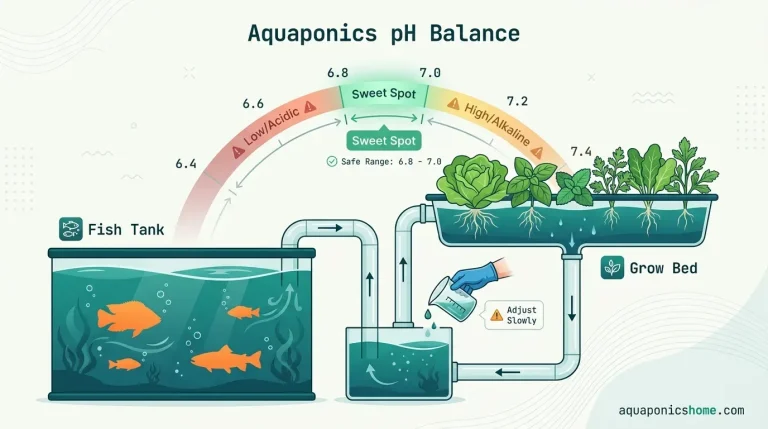
How to adjust pH in aquaponics safely: which compounds extension guides name, why caustic bases go in slowly, and what to try before adding anything.
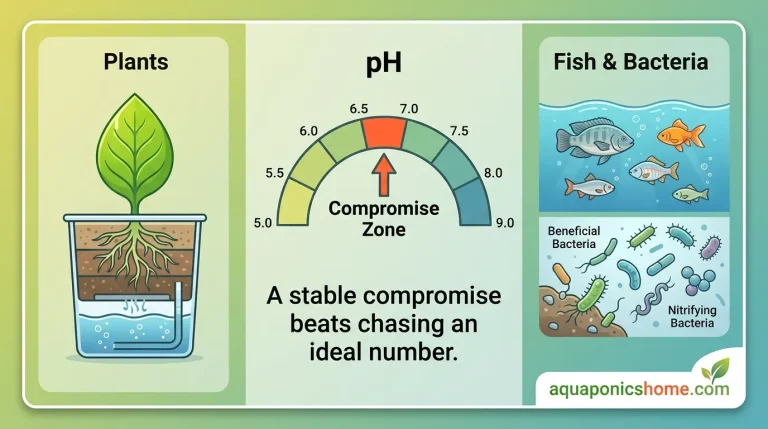
Aquaponics pH explained: fish, bacteria and plants each want something different. What the published compromise is, and why stability beats the target.
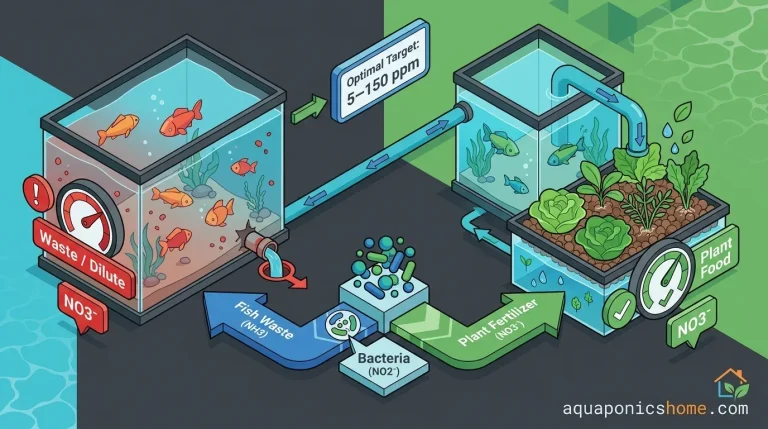
Aquaponics nitrate levels explained: why nitrate is the number you want to produce, what the published range means, and how to read a rising trend.
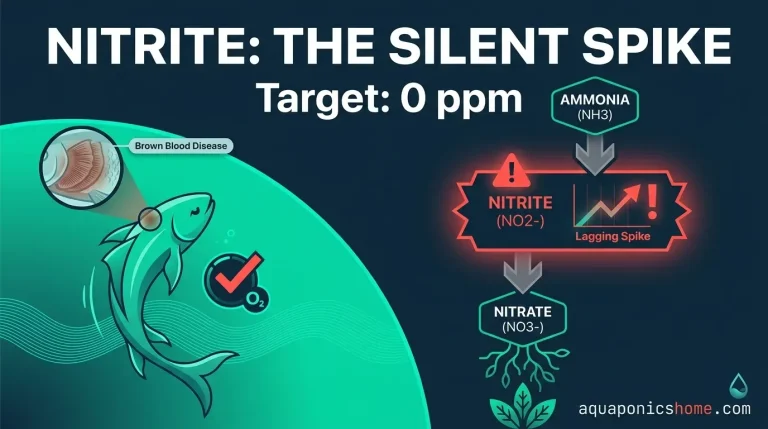
Aquaponics nitrite explained: where it comes from, why it rises after ammonia looks fixed, and why a fish can suffocate in well aerated water.
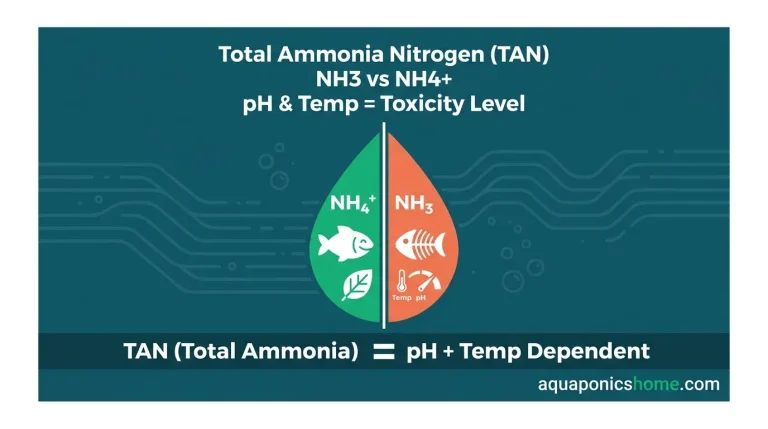
What aquaponics ammonia actually is, where it comes from, and why your test kit reading means nothing until you know the pH and temperature it was taken at.
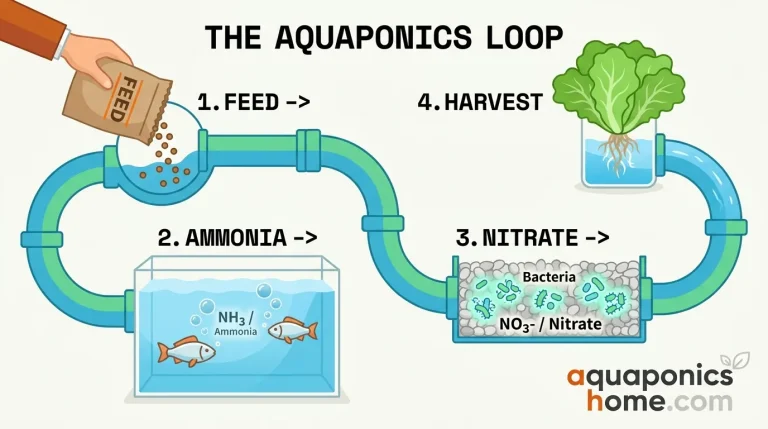
The aquaponics nitrogen cycle in plain words: where the nitrogen really comes from, the three bacterial steps, and the fourth step aquariums do not have.